
Key Mistake: Underestimating the Grading Company
| Grading Company | Characteristics and Market Perception |
| NGC / PCGS | American companies, market leaders. Their grades are considered the benchmark and are highly valued by collectors worldwide. |
| NGS | A Russian grading company. Less valued on the international market, which leads to lower prices for coins in their slabs. |
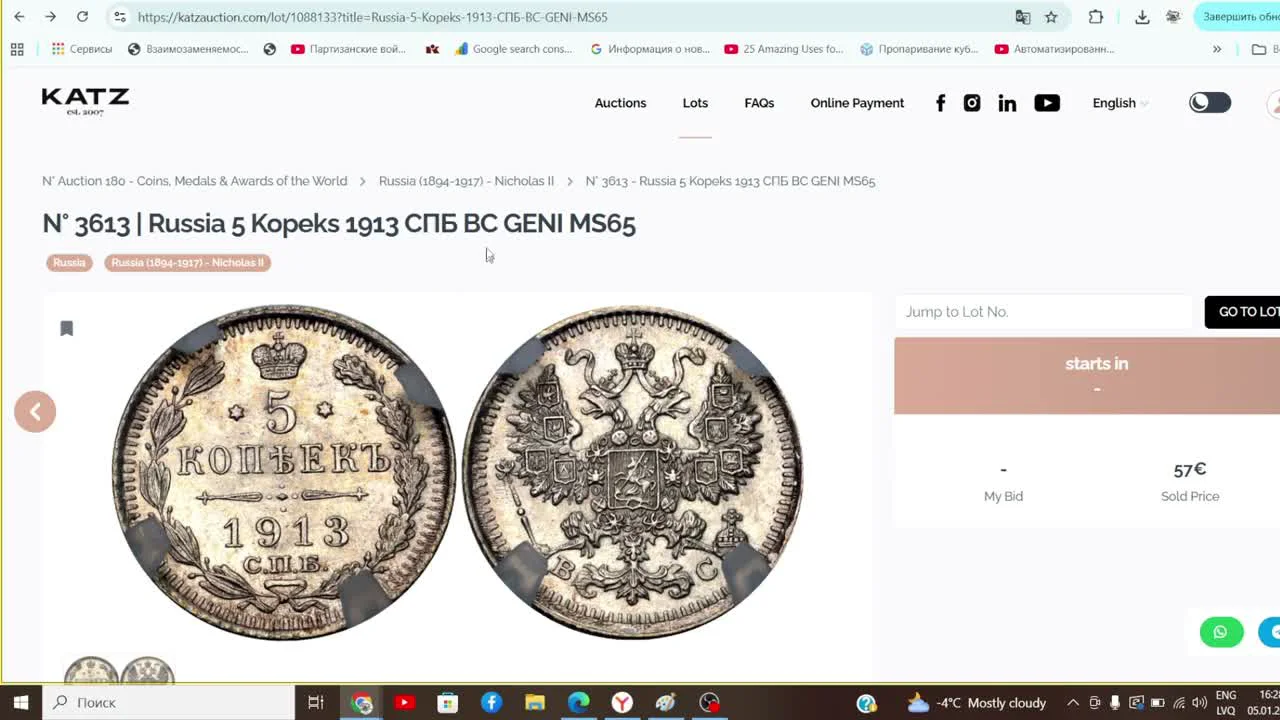
| GENI | A French grading company. Not very popular; coins in GENI slabs usually cost less than their NGC/PCGS counterparts. |
| ANACS | An old American company. Despite its long history, it hasn't gained popularity and lags behind the market leaders. Coins in their slabs are also valued lower. |
| ННР (R-HHP) | A Russian grading company. Previously known for its strict grading, but there is now a tendency to overgrade. Coins in these slabs are harder to sell on the European market. |
When participating in numismatic auctions, it's crucial to pay attention not only to the coin itself but also to the company that graded it and placed it in a slab. Different grading services have varying reputations in the market, which directly affects the final value and liquidity of the lot. It's a mistake to assume that the same grade from different companies is equivalent.
A recent Katz auction (No. 180) featured several lots illustrating this problem. For example, coins in slabs from lesser-known or local companies, such as NGS (Russia) or GENI (France), sell for significantly less than their counterparts in slabs from market leaders NGC and PCGS.
Understanding the reputation of a grading service helps avoid overpaying for a coin whose grade may not be recognized by the broader collecting community. This is especially important for investment purchases, where the asset's liquidity plays a primary role.
Discrepancy Between the Grade and the Coin's Actual Condition
Another common mistake is to blindly trust the grade indicated on the slab, especially if it was issued by a less reputable company. You must always carefully examine the lot's photos and assess the coin's condition yourself, looking for signs of wear.
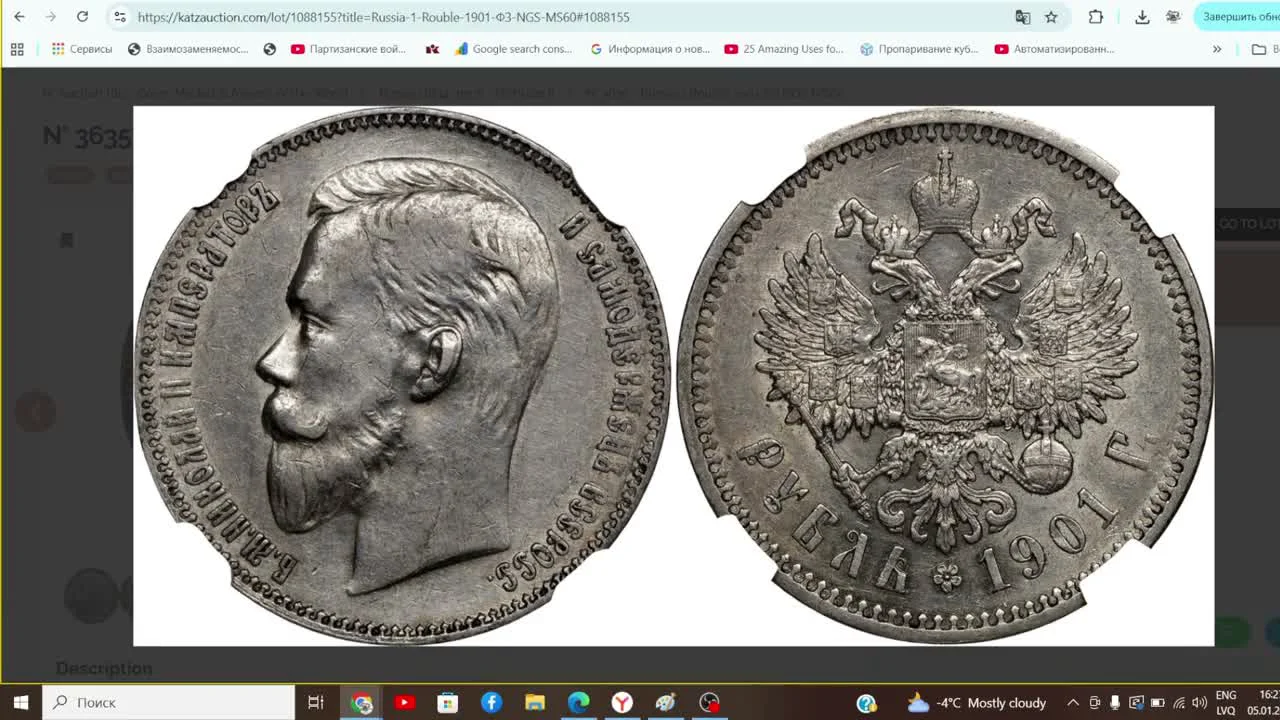
A striking example is the 1901 ruble (FZ) in an NGS slab with a grade of MS60, which sold for €983. Despite the grade, which implies no traces of circulation, the coin clearly shows wear on the high points of the relief: on the hair, the ear, and elements of the crown on the reverse. This condition is more consistent with an AU (About Uncirculated) grade, such as AU53 or AU55.
The low selling price is explained by the fact that experienced auction participants saw this discrepancy. They valued the coin based on its actual condition, not the inflated grade on the slab. This proves that a visual analysis is a mandatory step before placing a bid.
"Wandering" Lots and Hidden Reserve Prices
Sometimes, lots appear at auctions that wander from one sale to another without finding a buyer. This may be because the seller sets an excessively high hidden reserve price. Such coins can create the illusion of a high market value, even though no actual transaction has occurred.
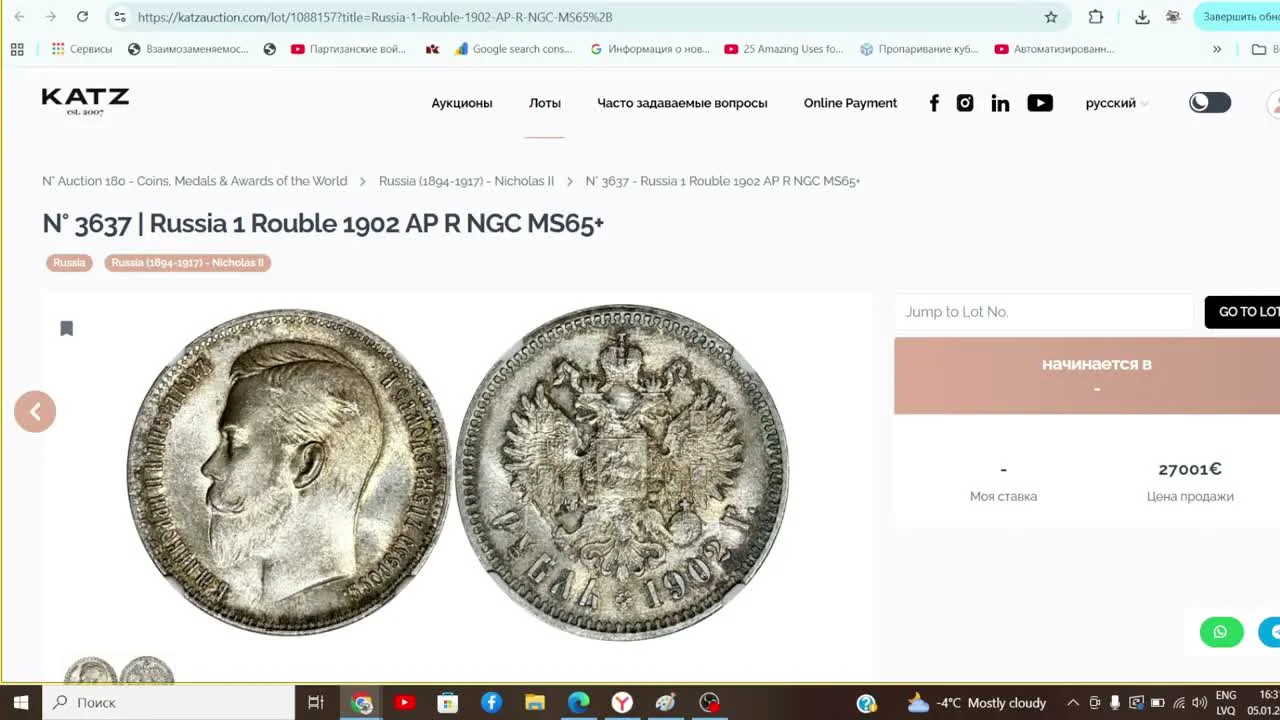
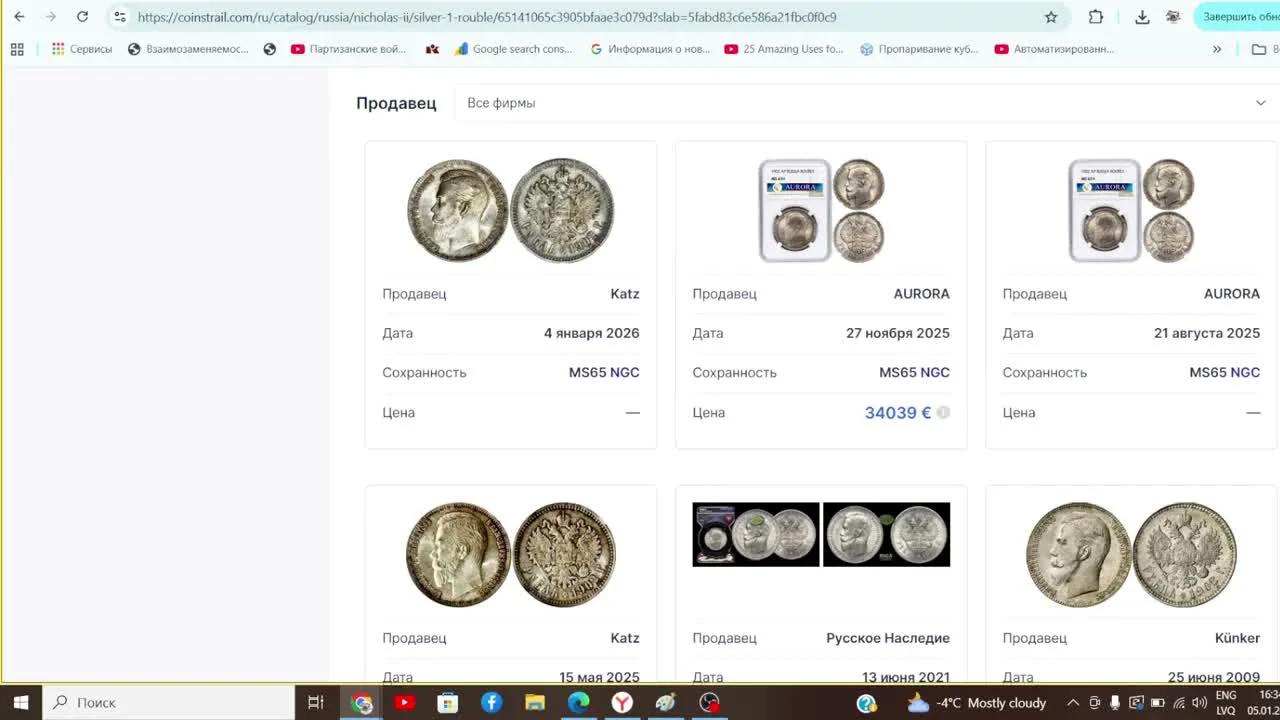
An example of such a "wandering" lot is the 1902 ruble (AR) graded NGC MS65+. At the auction, it was supposedly sold for €27,001. However, checking the sales history of this specific coin shows that it has been listed repeatedly on various platforms. It previously sold for €34,039 at a Russian auction and also for €24,800 at the same Katz auction in 2025 (obviously a date error on the website).
This behavior of a lot is a reason for caution. The owner is likely unwilling to sell the coin for less than a certain amount, and it will keep appearing at auctions until it reaches the desired price. Before bidding on an expensive lot, it is useful to check its auction history to avoid falling victim to inflated expectations.
The Value of Rare Coins in High Grades from Top Companies
A completely different situation arises with coins that are the best or among the best in terms of preservation among all known examples (top population). If such a coin is in a slab from a leading grading company, its price can be very high, yet fair and justified.
A gold 5 rubles 1888 (AG) graded PCGS MS65 was sold at the auction. This is a top-population lot: only five coins exist in this grade, and none are graded higher. The coin was sold for €8,200, which is an adequate price for such a rare specimen.
High demand for such coins from serious collectors establishes their high value. Unlike "wandering" lots, here the price reflects real market value, supported by rarity and the impeccable reputation of the grading service.
Market Trends: Rising Prices for Popular Coins
Recently, there has been a steady increase in prices even for relatively common coins, but in high grades of preservation. This is due to growing demand from collectors who aim to complete full sets of coins by year in slabs.
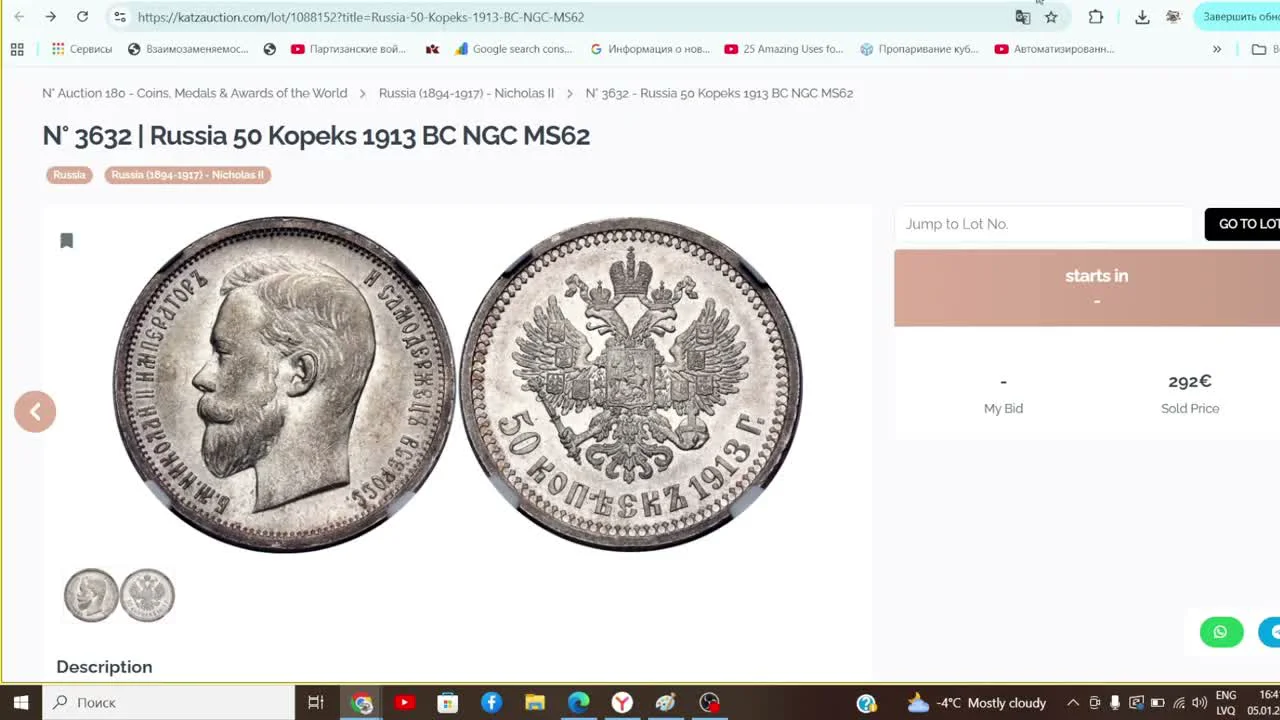
For example, a 25 kopeks 1895 (NGC MS62) sold for €824, and a 25 kopeks 1896 (PCGS MS62) for €500. The same applies to 50 kopeks: a 1896 coin (NGC MS61) was sold for €694, and a 1913 coin (NGC MS62) for €292. Although the 50 kopeks 1913 is the most common denomination, demand for it in a high grade is steadily growing.
Another example is the commemorative 1912 ruble "Glorious Year". This coin is very popular with collectors, and its prices are constantly rising. A specimen graded PCGS MS64 with a less-than-ideal patina was sold for €8,501. This shows that the popularity of the theme can be an even more important pricing factor than a perfect appearance.