
The Beginning of the Imperial Tradition
The tradition of giving precious Fabergé eggs for Easter originated with Emperor Alexander III. In 1885, the fifth year of his reign, he decided to give an unusual gift to his wife, Empress Maria Feodorovna, who was a Danish princess born in Copenhagen.
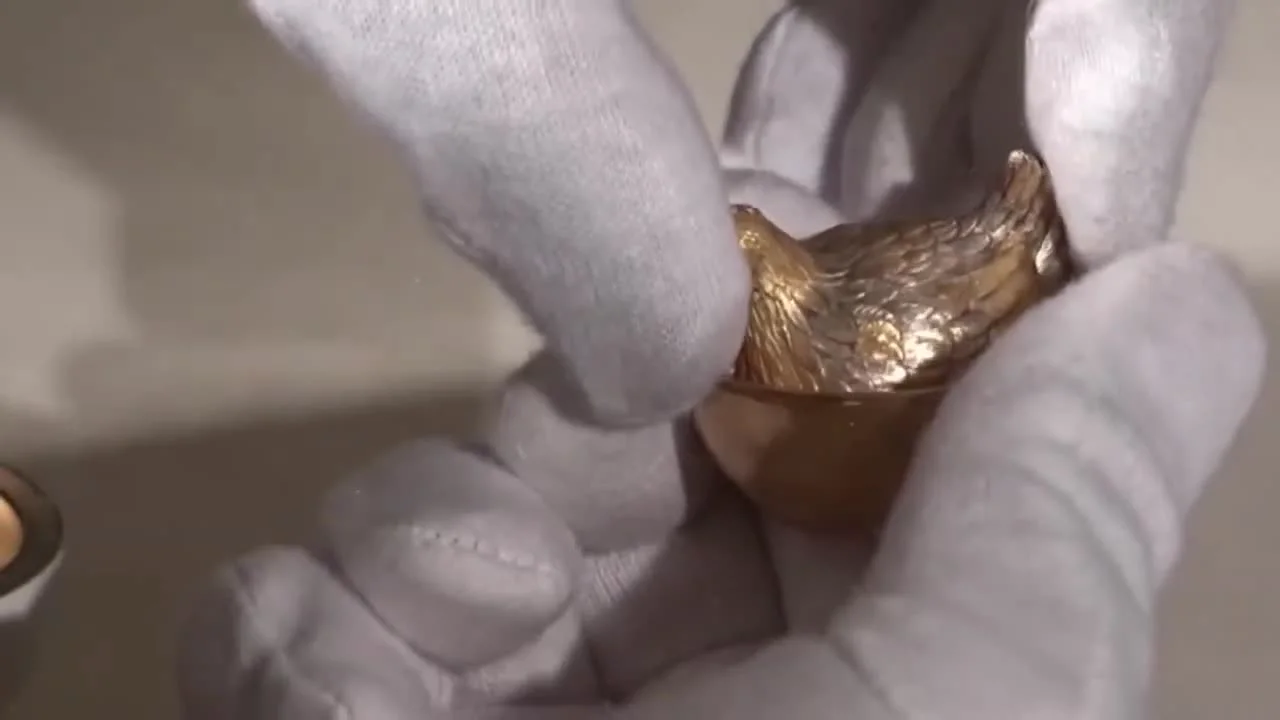
The commission was entrusted to Peter Carl Fabergé, a jeweler who had taken over the family firm in 1882. The first egg, known as the 'Hen' egg, was coated in white enamel and opened into two halves. Inside was a golden yolk, which, in turn, concealed a golden hen.
- The Imperial Crown, made of diamonds.
- A tiny ruby pendant.
The Empress was so delighted with the gift that from then on, the House of Fabergé created one unique egg for the imperial family every year. This tradition was continued by Alexander III's son, Nicholas II, who would order two eggs each year: one for his mother and another for his wife, Alexandra.
The Fate of the Collection After the Revolution
For a long time, the luxurious eggs remained a secret of the imperial court, and few knew of their existence. However, after the February Revolution, the situation changed dramatically. All the jewels were confiscated from the palace, carefully packed, and hidden in the Kremlin.
Later, when the new government ran out of funds, the collection began to be sold off. It is believed that about 70 eggs were created in total, but far fewer have survived to this day—46 imperial and 11 other examples.
Today, Fabergé eggs are a world-renowned synonym for the luxurious lifestyle of the Romanov dynasty. Each one is a unique work of art, preserving the memory of a bygone era.
The 'Standart Yacht' Egg
This jewel-encrusted Easter egg was created in 1909 for Nicholas II as a gift for his wife, Tsarina Alexandra Feodorovna. The piece is a transparent, hollow rock crystal egg, positioned horizontally.
The exterior is decorated with a gold band featuring green enamel leaves. Inside is a precise miniature replica of the imperial yacht 'Standart,' made of gold. The egg itself is engraved with 'Standart 1909.'
The yacht itself was commissioned by Alexander III in Copenhagen and launched in 1895. At 116 meters long, it was considered the largest yacht in the world. This egg is currently housed in the Moscow Kremlin Armoury and is one of the few that have never left Russia.
The 'Peter the Great' Egg
| Material | Description |
| Gold | Red, green, and yellow |
| Platinum | Used for detailing |
| Diamonds | Rose-cut |
| Rubies | For decorative accents |
| Rock crystal | Structural elements |
| Enamel and ivory | For miniature portraits |
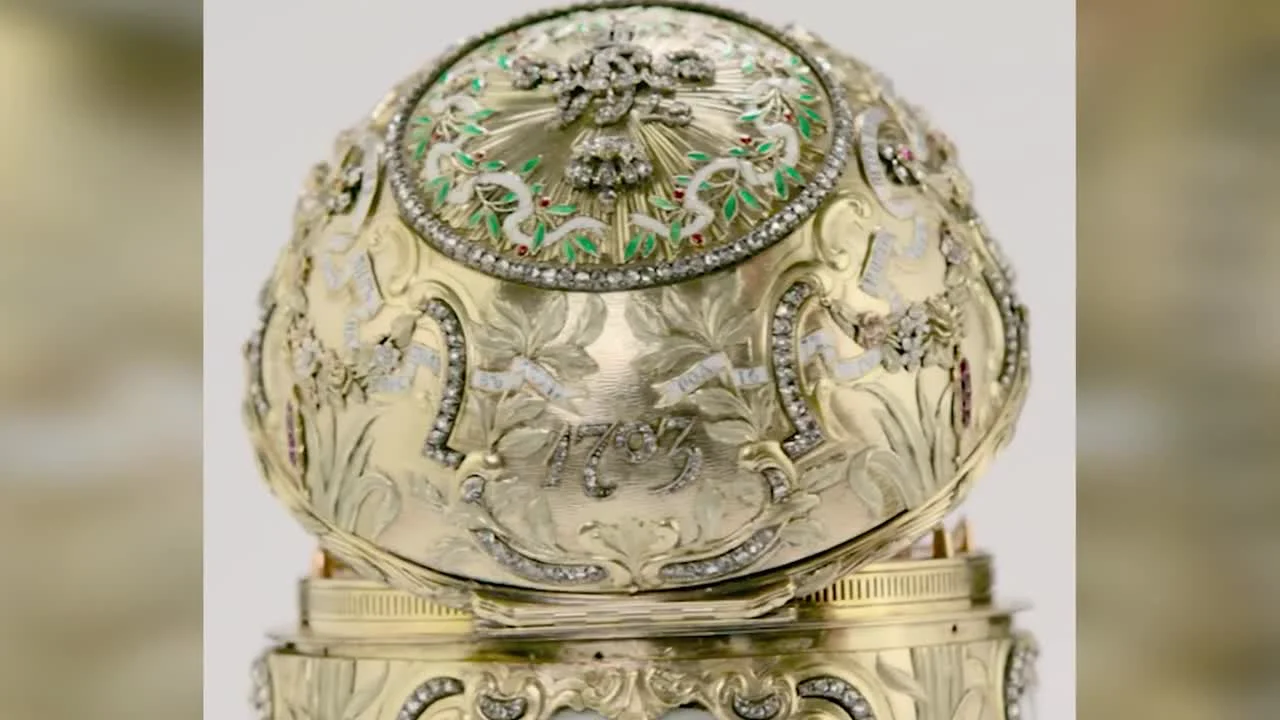
Created in 1903 in the Rococo style, this egg commemorates the bicentennial of the founding of St. Petersburg. A variety of precious materials were used in its creation, highlighting its exceptional value.
The shell features four miniatures depicting St. Petersburg before and after 1703, as well as in 1903. When the egg is opened, a special mechanism raises a miniature gold replica of the monument to Peter the Great, set on a sapphire base. This surprise alludes to the legend that the city will remain impregnable as long as the 'Bronze Horseman' stands in its place.
The 'Gatchina Palace' Egg
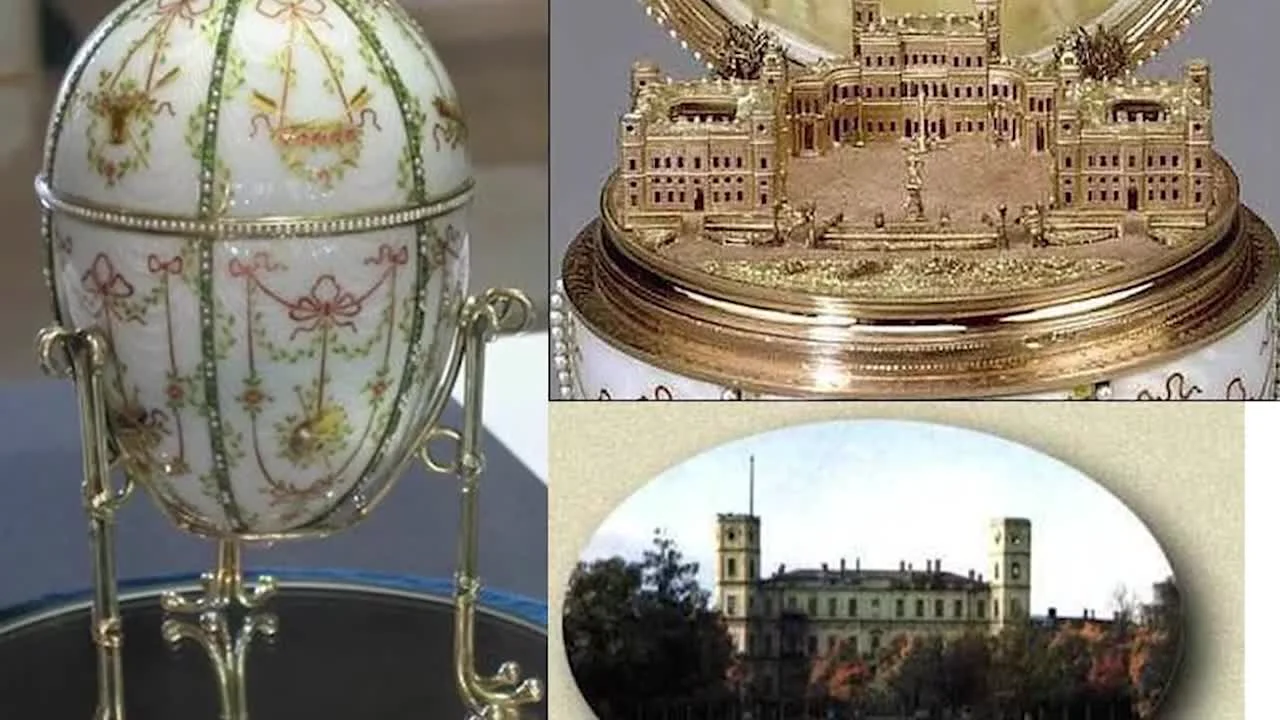
This jeweled egg was made in 1901 by order of Nicholas II for his mother, the Dowager Empress Maria Feodorovna. The main surprise of the piece is a hidden miniature gold replica of the Gatchina Palace, located south of St. Petersburg.
The model of the palace, despite being only 3 centimeters high, is astonishingly detailed: one can make out windows, cannons, and even flags. The creator of this masterpiece was the Fabergé firm's master craftsman, Mikhail Perkhin.
After the revolution, in 1920, the egg was acquired by Alexander Polovtsov, a former palace official who opened an antique shop in Paris. In 1930, it was sold to the American Henry Walters and has been part of the Walters Art Museum collection since 1952.
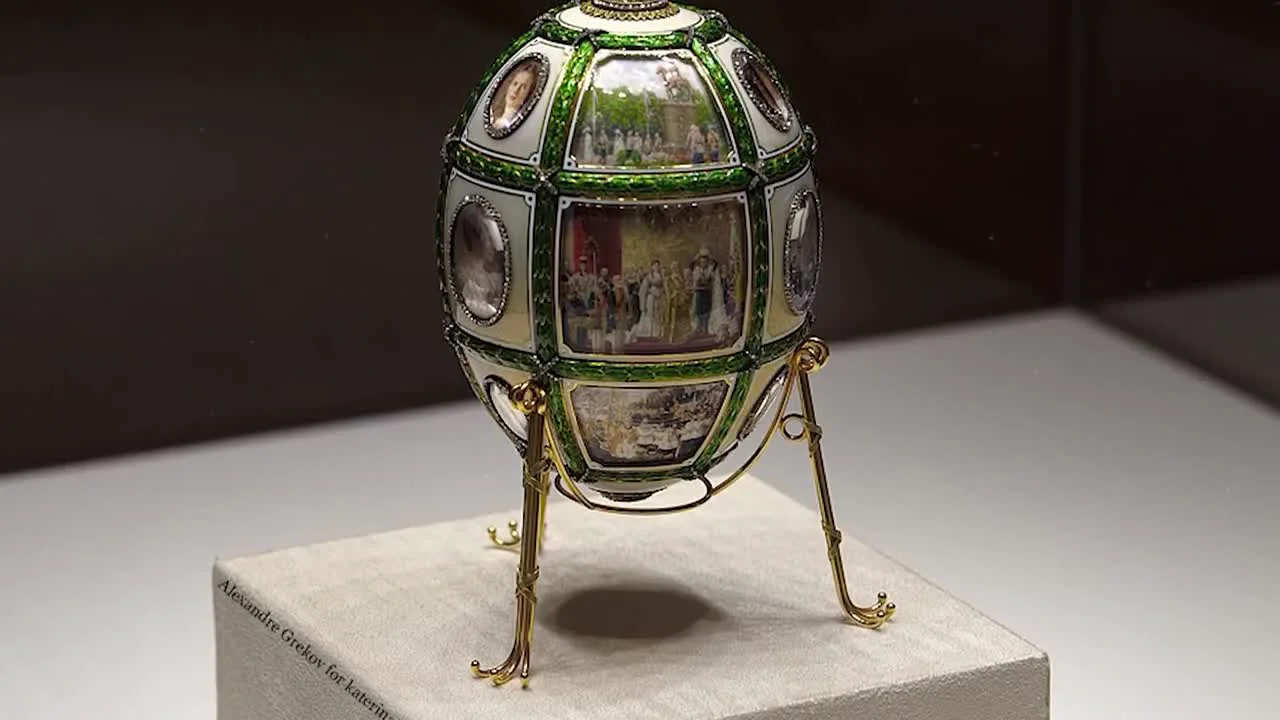
The 'Fifteenth Anniversary' Egg
In 1911, Nicholas II celebrated the fifteenth anniversary of his reign. To commemorate this event, the House of Fabergé created a unique egg, which the emperor gifted to his wife. The piece is made of gold, covered in white enamel, and adorned with diamonds and rock crystal.
- The coronation procession.
- The coronation ceremony.
- The opening of the State Duma.
- The Alexander III Bridge in Paris.
- The canonization of Saint Seraphim of Sarov.
For a long time, the egg belonged to Forbes magazine publisher Malcolm Forbes. It was later purchased, along with eight other imperial eggs, by Viktor Vekselberg for nearly $100 million. Today, it is exhibited at the Fabergé Museum in St. Petersburg.
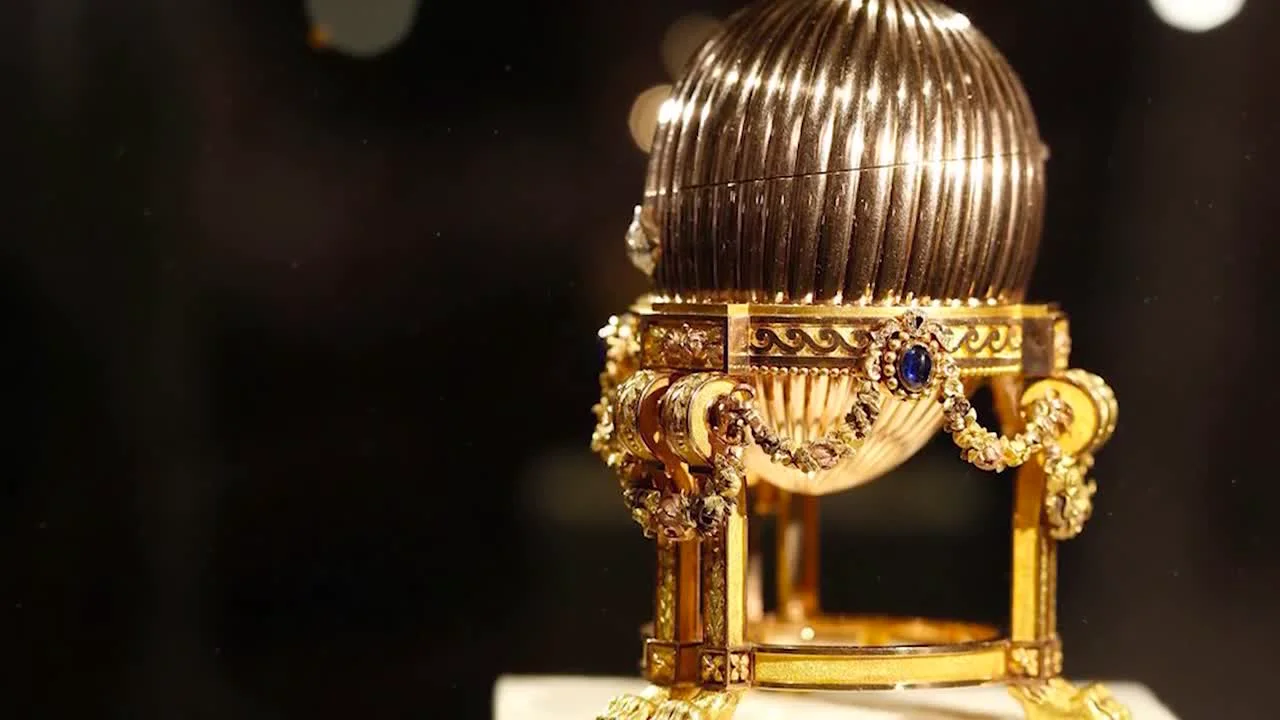
The Lost and Found 'Third Imperial Egg'
This Easter egg with a clock was created in 1887 for Alexander III and gifted to his wife, Maria Feodorovna. Made in the Louis XVI style, it was considered lost for many years until it was accidentally discovered at an American market in 2012.
The egg's design consists of a reeded 18-karat gold case supported on a golden ring. It rests on three sets of legs ending in lion paws. These are connected by garlands of roses and leaves made from different gold alloys. The surprise is a watch that appears when a diamond clasp is pressed.
In 2014, for the first time in 112 years, the egg was put on public display. Its value is estimated at $33 million. Scratches remain on its surface—traces of how potential buyers in the past tested the metal for its gold content.
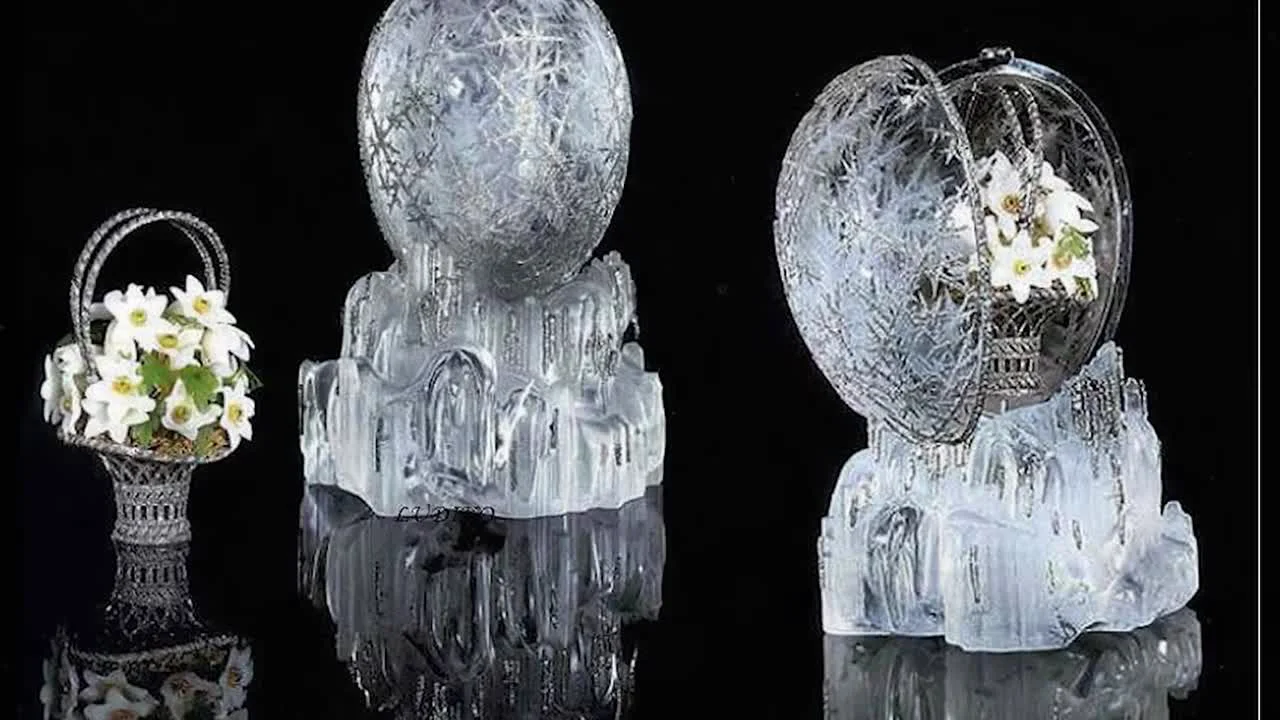
The 'Winter' Egg: The Most Expensive Creation
Perhaps the most luxurious Easter gift was the 'Winter' Egg, created in 1913. Nicholas II presented it to his mother, Maria Feodorovna. This piece is considered the most expensive of all ever created by the imperial jeweler.
The egg is made of rock crystal and platinum. Its surface is intricately engraved from the inside, creating the effect of ice crystals, and is encrusted with three thousand diamonds. The base is also made of rock crystal and is shaped like melting ice. Hidden inside is a surprise—a small basket of snowdrops.
After the revolution, the egg left Russia. In 1994, it was sold at a Christie's auction for $5.6 million. In 2002, at the same auction house, it was acquired by the Emir of Qatar, Hamad bin Khalifa, for $9.6 million.
