
The 'Secret' Price of a Hobby: To Deceive or to Tell the Truth
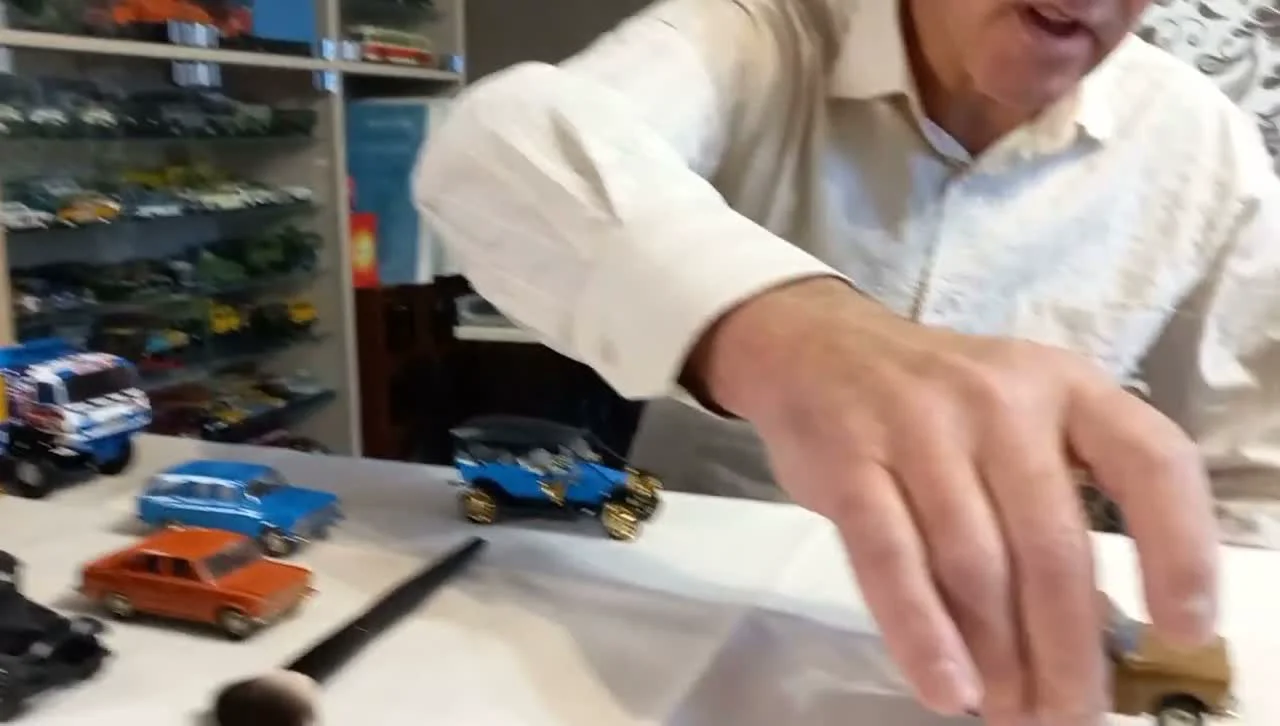
For many scale model collectors, the cost of their hobby is a sensitive topic, especially in conversations with family. The real price of a model is often concealed, and a more modest, 'family-friendly' price is announced at home. This little trick has become almost a tradition in the collector community.
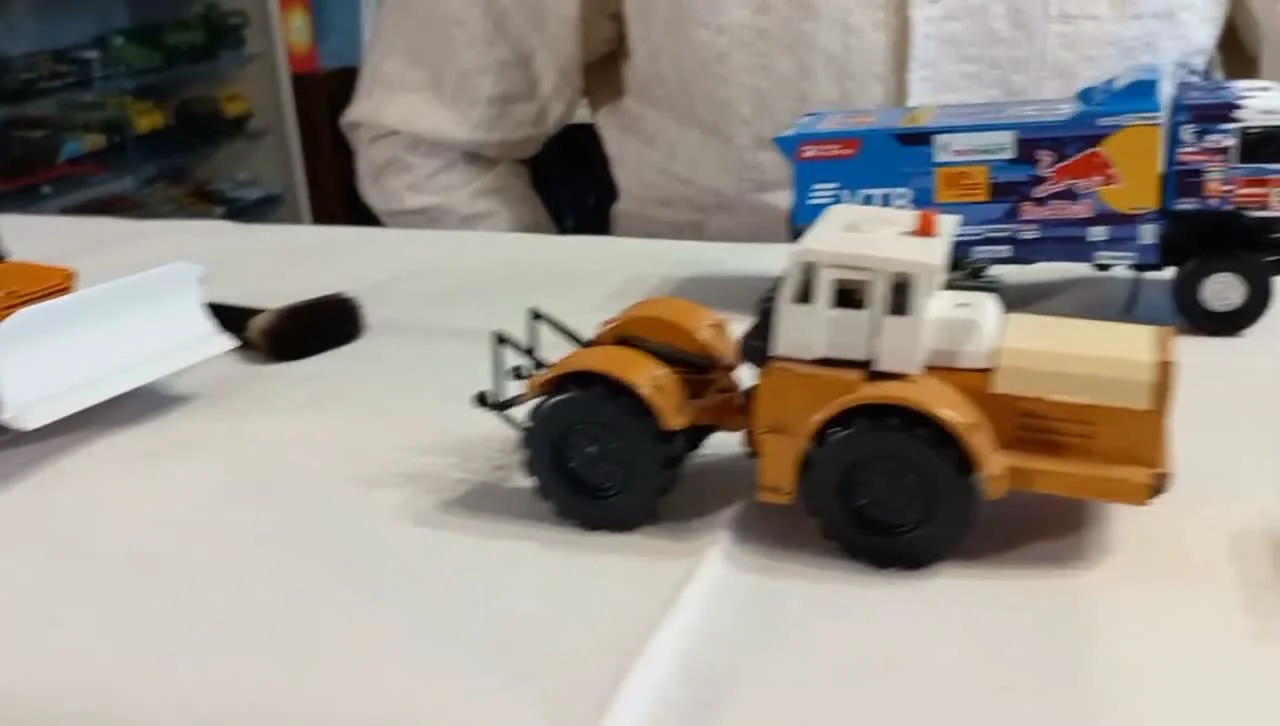
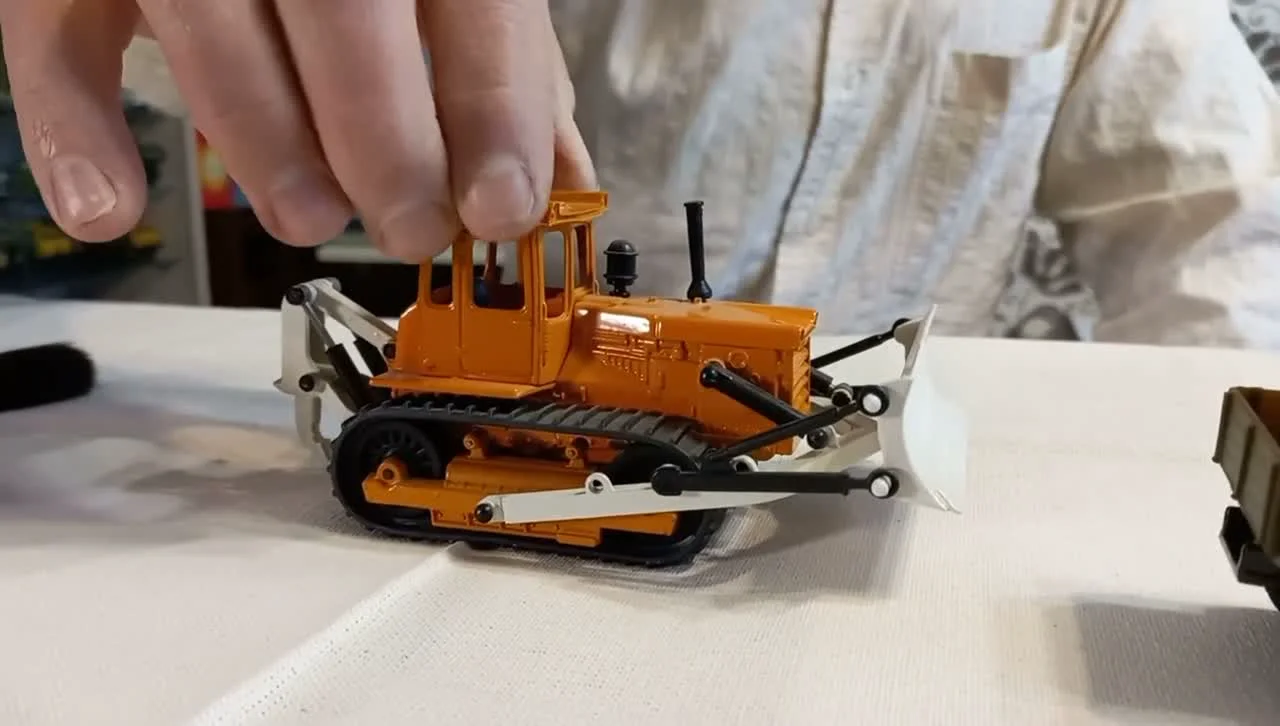
A telling case from late 1985 involves the purchase of a 'Kirovets' tractor model. It cost 7 rubles—a sum that could feed a family for a whole week at the time. Such an expense surprised the wife, and since then, the prices of new acquisitions for the collection began to be 'adjusted' downwards.
A kind of secret language even emerged among collectors. When discussing the cost of a new model in the presence of their wives, they might exchange knowing glances and gestures to avoid revealing the real figures. For example, a model costing thousands of rubles might be presented as a hundred-ruble purchase.
The Beginning of a Collection: Prices in the Soviet Era
| Model | Price in Soviet Times |
| Moskvich / Zhiguli | 3 rubles 50 kopecks |
| Kirovets K-700 | 7 rubles |
| Russo-Balt S24/40 | 8 rubles |
| Chaika GAZ-13 | 9 rubles 40 kopecks |
| GAZ (Leningrad Plant) | 4 rubles - 4 rubles 30 kopecks |
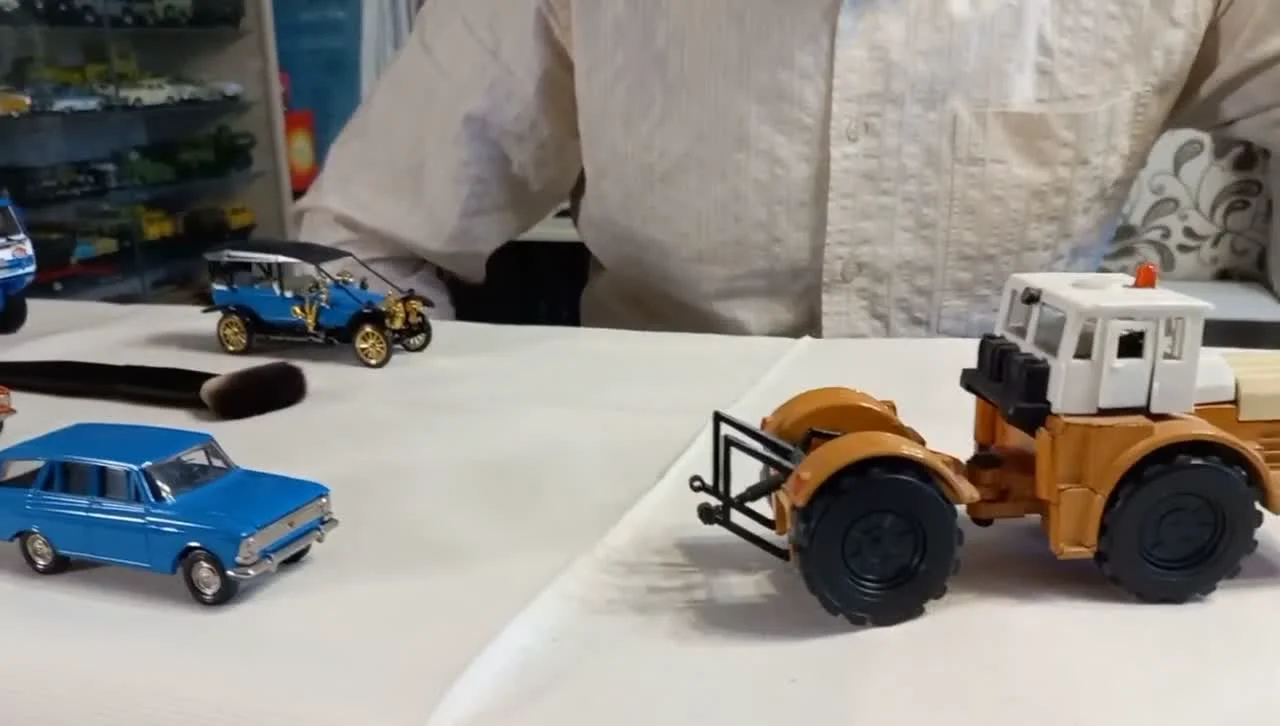
Collecting 1:43 scale model cars seriously began in the 1980s. One of the first models in the collection was the 'Moskvich' IZH-Kombi. In Soviet times, the prices for such models were relatively stable and affordable, although they were not considered cheap.
The average price for popular passenger car models, such as the 'Moskvich' or 'Zhiguli,' was 3 rubles and 50 kopecks. However, there were also more expensive examples whose cost reflected their complexity or rarity.
To understand the scale of these prices, it's worth noting that the 8-ruble cost of a 'Russo-Balt' model was a significant sum for a student whose monthly stipend was 40 rubles. Buying such models required saving and was a serious step for a collector.
'Zinc Pest' and the Fate of Old Models
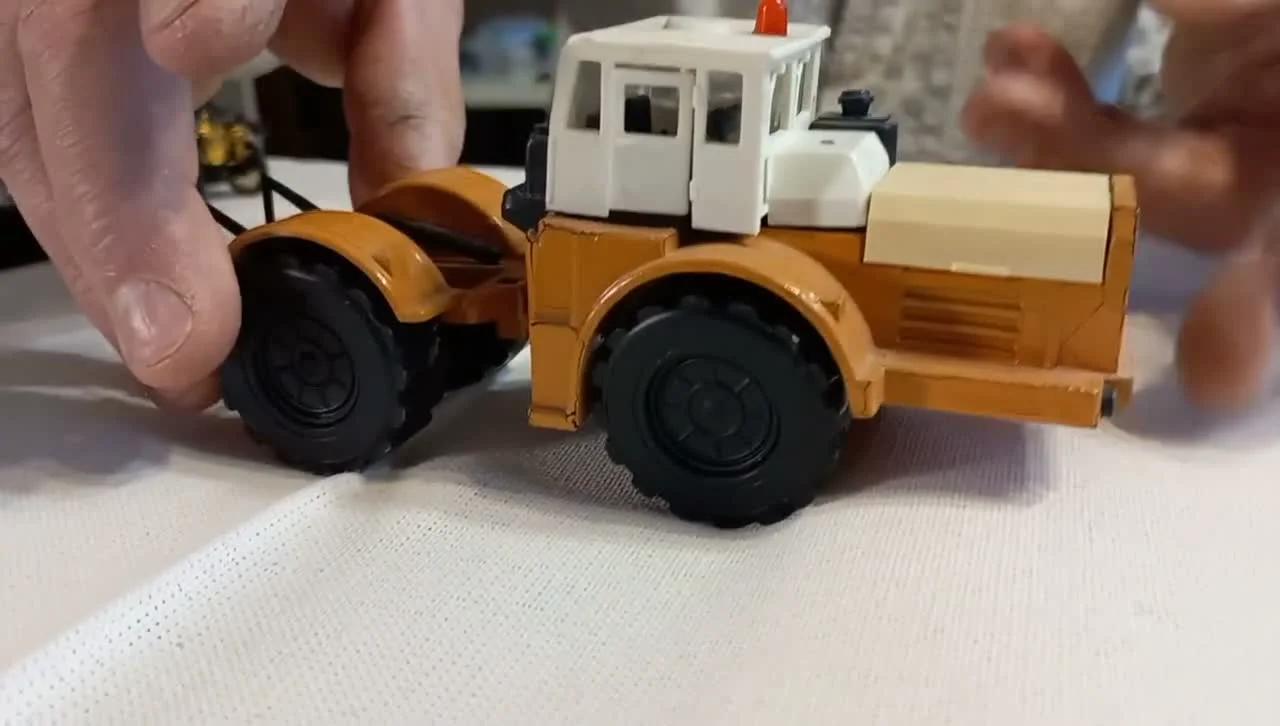
Time is relentless, even for metal models. Many examples produced in the Soviet era eventually succumb to destruction due to the so-called 'zinc pest.' This process is the degradation of the zinc alloy from which the models are made, leading to cracks and the destruction of the body.
A vivid example of this phenomenon is that very 'Kirovets' tractor purchased in 1985. Decades later, its orange body is covered in a network of cracks, especially on the front part. The model is literally falling apart, although it was in perfect condition until recently.
Such damage makes the model practically irreparable and strips it of its market value. It becomes an 'invalid' in the collection, kept purely as a memento. Selling it for parts is pointless, as the main body parts are already destroyed.
From Expenses to Investments: The Scale Model Market Today
Over time, attitudes toward collecting and the value of the models themselves have changed dramatically. What was once just a hobby and an expense has now become a form of investment for many. Well-preserved collections from the Soviet period are now worth serious money.
Model prices have risen significantly. For example, a T2 bulldozer, purchased in the post-Soviet era, cost 700 rubles. A modern racing KAMAZ model from DeAgostini costs around 1999 rubles. An understanding of the collection's value has also come to family members over time, and they are beginning to support the hobby.
Today's market offers a huge range of prices. For instance, the same model of a modern KAMAZ bus can be sold for anywhere from 4,500 to 49,000 rubles, indicating the speculative nature of the market. Under these conditions, many collectors set a personal price ceiling for themselves, for example, no more than 2,500 rubles per model.
Value Beyond Money
Despite the growing market value, for a true collector, the value of each model is measured by more than just money. The memories and stories associated with its acquisition are far more important. Each model is a part of personal history.
That same seven-ruble 'Kirovets,' though destroyed by 'zinc pest,' remains priceless. It is tied to memories of 1985 and the birth of a daughter. Such models become symbols of certain stages in life, and their value cannot be measured in monetary terms.
A collection is not just about expenses or investments. It is a passion that brings joy and preserves memories of the past. Therefore, it's important not only to know the real value of your models but also to cherish the emotions and memories they hold.