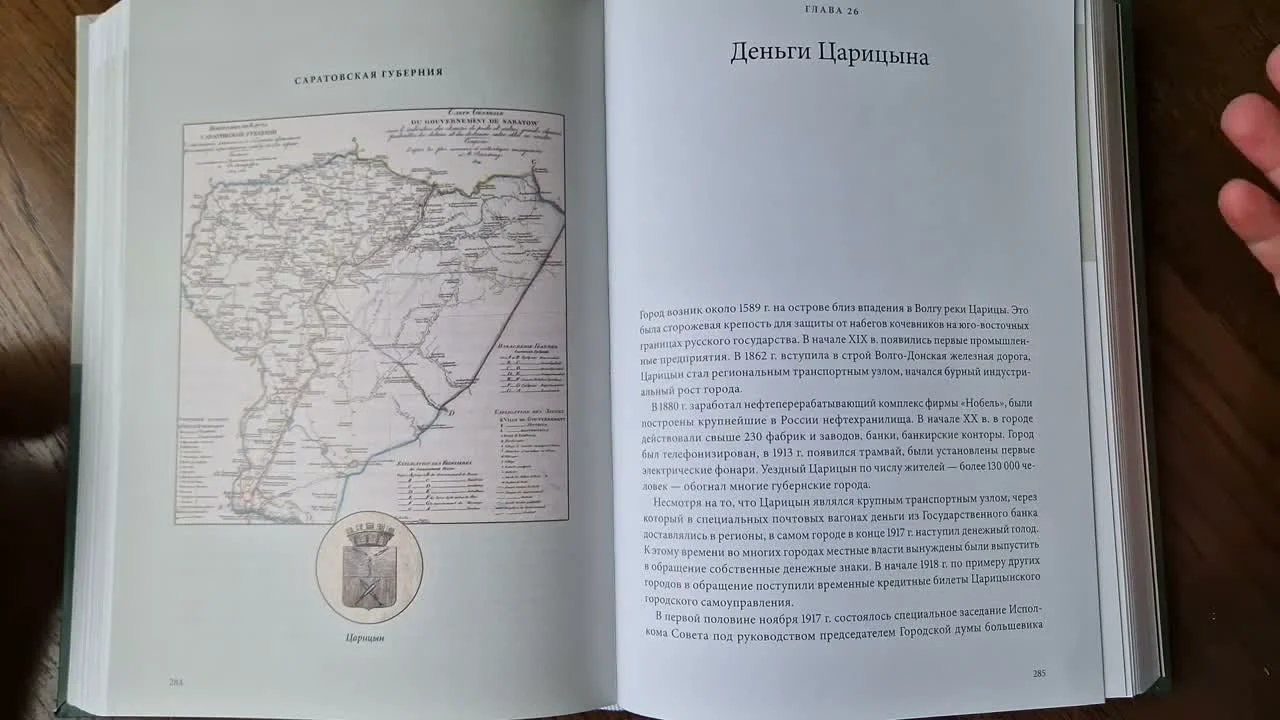

Historical Context: Tsaritsyn at the Beginning of the 20th Century
During the Civil War, the city of Tsaritsyn, later known as Stalingrad and now Volgograd, was a district town within the Saratov Governorate. Despite its status, it was a large and developing center that, like many other settlements in the former Russian Empire, faced serious economic difficulties.
By the end of 1917 and the beginning of 1918, a severe monetary crisis had erupted in the region, as it had throughout the country. The main reason was an acute shortage of state-issued currency, particularly credit notes. This deficit paralyzed trade and the financial life of the city, forcing local authorities to seek unconventional solutions.
Issuance of Temporary Credit Notes
Faced with a 'money famine,' the Tsaritsyn city authorities decided to issue their own banknotes. Initially, the idea of circulating coupons from the 'Liberty Loans' was considered, but this plan was implemented later. The first step was the issuance of temporary credit notes by the Tsaritsyn city self-government in early 1918.
A series of five denominations was issued. These banknotes were intended to temporarily replace state money and ensure the normal functioning of the city's economy. Their design and color scheme largely followed the traditions adopted for all-Russian banknotes, which was meant to increase public confidence.
- 1 ruble
- 3 rubles
- 5 rubles
- 25 rubles
- 100 rubles
'Mininki': How the People Greeted the New Money
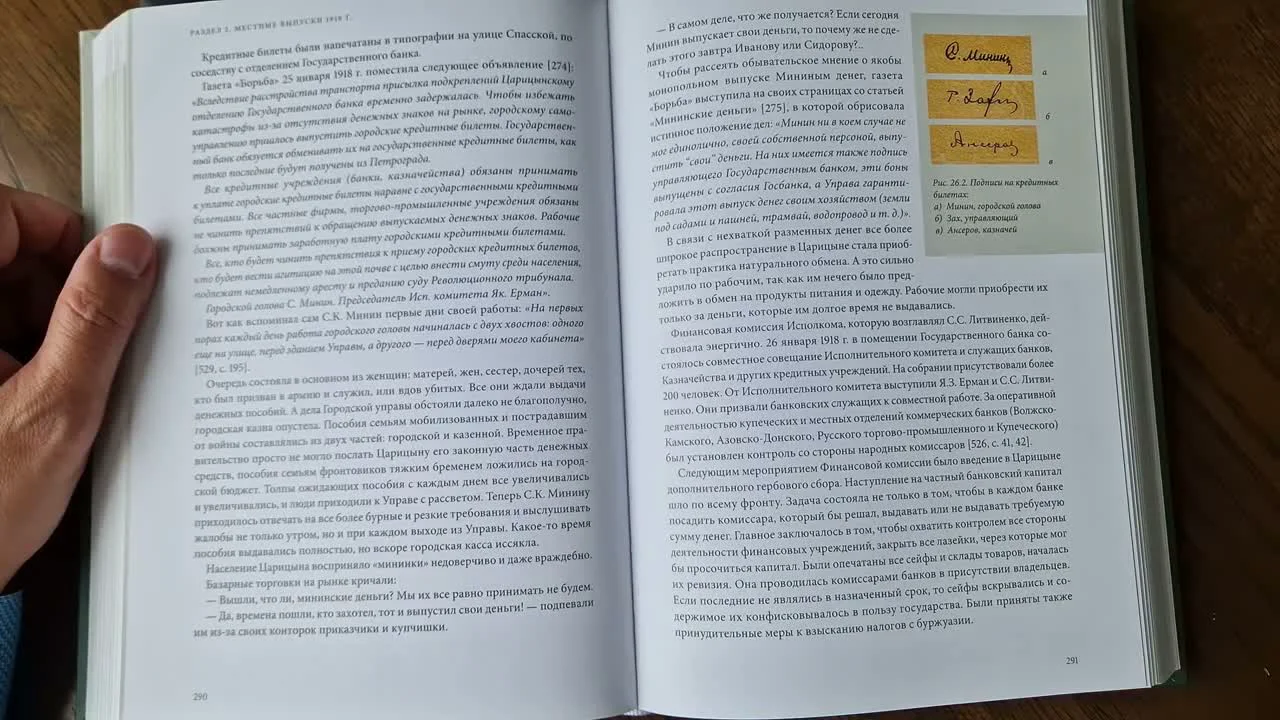
All the banknotes bore the facsimile signature of the city head, Minin, which quickly led to the emergence of a popular nickname—'mininki.' However, the population treated this local money with great distrust, and sometimes with outright hostility.
There is evidence that market traders refused to accept 'mininki' as payment. This was a typical reaction to the appearance of any money surrogates during that period: people did not trust local authorities and preferred to deal with the more familiar, albeit scarce, state-issued currency. The city authorities had to make efforts to overcome this distrust and force the money into circulation.
Backing and Features of the Tsaritsyn Notes
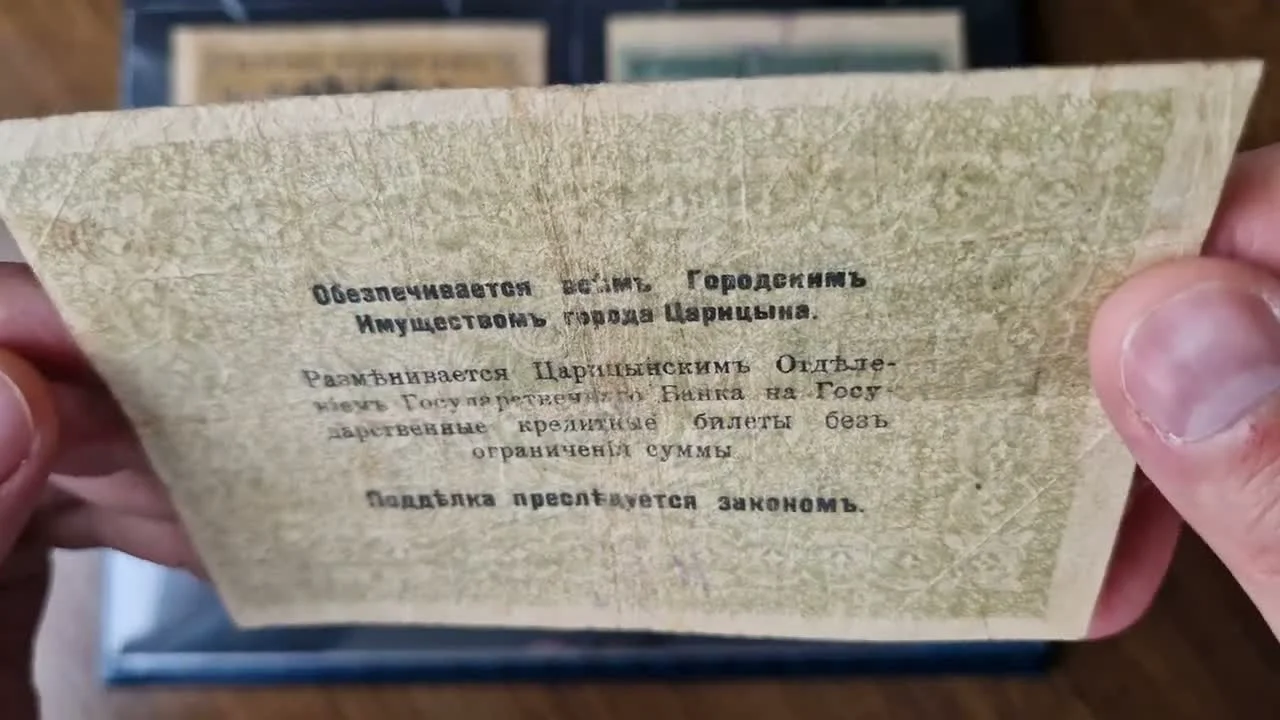
According to the inscriptions on the reverse side, the temporary credit notes were secured by 'all the municipal property of the city of Tsaritsyn.' It was also stated that they were exchangeable at the Tsaritsyn branch of the State Bank for state credit notes without any limit on the amount. As with all official money, there was an inscription stating that counterfeiting was punishable by law.
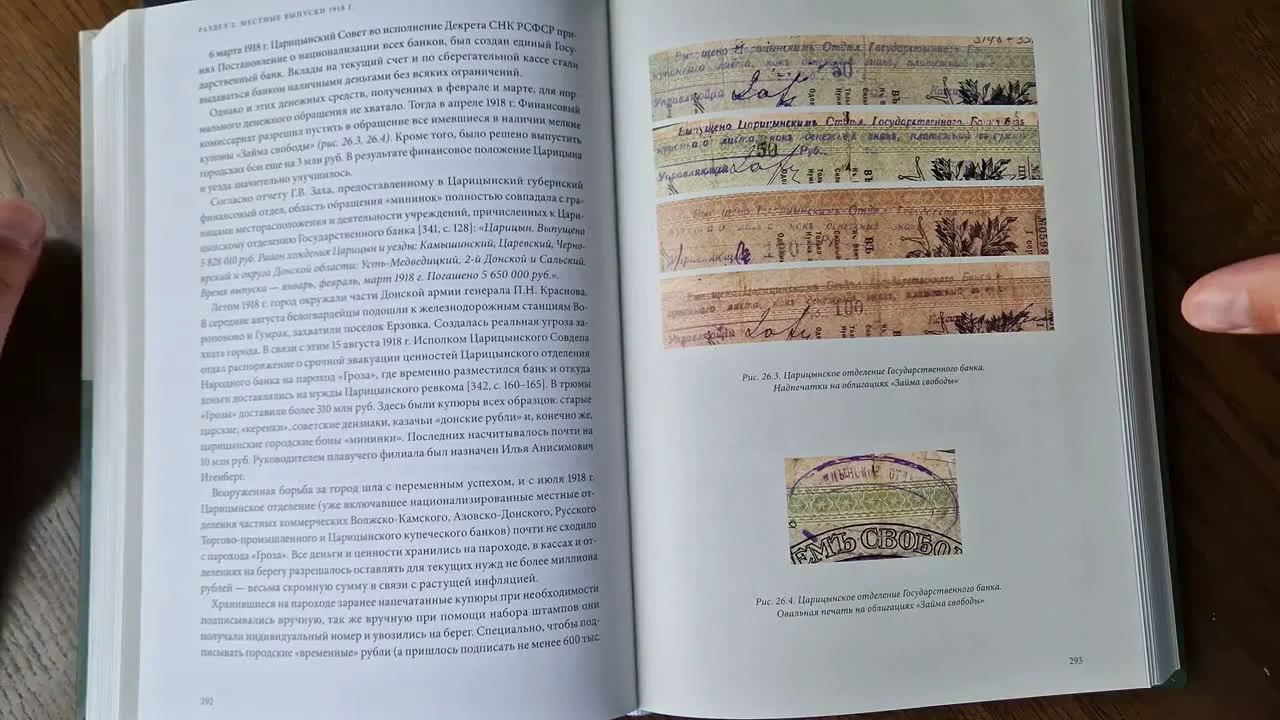
The banknotes were printed on simple, low-quality paper without watermarks, which made them vulnerable to counterfeiting. Each note featured three facsimile signatures (of the city head, the manager of the State Bank branch, and the treasurer) and one handwritten signature of a cashier. Interestingly, based on surviving examples, the cashiers' signatures differ on various banknotes.
The color scheme of the denominations was traditional for Russian money of that time: 1 ruble – yellow, 3 rubles – green, 5 rubles – blue, 25 rubles – red. This was done to make the money more recognizable and familiar to the population.
Issuance Volumes and Subsequent Fate
| Denomination | Series | Quantity (pcs.) | Total Amount (rub.) |
| 1 ruble | «V» | 110 861 | 110 861 |
| 3 rubles | «B», «G» | 125 474 | 376 422 |
| 5 rubles | «A», «B» | 180 615 | 903 225 |
| 25 rubles | «G» | 132 844 | 3 321 100 |
| 100 rubles | «A» | 49 787 | 4 978 700 |
| Total | 9 690 338 |
Archival data on the quantity of Tsaritsyn money put into circulation has been preserved. As of March 11, 1919, a significant number of these temporary notes were in circulation.
In addition to the credit notes, coupons from 'Liberty Loan' bonds with overprints were later put into circulation in Tsaritsyn, as in many other cities. There is also a curious historical fact: at one point, the issuing center that printed the money was located on the steamship 'Groza' (Thunderstorm), which sailed along the Volga, especially during the defense of Tsaritsyn from the White forces.
