
Collection Design and Its Symbolism
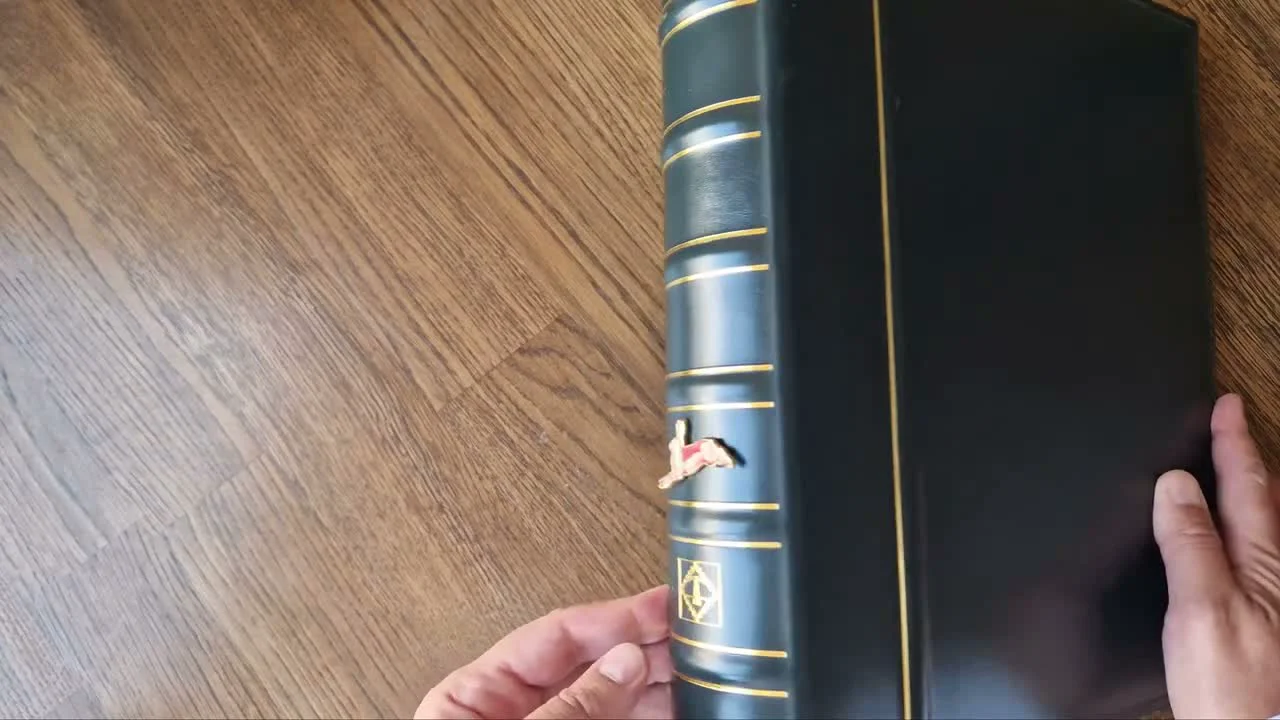
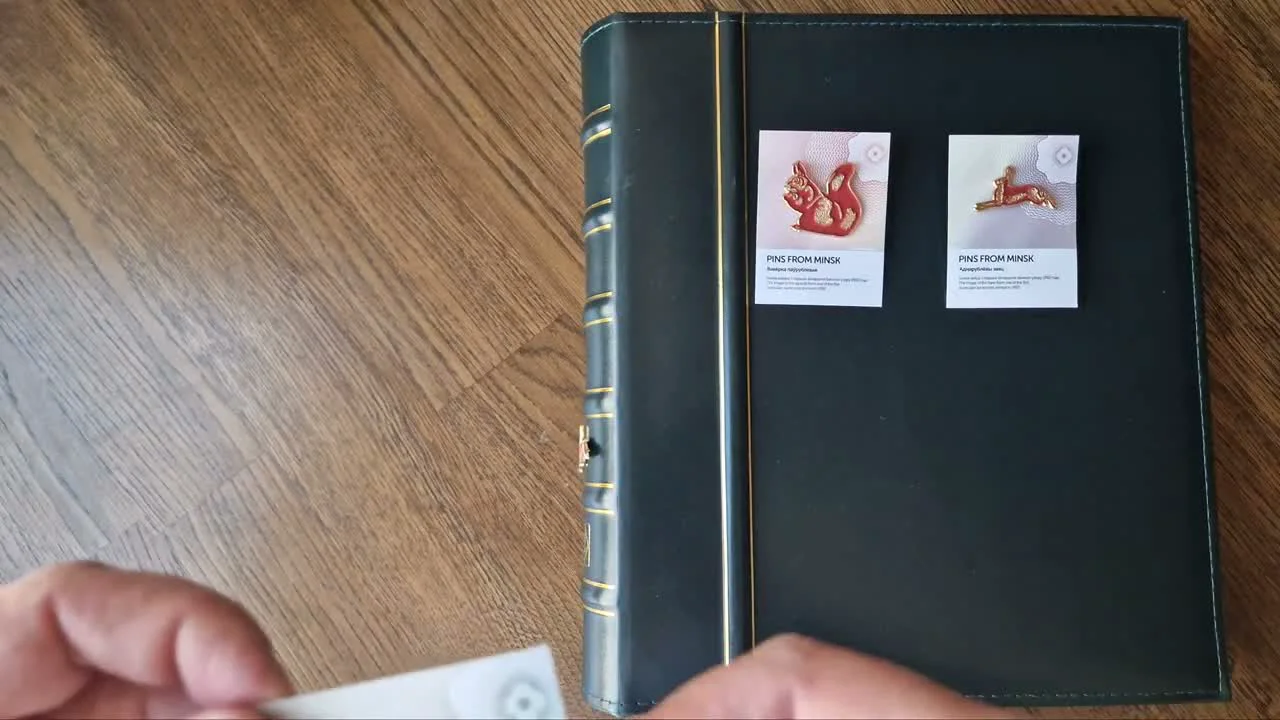
The core of the Republic of Belarus banknote collection is a 'Grande' format album. To identify the album, a special symbol is placed on its spine—a pin in the shape of a hare. This pin is part of the 'Pins from Minsk' series, which was released based on the motifs of the first Belarusian banknotes.
The entire series of pins includes images of animals that were featured on the 1992 banknotes. Four such pins are known to exist:
- Squirrel ('fifty-kopek note')
- Hare ('one-ruble note')
- Lynx ('ten-ruble note')
- Bison ('hundred-ruble note')
The images on the pins fully correspond to the drawings on the banknotes, making them a wonderful addition to a notaphilic collection and emphasizing its theme.
Philatelic Accompaniment
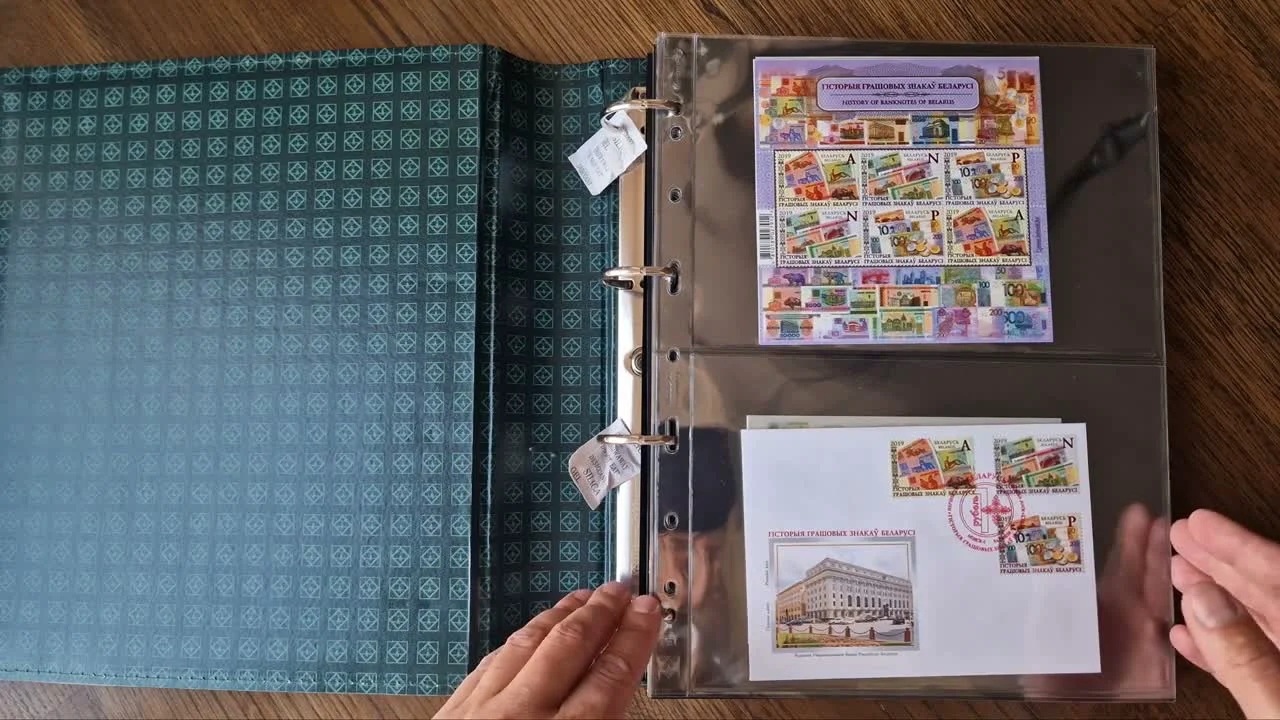
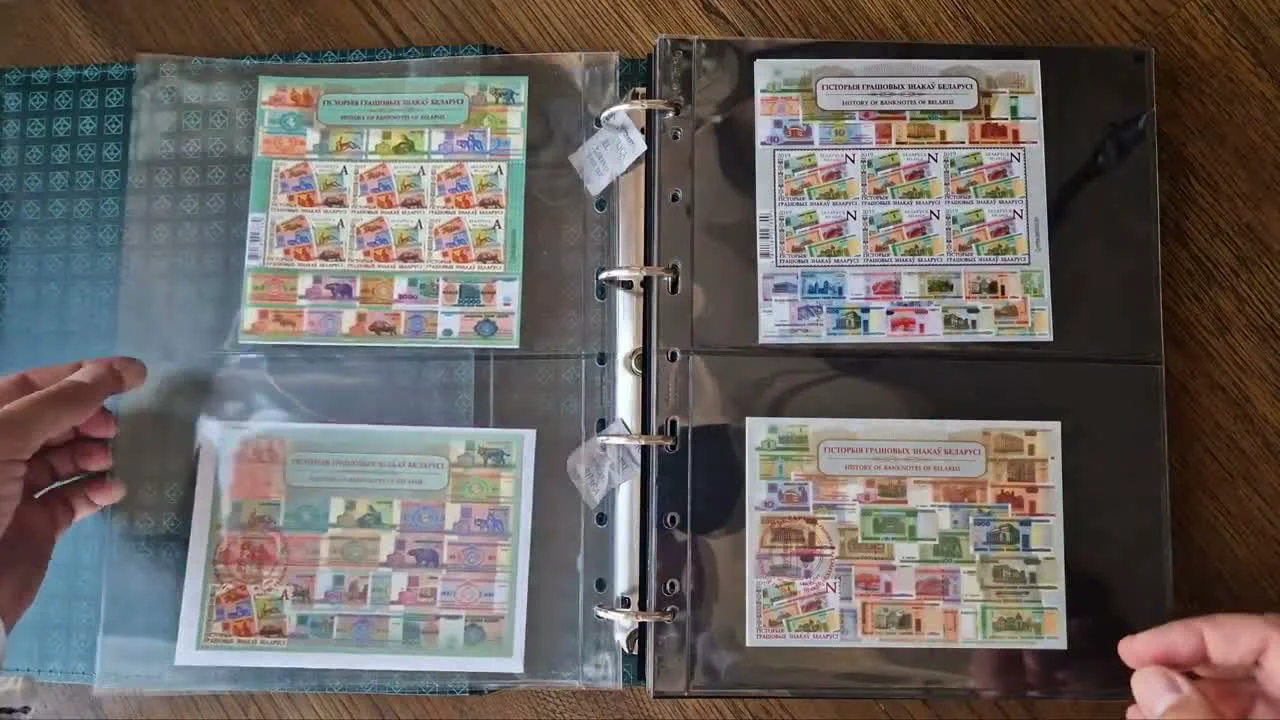
The collection is not limited to just banknotes. It also features philatelic material indirectly related to the history of Belarus's currency circulation. This includes, in particular, miniature sheets of stamps issued in 2019.
These stamps are dedicated to three main periods of Belarusian money:
- Banknotes of the 1990s (the so-called 'zaychiki').
- Banknotes of the 2000 series.
- Modern banknotes of the 2009 series (introduced in 2016).
In addition to the stamp sheets, thematic postcards and first-day covers were issued for each period. The print run for each postcard published by 'Belpochta' in 2019 was 3,000 copies. Such an addition allows for the creation of a more complete and multifaceted exhibition.
The First Banknotes — 'Zaychiki'
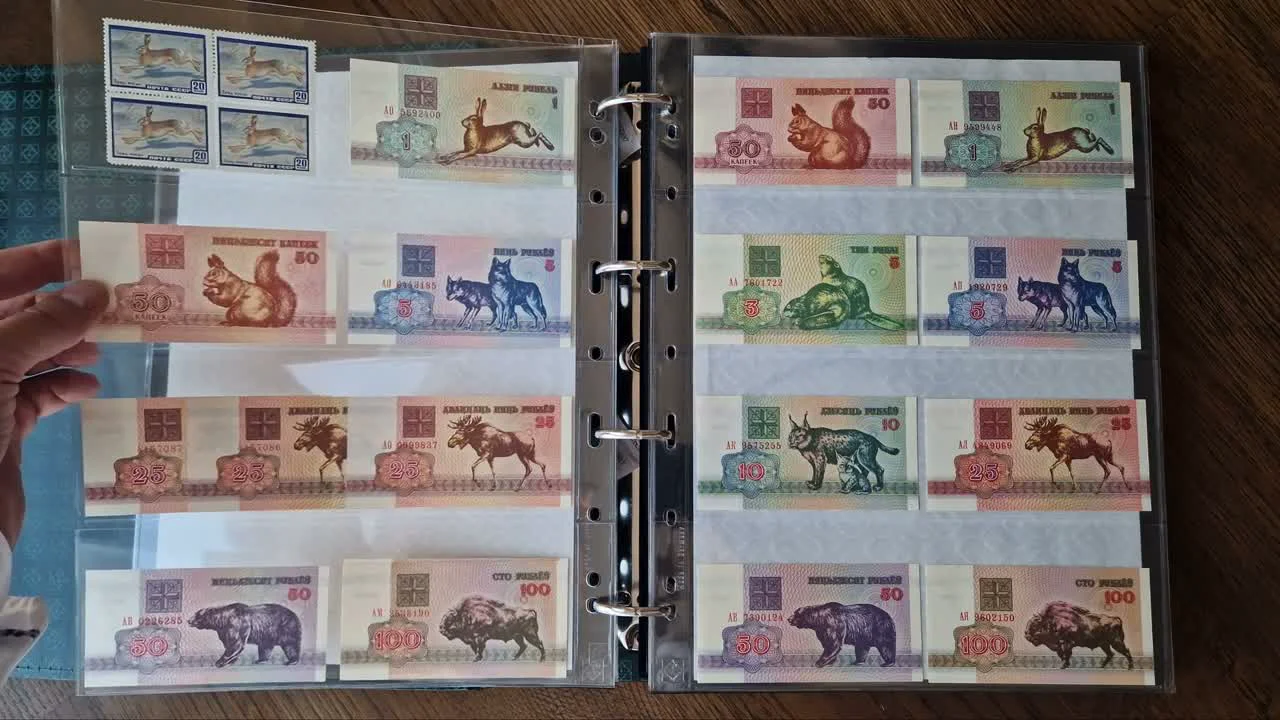
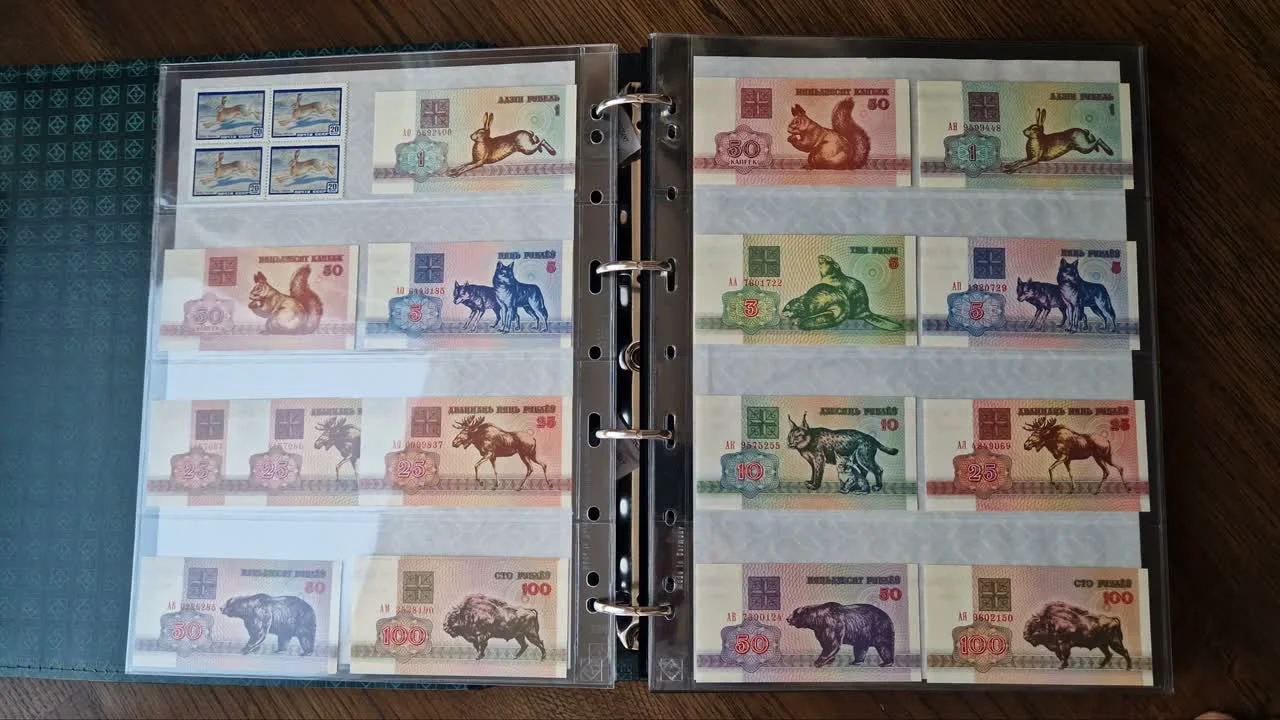
The central place in the 1990s collection is occupied by the first Belarusian rubles, popularly known as 'zaychiki' (little hares). This series got its name from the images of animals characteristic of Belarus's fauna. The right page of the spread presents the full denomination series of these banknotes.
The series includes banknotes from 50 kopeks to 100 rubles featuring the following animals:
- European hare (1 ruble)
- Squirrel (50 kopeks)
- Wolves (3 rubles)
- Beaver (5 rubles)
- Lynx (10 rubles)
- Moose (25 rubles)
- Bear (50 rubles)
- Bison (100 rubles)
These banknotes became a symbol of the early 90s and the formation of the national currency of independent Belarus.
'Zaychiki' Varieties: Watermarks and Printing Errors
| Watermark Type | Description |
| v1 | Vertical orientation, normal |
| v2 | Vertical orientation, mirrored |
| h1 | Horizontal orientation, normal |
| h2 | Horizontal orientation, mirrored |
In addition to the main set, the collection also features various banknote varieties. One area of collecting focuses on variations in the watermark's orientation. Due to peculiarities in the printing process, sheets of paper could be fed into the press differently, leading to the emergence of four types of watermarks.
The collection is almost complete with all known series and watermark variants. Only one item is missing: the 25-ruble note with the moose, which has a 'v2' type watermark.
Of particular interest is a rare printing error: 25-ruble banknotes that are missing the series letters and have only a serial number. The collection contains two such specimens with consecutive numbers, indicating they came from the same banknote stub.
High-Denomination Banknotes and Their Illustrations
With the rise of inflation in the 1990s, banknotes of higher denominations appeared: 200, 500, and 1000 rubles. Unlike the 'animal' series, their obverse sides featured architectural and urban motifs.
The reverse side of these notes featured the 'Pahonia' coat of arms, which was the state symbol of Belarus during that period. To better visualize this element of the collection, each banknote is supplemented with early stamps of independent Belarus depicting the white-red-white flag and the 'Pahonia' coat of arms.
Varieties of these banknotes also exist. For example, the 1000-ruble banknote of the 1998 issue varies by the type of security rectangle. The 500-ruble banknote of the AA series has also become quite rare over time.
The Hyperinflation Period: From Thousands to Millions
| Denomination | Variety Feature |
| 20,000 rubles | Vary in the width of the tower on the reverse side. |
| 50,000 rubles | Differ in the width of the watermark and the type of security thread. |
| 100,000 rubles | Three variants exist, differing by the type of security thread. |
| 5,000,000 rubles | Have two variants based on the direction of the security thread (top to bottom or bottom to top). |
The 1990s banknote series is concluded by notes of extremely high denominations that appeared during the hyperinflation period. The collection includes banknotes of 500,000, 1,000,000, and 5,000,000 rubles. Some of these also have known varieties that are of interest to collectors.
Sheets of original watermarked banknote paper were used as a background for the pages with the banknotes. Subsequently, in 2008, the remaining stock of this paper at the Goznak factory was used to print insurance policies for the 'Ingosstrakh' company, making these sheets an interesting artifact of the era.