
The Crossover Experiment: PCGS vs. NGC
To study the comparability of grades from different grading companies, an experiment was conducted to cross over coins from PCGS slabs to NGC slabs. For this purpose, coins were specially selected that met specific criteria regarding their year of issue and original grade.
As part of the experiment, four coins previously graded by PCGS were sent for regrading to NGC in Munich. The goal was to get an objective picture of how the grading standards of the two leading companies compare and to confirm or refute existing market opinions.
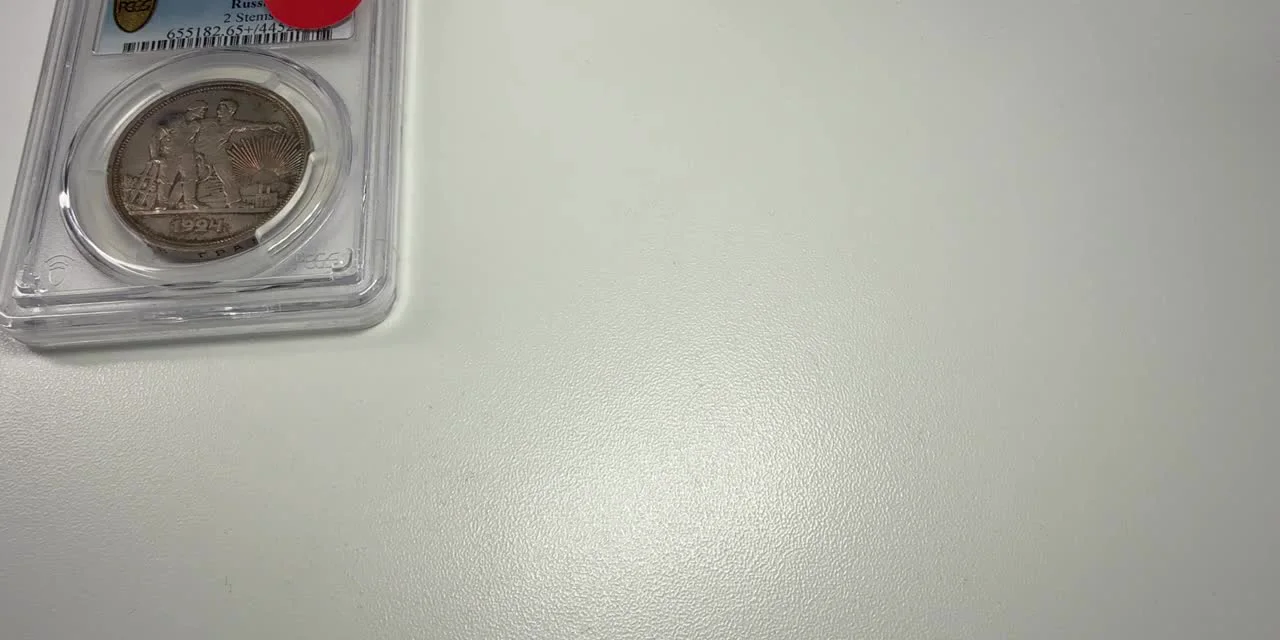
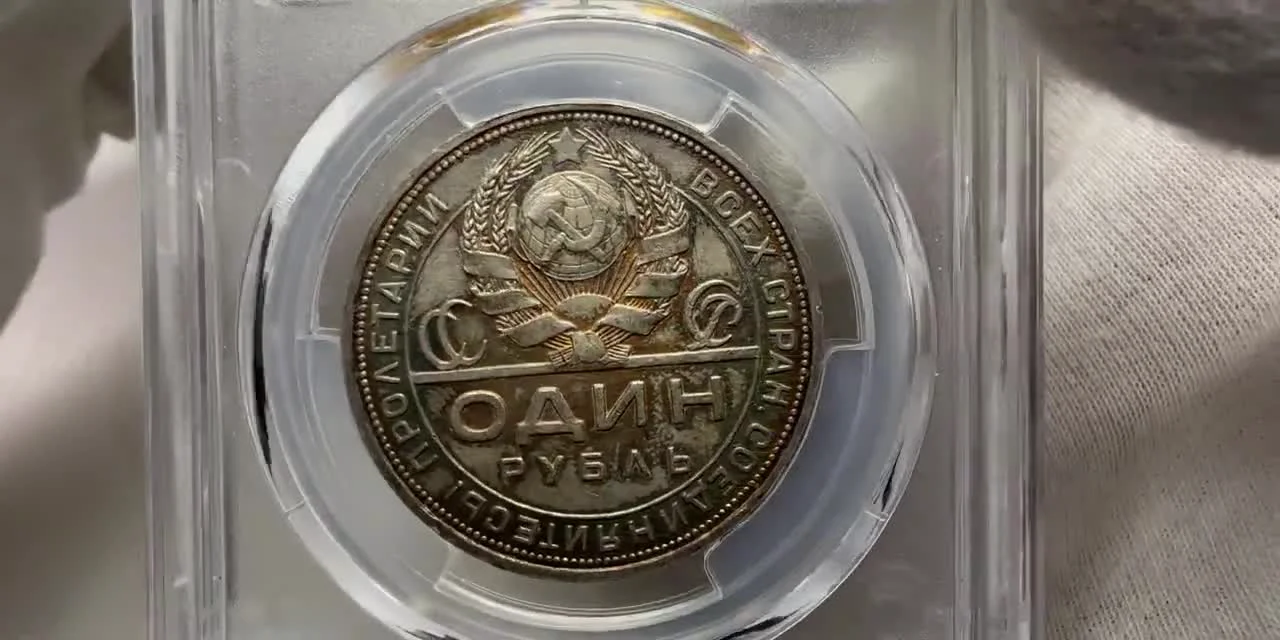
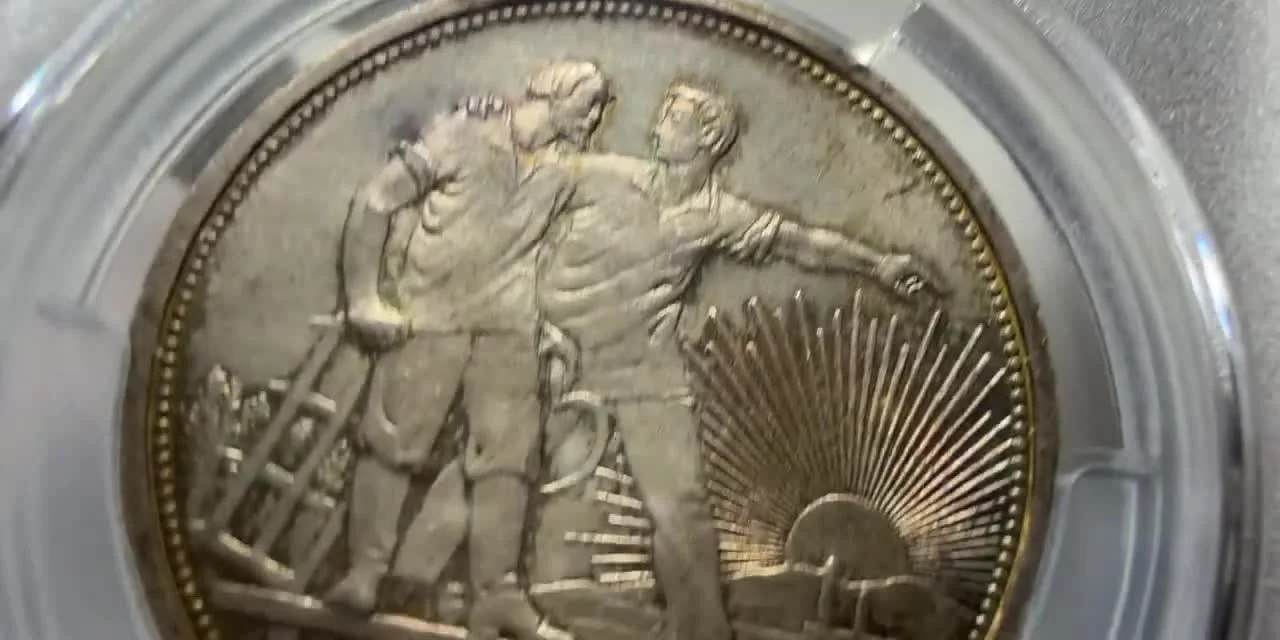
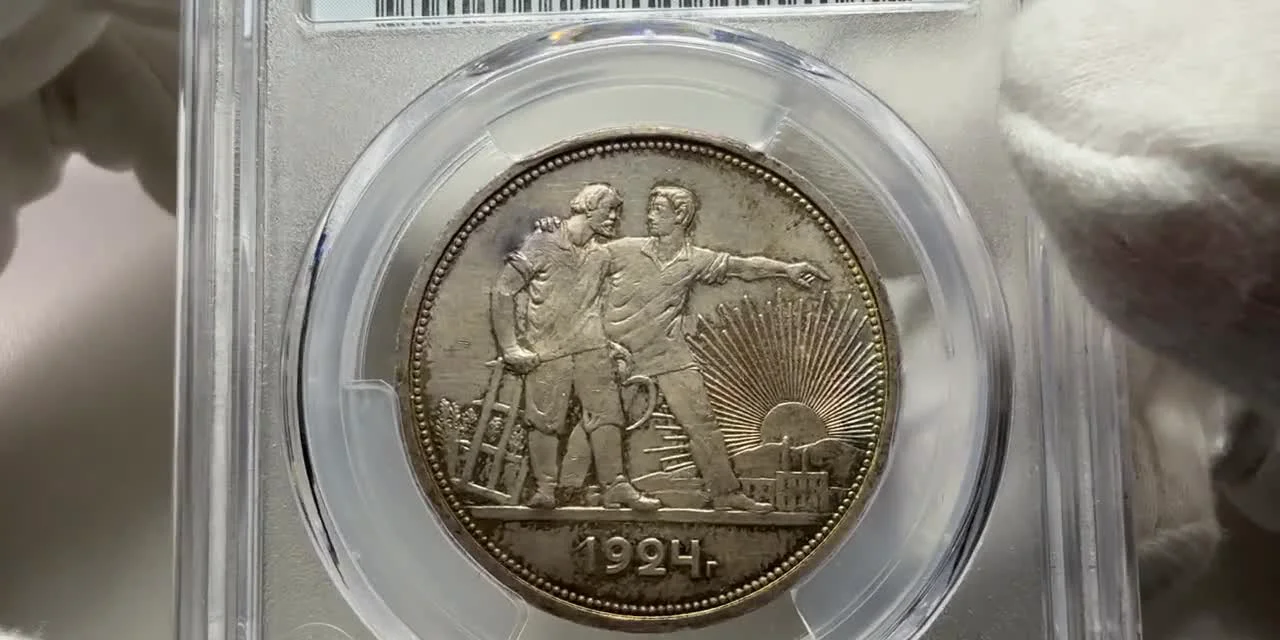
Case #1: 1924 Ruble (PL) Graded MS65+
The first coin in the experiment was a 1924 Ruble with the initials PL, graded PCGS MS65+. When sent to NGC, a sticker was placed over the label to hide the original grade from the expert and ensure impartiality. However, the grade is also indicated in the serial number, which calls into question the complete anonymity of the evaluation.
This coin did not cross over and was returned in its old slab. This means that NGC experts did not agree with the MS65+ grade. There was a prevailing opinion among collectors that this coin would never receive such a high grade upon re-evaluation, which was confirmed by the experiment.
Market Perception and Collector Consensus
Among collectors of Soviet and Russian Imperial coins, a consensus has formed that favors NGC slabs. There is a belief that PCGS grades coins less strictly, while NGC experts are considered more professional. As a result, coins in NGC slabs often command higher prices on the market.
Many collectors don't even look so much at whether the coin itself matches the stated grade, but rather at the grading company's brand on the slab. This creates a situation where the NGC logo itself adds value to the coin in the eyes of buyers.
The Evolution of Grading Standards: Old and New Slabs
It's important to understand that coin grading standards are not static and change over time. Collectors often divide slabs into different periods. There is a belief that old PCGS slabs from the 1990s contain coins with "true," conservative grades.
At the same time, in recent years, grading standards have become noticeably stricter. Coins that might have received an MS66 or MS67 grade in the past now struggle to reach MS65. This tightening is largely due to the influence of a new independent grade verification company.
The Influence of CAC on the Market
| CAC Sticker | Meaning |
| Green | The coin meets the standard for its grade. |
| Gold | The coin exceeds the standard for its grade (undergraded). |
The American company CAC (Certified Acceptance Corporation), founded by John Albanese, who was a co-founder of both PCGS and NGC, has had a significant impact on the tightening of grading standards. Initially, CAC focused on verifying already graded coins, applying special stickers ("beans") to the slabs.
CAC's high authority and strict approach forced NGC and PCGS to review and tighten their own grading criteria to meet new market realities. This has led to modern grades becoming more conservative.
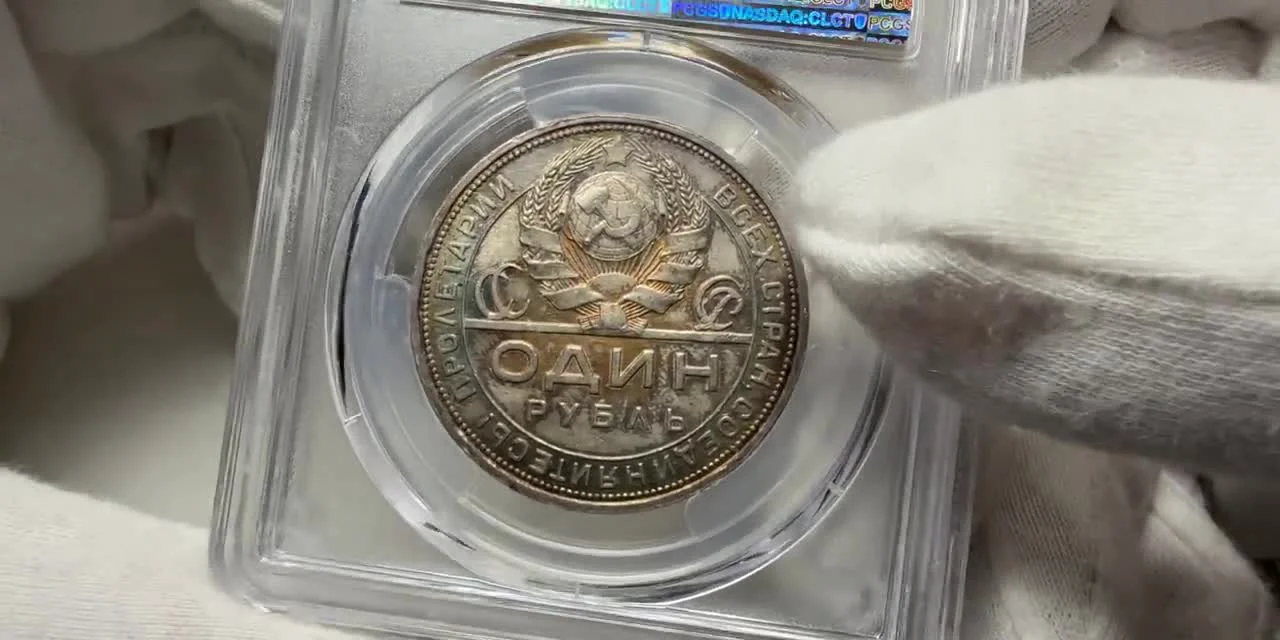
Case #2: 1924 Ruble NNR MS66
To illustrate the tightening of standards, we can look at another example of a 1924 Ruble. It was previously in an NNR slab with a grade of MS66. After regrading at NGC, the coin only received an MS65. This shows that coins graded even 5-10 years ago may not confirm their grade under today's stricter criteria.
There is an informal "two-second rule" that some graders use. If defects are not immediately noticeable during a quick inspection (one second per side), the coin can qualify for an MS66 grade. If you need to look closely to find flaws, it's more likely an MS65.

Case #3: Successful Crossover of a 1913 Ruble
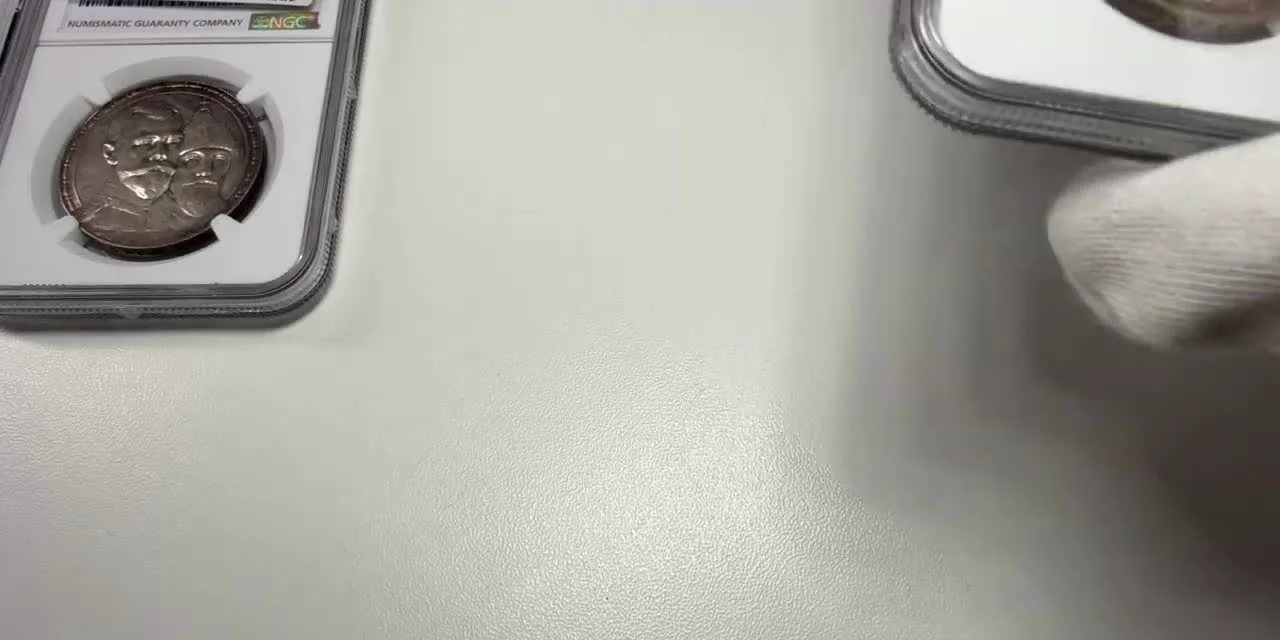
The next coin in the experiment was a 1913 Ruble commemorating the 300th anniversary of the House of Romanov. The coin was in a PCGS slab with a grade of MS64 and a serial number indicating a recent grading date (2023-2024). When sent to NGC, an equivalent grade of MS64 was requested.
The crossover was successful: the coin received the same MS64 grade from NGC. This case demonstrates that coins graded by PCGS under modern, stricter standards are highly likely to confirm their grade at NGC. This turned out to be financially advantageous: the coin was purchased in a PCGS slab for 1400 euros, and after being crossed over to NGC, its market value exceeded 2500 euros.
Case #4: 1921 Poltinnik AG
A 1921 Poltinnik (AG) showed a similar result. It was also in a modern PCGS slab with a grade of MS64. After being sent for crossover to NGC, the coin confirmed its grade and received an MS64.
This example further proves that coins from "fresh" PCGS slabs, whose serial numbers start with a 5 or higher (corresponding to roughly 2021-2024), have a good chance of a successful crossover to NGC. In this case, there was no financial gain, as the coin's price is roughly the same in both slabs, but the experiment confirmed the hypothesis about the comparability of modern standards.
Case #5: Risky Crossover of a 1922 Poltinnik MS66
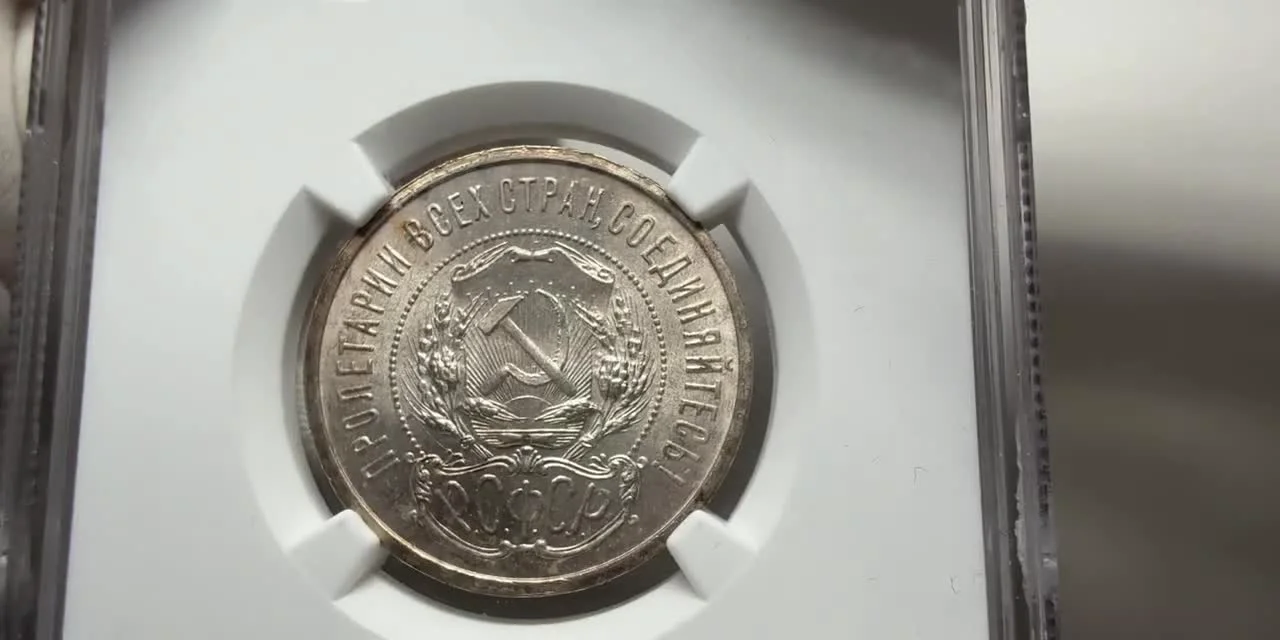
The most interesting and risky crossover was a 1922 Poltinnik (AG) with a PCGS grade of MS66. This is the rarest type of Soviet poltinnik, and in such a high grade, the coin holds significant value (a price of around 4000 euros was offered).
Despite the risk, the coin was sent to NGC and successfully confirmed its grade, receiving an MS66, which is the highest grade (Top Pop) for this type in the NGC database. This success significantly increased the coin's value, which can now be estimated at 10,000-15,000 euros. Interestingly, this coin was originally purchased for 500 rubles, which shows a colossal increase in its value over a few years.
Conclusions and Recommendations for Collectors
The experiment's results show that crossing over coins from PCGS to NGC can be successful but requires a balanced approach. The key factor is the grading date at PCGS, which can be roughly determined by the slab's serial number.
Several strategies can be highlighted for collectors:
- Buy coins directly in NGC slabs if you prefer this company.
- Look for attractive coins in "old" PCGS slabs (with serial numbers not starting with 5, 6, or 9), which may be undergraded, and send them for crossover.
- Buy coins in "fresh" PCGS slabs (with serial numbers starting with 5 or higher), as they are highly likely to confirm their grade at NGC, which can be financially beneficial due to the difference in market price.

