A Rare Specimen or a Fake? The 50 Kopek Coin of 1927
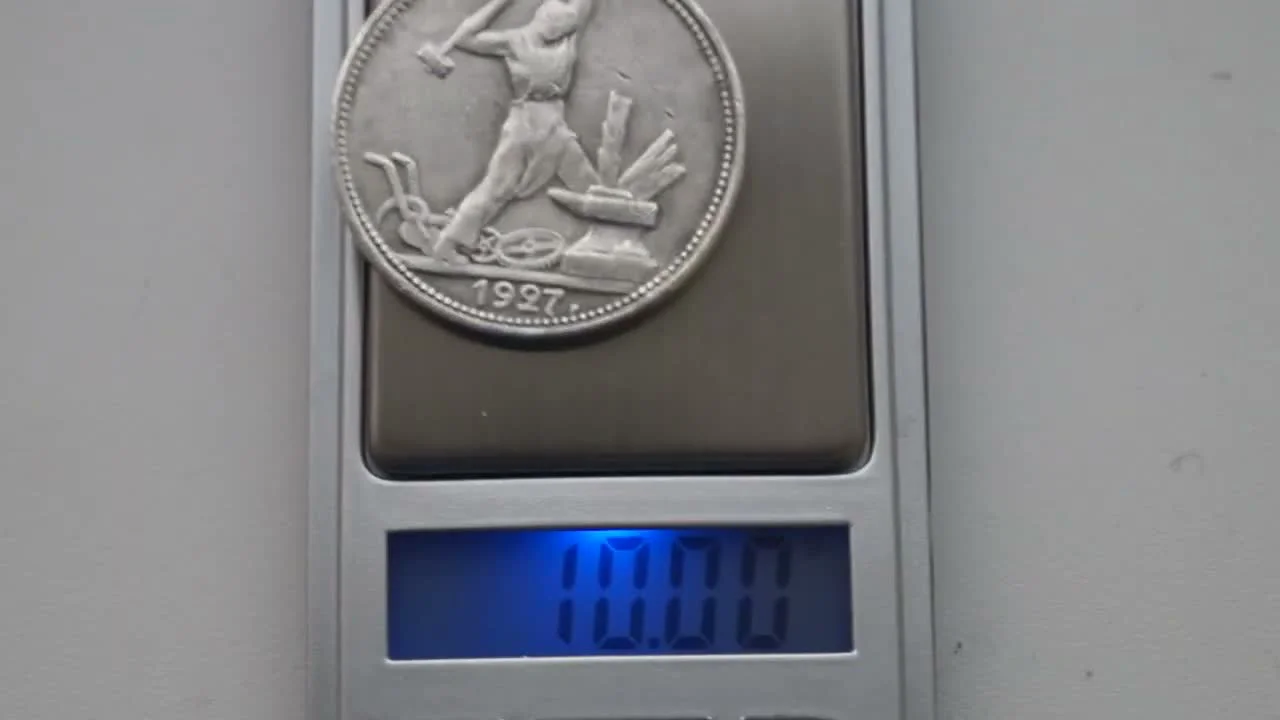
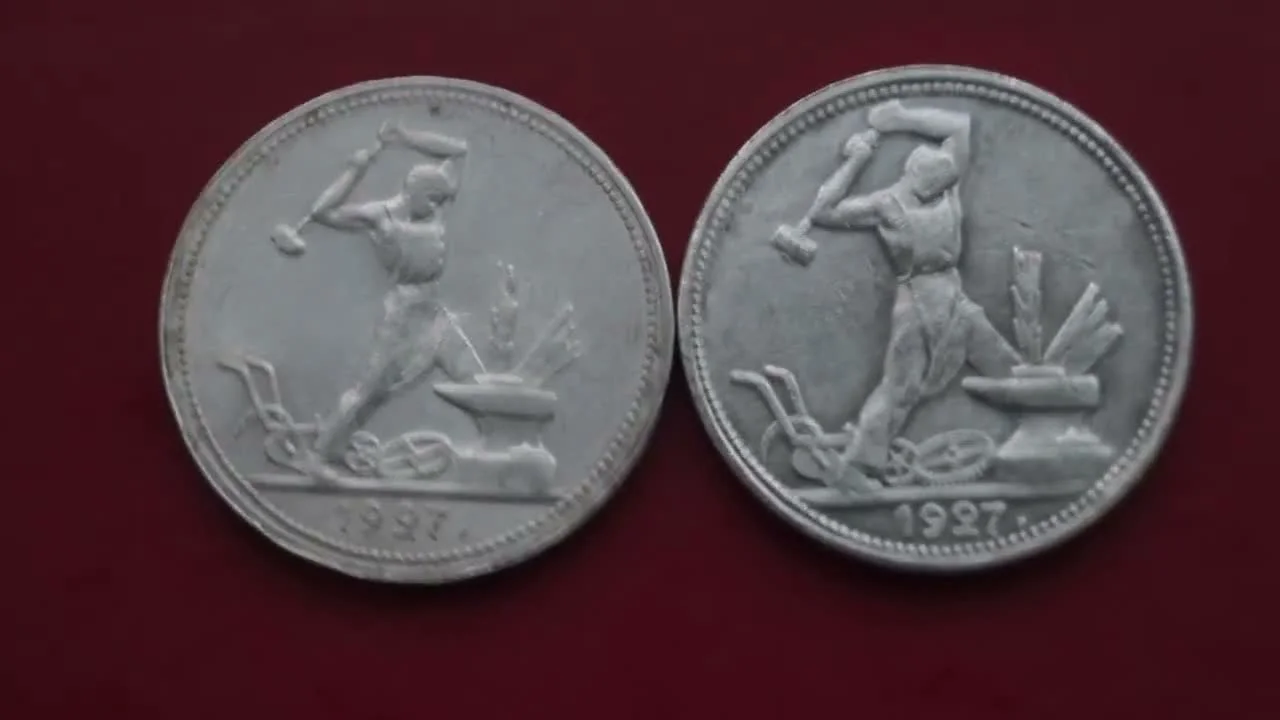
The focus is on a 1927 silver coin with a denomination of 50 kopeks. Its obverse depicts the USSR coat of arms and the inscription 'one poltinnik,' while the reverse shows the figure of a worker with a hammer. A special feature of this specimen is its smooth edge, meaning there is no inscription on the coin's rim.
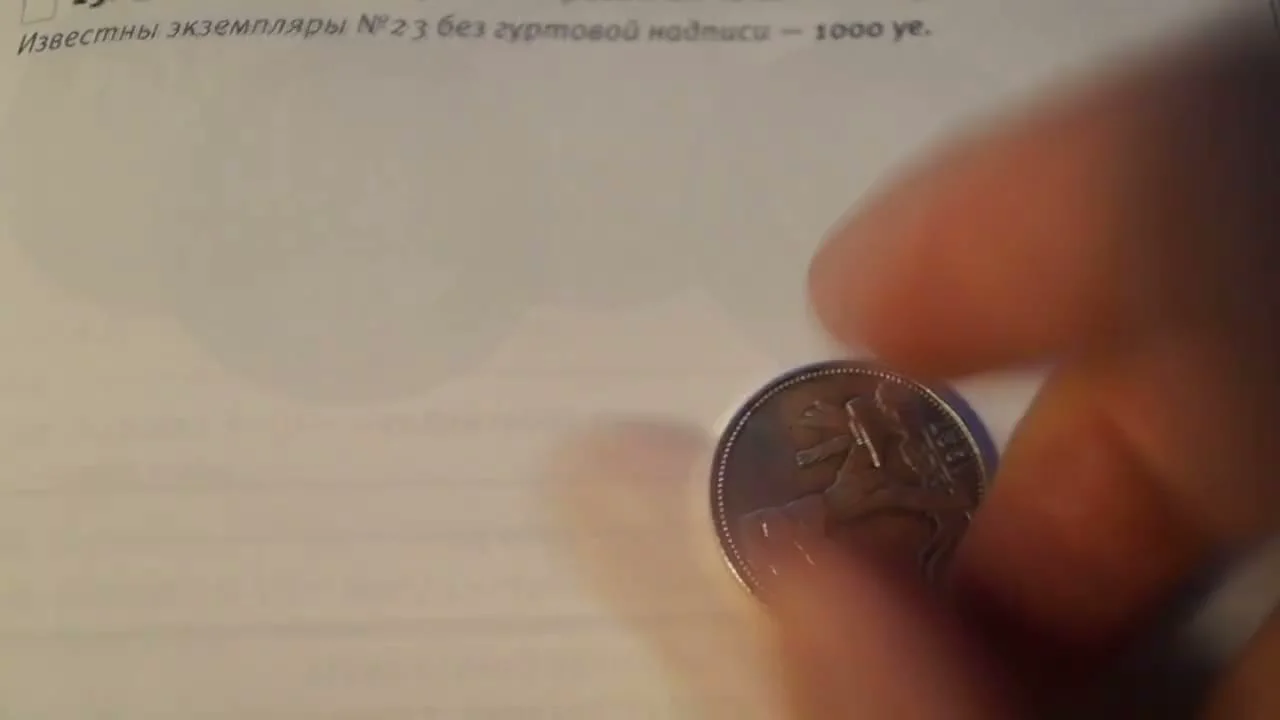
According to the Fedorin catalog, coins from this year without an edge inscription are rare. Their catalog value is estimated at 1000 conventional units. Such a high potential value makes determining the authenticity of this specimen critically important.
Initial Tests: Magnet and Stability Check
The first and simplest way to check a silver coin is with a magnet test. Real silver is not magnetic. When a magnet was brought near the 1927 50 kopek coin under examination, there was no reaction. This means the alloy is non-magnetic, and the coin passes the first check.
The next method is to check the perpendicularity of the edge. It is believed that a well-struck coin should stand steadily on its edge. When placed on a flat surface, both the genuine and the examined poltinniks demonstrated good stability. Thus, this stage of the inspection was also passed.
Weighing and Sound Test: The First Doubts
One of the key parameters is weight. The standard weight of a silver poltinnik from that period is exactly 10 grams. Weighing on a precise electronic scale showed that both the known genuine specimen and the coin in question weigh 10.00 grams. No discrepancies were found in this parameter.
However, the sound test raised serious doubts. A genuine silver coin, when lightly struck, produces a characteristic thin, high, and ringing sound. The sound of the coin under examination was noticeably duller and lower. Such a difference in acoustic properties is a strong argument that the coin might be a counterfeit.
Edge Analysis: The Key to Uncovering the Manufacturing Technology
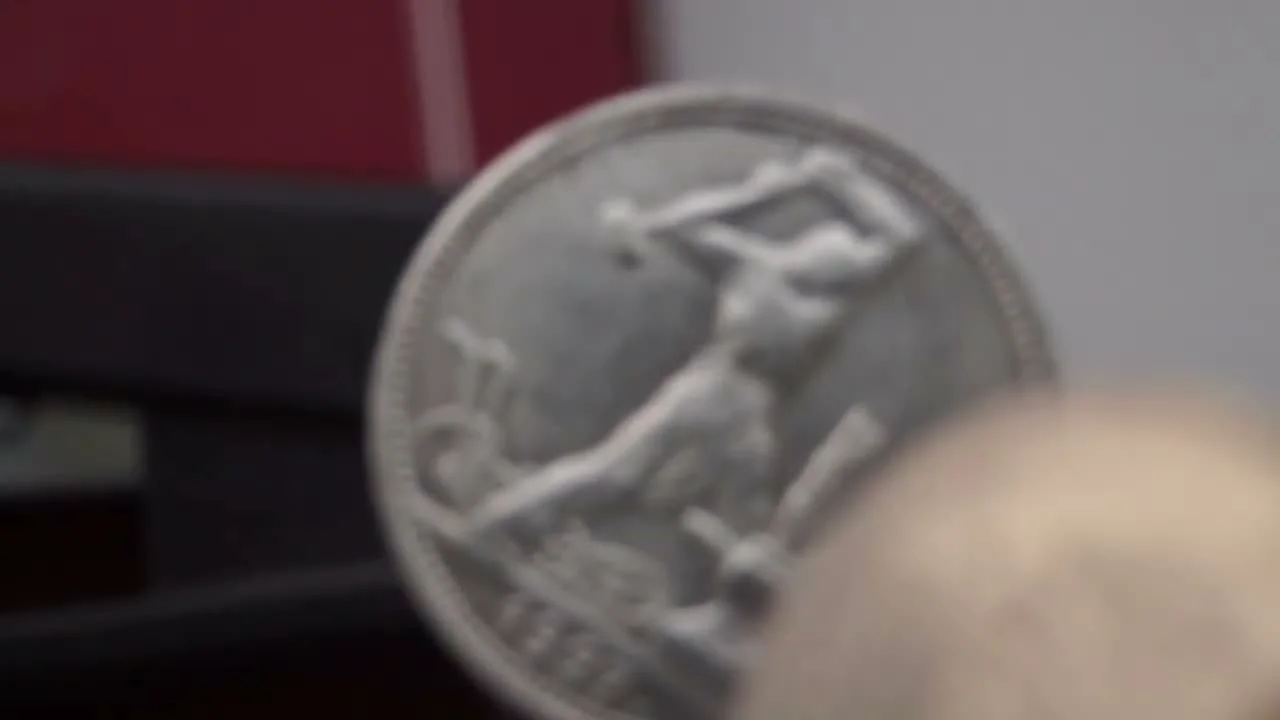
The most reliable way to detect a counterfeit is to compare its details with a known genuine specimen. Upon close examination of the edge (rim) of the two coins, a major difference is revealed. The genuine coin has a sharp, perpendicular edge, whereas the fake one is rounded, as if 'smoothed over'.
This edge shape indicates the manufacturing technology. While genuine coins are struck, which creates sharp edges, rounded edges are characteristic of casting. This feature almost unequivocally indicates that the coin in question is a copy, not an original mint product.
Die Comparison: Identifying Differences in Details
| Element | Counterfeit Coin | Genuine Coin |
| Date '1927' | The digits are wider and more crudely executed. | The digits are thin and clearly defined. |
| Worker's Hammer | The shape of the hammer is wide, similar to the design of 1924 coins. | The handle of the hammer is thin, and the hammer itself has a different, more elegant shape. |
| Inscriptions on the Obverse | The letters are wider and appear slightly blurry. | The letters are thinner and have sharp outlines. |
Besides the edge, a detailed comparison of the images on the obverse and reverse also reveals numerous inconsistencies. These differences confirm that the coin is a counterfeit.
These discrepancies in the die details, especially in the design of the hammer and the rendering of the date's digits, are irrefutable proof of forgery.
Verdict: A High-Quality Counterfeit with Silver Plating
Despite passing the weight and non-magnetic tests, the coin is a counterfeit. The decisive factors were the dull sound, the rounded cast edge, and numerous differences in the die details on both sides.
Subsequent laboratory analysis showed that the coin's core is made of a different metal coated with a layer of silver. This explains why it passed some tests successfully. This case demonstrates that determining the authenticity of coins requires a comprehensive analysis of all characteristics, not just checking one or two parameters.