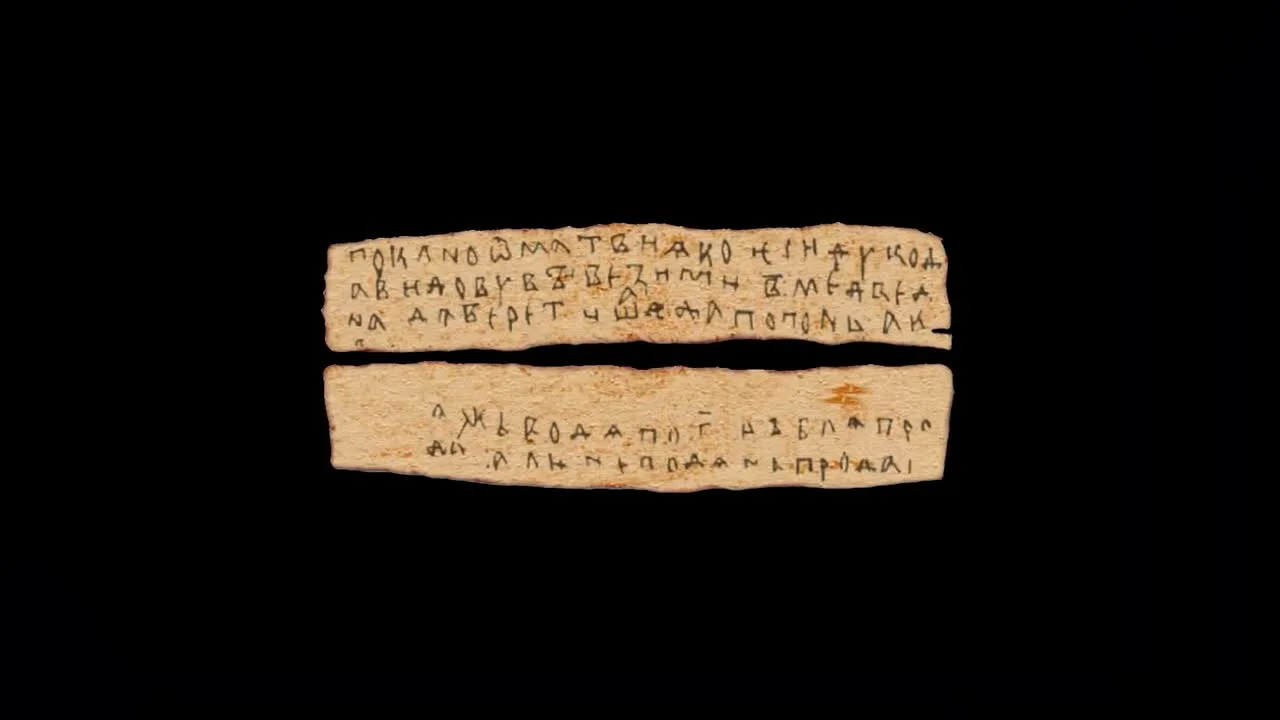

The First Mention of the Ruble
| Letter | Name | Numerical Value |
| А | Az | 1 |
| В | Vedi | 2 |
| Г | Glagol | 3 |
The history of the ruble spans almost 7.5 centuries. It appeared in Novgorod in the last quarter of the 13th century, and the first written mention of it dates back to 1281, found in one of the birch bark manuscripts.
In those times, letters of the Cyrillic alphabet were used to write numbers. For example, to indicate a number, a special mark called a titlo was placed above the letter. Thus, in the manuscript, one can make out not only the word 'ruble' but also the number three, denoted by the letter 'Glagol' (Г) with a titlo above it.
This method of writing made it possible to distinguish numbers from letters in the text and was commonly accepted for calculations and documentation.
The Grivna — The Progenitor of the Ruble
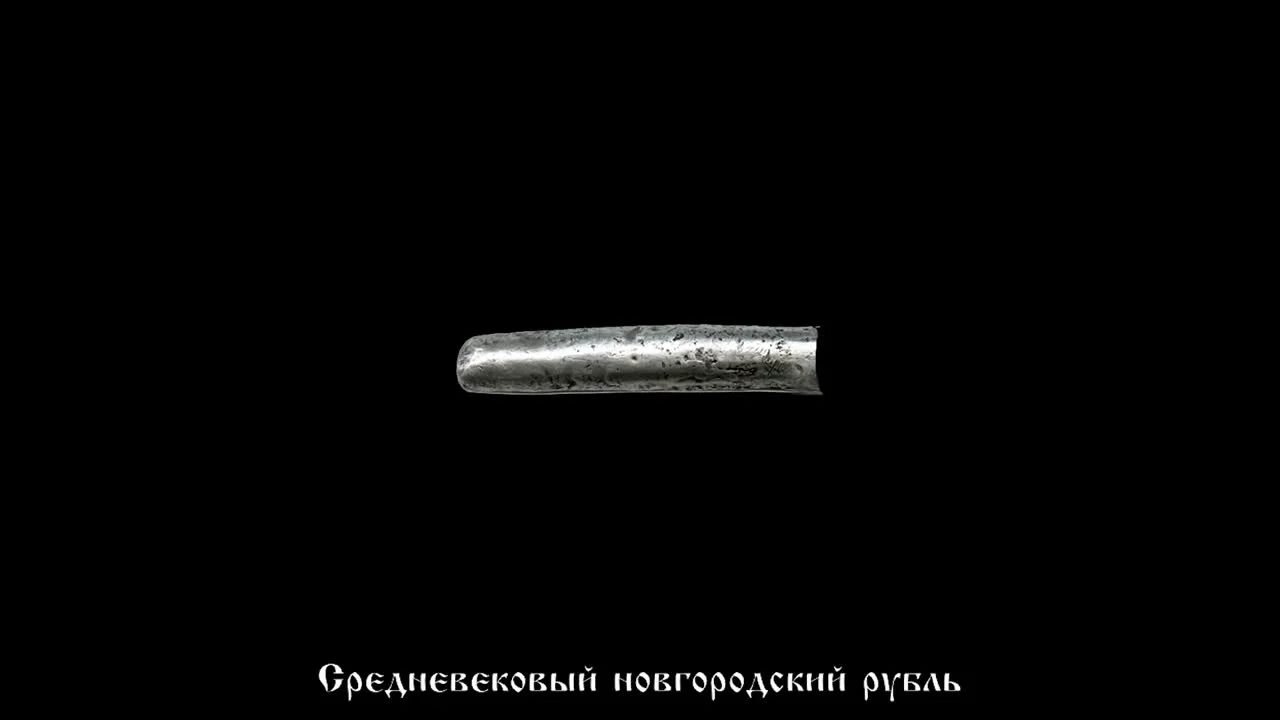
Initially, the ruble was not a coin in the usual sense. It was a chopped-off piece of a silver ingot known as a grivna. The name of the new monetary unit came from the Russian word 'rubit' (to chop).
The grivna itself was a long, narrow silver ingot weighing 204.756 grams. It served not only as a means of payment but also as a unit of weight. For example, a pood in those days was divided not into 40 funts (pounds), but into 80 grivnas. The funt as a measure of weight would only appear in Russia in the 18th century and would be equal to two grivnas.
Since the grivna was not always chopped uniformly, the weight value of the ruble was not initially fixed. Depending on the size of the piece, a ruble could be 'long' or 'short.' This is the origin of the famous saying 'to chase the long ruble' (meaning to go after easy money).
The Value of Ancient Rus' Money
Even a chopped-off piece of a grivna in the 13th-14th centuries was a small fortune. One could buy a cow for a short ruble, and a whole horse for a long one.
For everyday transactions, smaller units were used. The prices of most goods were measured in 'belkas,' which were then called 'vekshas' or 'veveritsas.' These were not squirrel pelts, but small pieces of silver weighing 0.682 grams, which was 1/300th of a grivna.
There was also a larger monetary unit — the kunitsa, or 'kuna.' It was also a piece of silver weighing 4.095 grams. Interestingly, until recently, the 'kuna' was the name of the national currency of Croatia.
The Appearance of the 'Denga' and 'Novgorodka'
For a long time in Rus', money was not called 'dengi' — the word 'penyazi' was used to refer to it. The situation changed in 1420 when Novgorod began to mint the first coin called the 'denga.'
This coin's silver content was 1/216th of the Novgorod grivna, and its weight was 0.948 grams. When these coins began to reach Moscow, they became known as 'novgorodkas.'
Novgorod's economic dominance caused dissatisfaction among the Moscow princes. Despite the city's capture by Ivan III in 1478, Novgorod remained the main center for money issuance for a long time for the part of Rus' that was not part of the Grand Duchy of Lithuania.
The Monetary Reform of Elena Glinskaya and the Birth of the Kopek
The situation changed radically with the rise to power of Elena Glinskaya, the widow of Vasili III. She carried out a financial reform, during which the minting of the Moscow denga began. This coin was half the weight of the new Novgorod denga of the 1535 model.
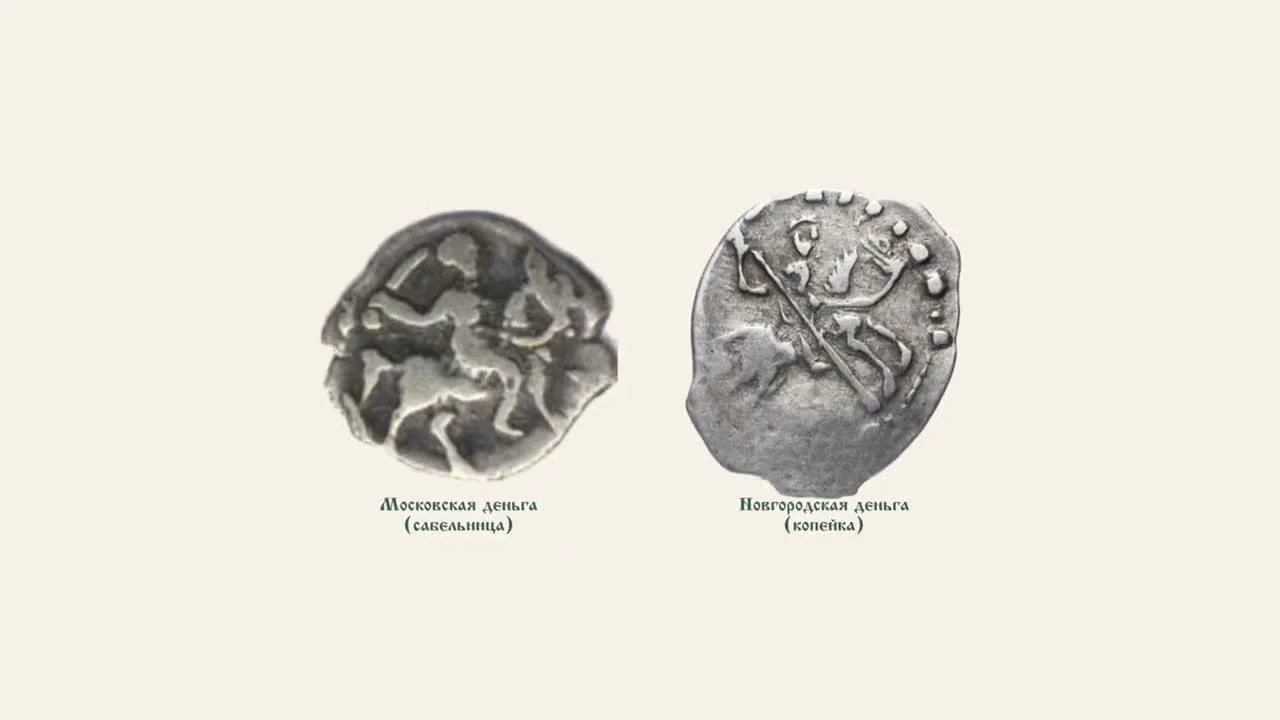
To distinguish between the two coins with the same name, they began to be named after the image on them:
- Moscow denga: depicted a horseman with a saber, received the popular name 'sabelka' or 'sabelnitsa'.
- Novgorod denga: depicted a horseman with a spear (kopyo), it came to be called 'kopek'.
During this same reform, the Moscow ruble with a fixed weight value also appeared. It was equal to 100 Novgorod dengas (kopeks) or 200 Moscow dengas and weighed about 68.25 grams.
The Establishment of a Unified Monetary System
After the final defeat of Novgorod by Ivan the Terrible in 1570, the minting of Novgorod coins ceased. Moscow became the sole center of issuance, and kopeks began to be minted there. From that moment, a unified monetary system was established in Rus'.
The system was based on the following units:
- Kopek — the main monetary unit.
- Denga — a fractional coin, equal to 1/2 kopek.
- Polushka — the smallest coin, equal to half a denga or 1/4 kopek.
This system proved to be very stable. It was maintained even during the Time of Troubles when the country suffered from famine. In this form, with the polushka as a quarter of a kopek, the monetary system existed until 1917.
Gold Kopeks and the First Ruble Coin
In 1610, Tsar Vasili Shuisky, having exhausted his silver reserves to pay Swedish mercenaries, was forced to mint coins from gold. This is how gold kopeks and dengas appeared. Since gold was 10 times more expensive than silver, their purchasing power was correspondingly higher.
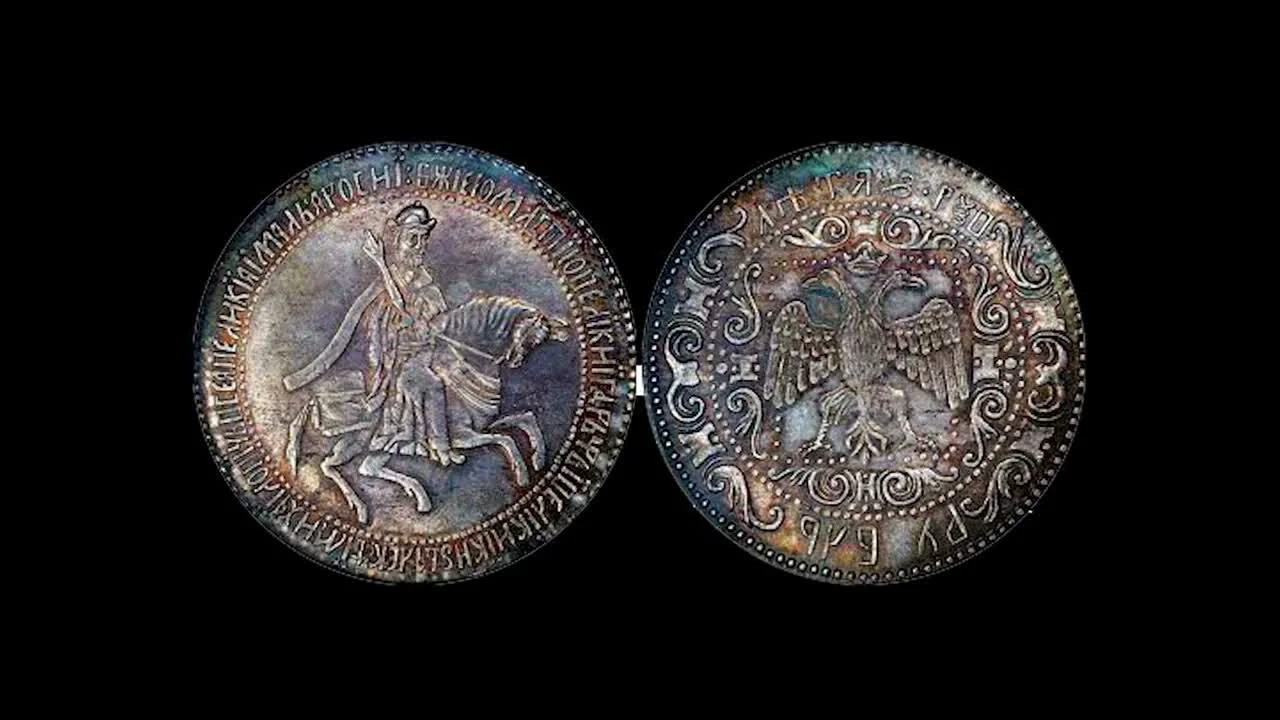
The very first coin with the denomination 'ruble' was minted in 1654 under Tsar Alexei Mikhailovich. However, it was in circulation for no more than a year. The population quickly discovered that it contained less silver than one hundred individual kopeks — in fact, its real value was only 64 kopeks.
The word 'kopek' itself remained a popular name and first appeared on a coin only in 1704, during the reign of Peter I.
