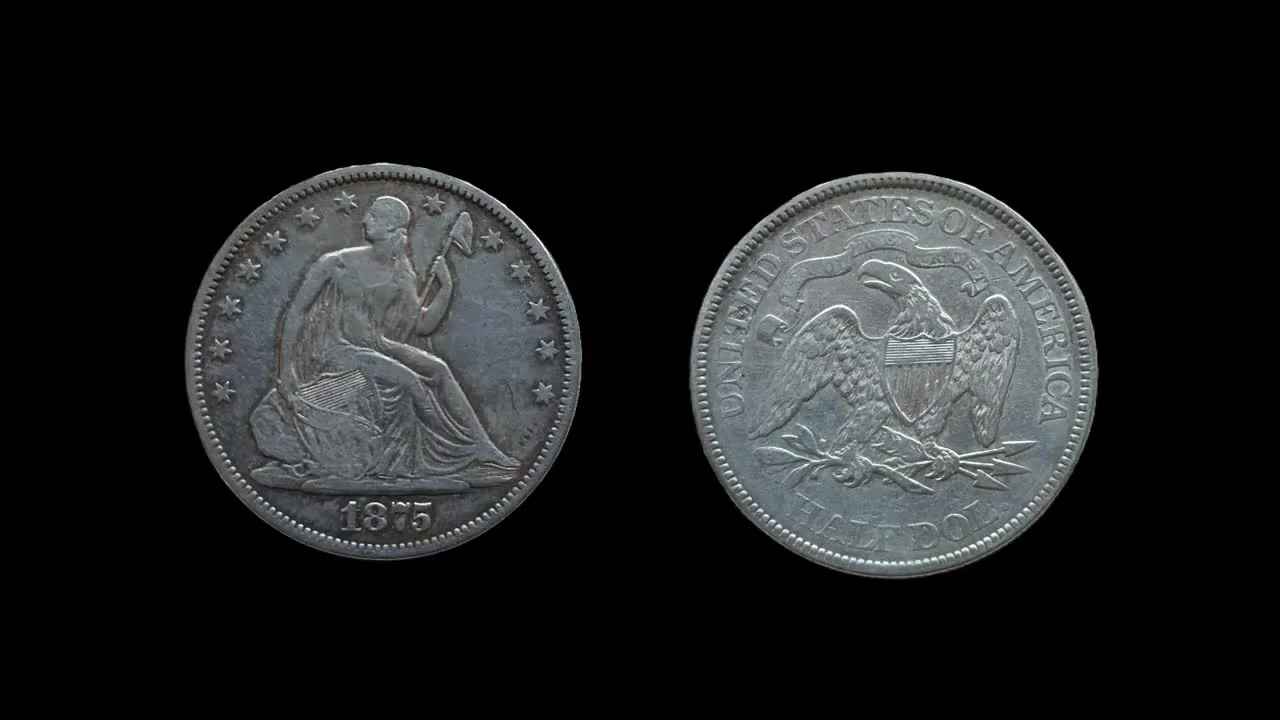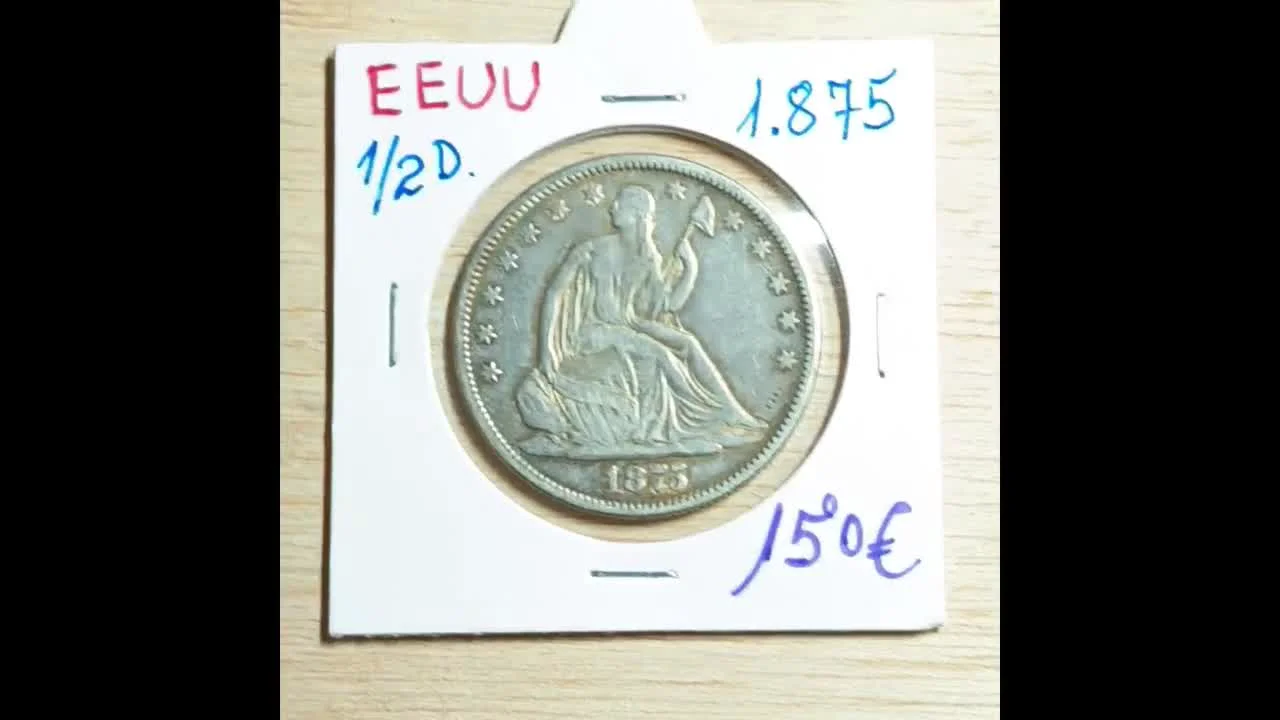

Acquisition and Initial Appraisal
A 1875 US 50-cent coin, known as the 'Seated Liberty,' has been added to the collection. The piece was acquired at a numismatic fair in Valencia. The initial price was 150 euros, but after bargaining, the coin was purchased for 130 euros.
The main task is to analyze the coin for authenticity, determine its condition (grade), and ascertain whether the purchase price was fair. This process involves both a historical overview and a detailed physical examination.
Historical Context and Purchasing Power
| Good/Service | What 50 Cents Could Buy |
| Coffee | 2 pounds |
| Eggs | 2 dozen |
| Haircut | 2 visits to the barbershop |
| Transportation | 10 trips on public transport |
| Entertainment | 1 theater ticket |
In 1875, a half dollar was a significant amount, comparable to $15-18 today. With this money, one could make a series of purchases that clearly demonstrate its value in that era.
This purchasing power highlights that 50 cents was a substantial coin for daily transactions, not just small change.

The 'Seated Liberty' Series: Design and History
Coins of the 'Seated Liberty' series were minted from 1839 to 1891. This design is the longest-running in the history of American silver, valued by collectors for its stability, recognizability, and 19th-century aesthetics.
The obverse depicts an allegorical figure of Liberty seated on a rock. In her right hand, she holds a shield inscribed with 'LIBERTY,' and in her left, a pole with a Phrygian cap, a symbol of freedom. The figure is surrounded by 13 stars, symbolizing the original US states.
- Dimes (10 cents)
- Quarters (25 cents)
- Half Dollars (50 cents)
- Dollars

Variations and Collectible Features
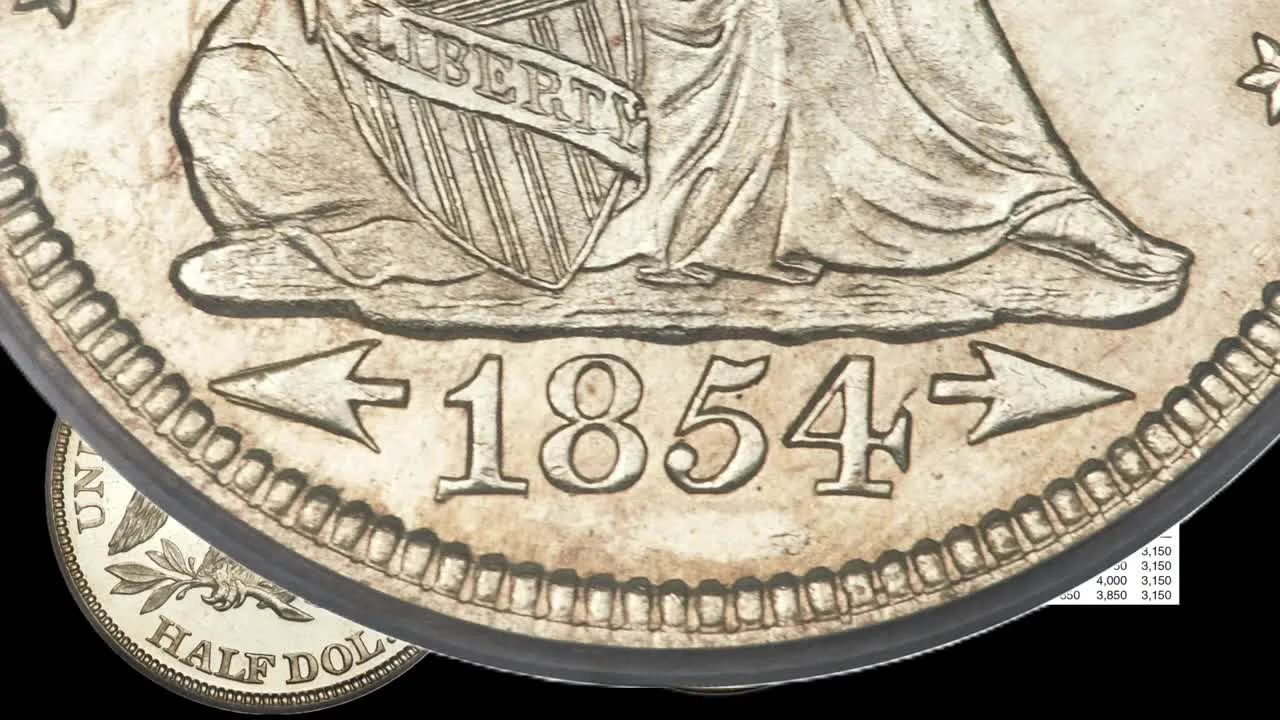
Over the years of its mintage, the coin's weight changed from 13.3 to 12.5 grams. These changes were indicated by adding arrows on either side of the date on the obverse. The arrows were present during the periods 1853–1855 and 1873–1874. The 1875 coin does not have arrows.
Starting in 1878, the mintage of half-dollar coins began to decline as the US Mint focused on producing silver dollars. Therefore, coins issued after this date are considered rarer and are more valuable.
Collecting the entire series by year is a challenging task. There are both common dates and very rare specimens, such as the 1853-O without arrows or the 1878-S. Due to extensive circulation, most coins are heavily worn, and finding examples in high grades (XF or AU) is quite difficult.
Assessing the Condition of the 1875 Coin
To determine the coin's condition (grade), specialized literature is used, such as the book 'Photograde' by James F. Ruddy. According to this guide, for a 'Fine' (F-12) grade, the word 'LIBERTY' on the shield must be fully readable, and about half of the feathers on the eagle's wings should be visible on the reverse.
On the specimen in question, the word 'LIBERTY' is only partially readable at a certain angle, which falls short of a 'Very Fine' (VF) grade, where the inscription must be very clear. However, the condition of the feathers on the reverse and the overall detail are better than that of a 'Very Good' (VG) grade.
Thus, the coin can be graded as 'Fine' (F), which corresponds to approximately F-12 or F-15 on the Sheldon scale. It is an honest, evenly worn coin that has been in circulation for a long time.
Authenticity Check and Final Value
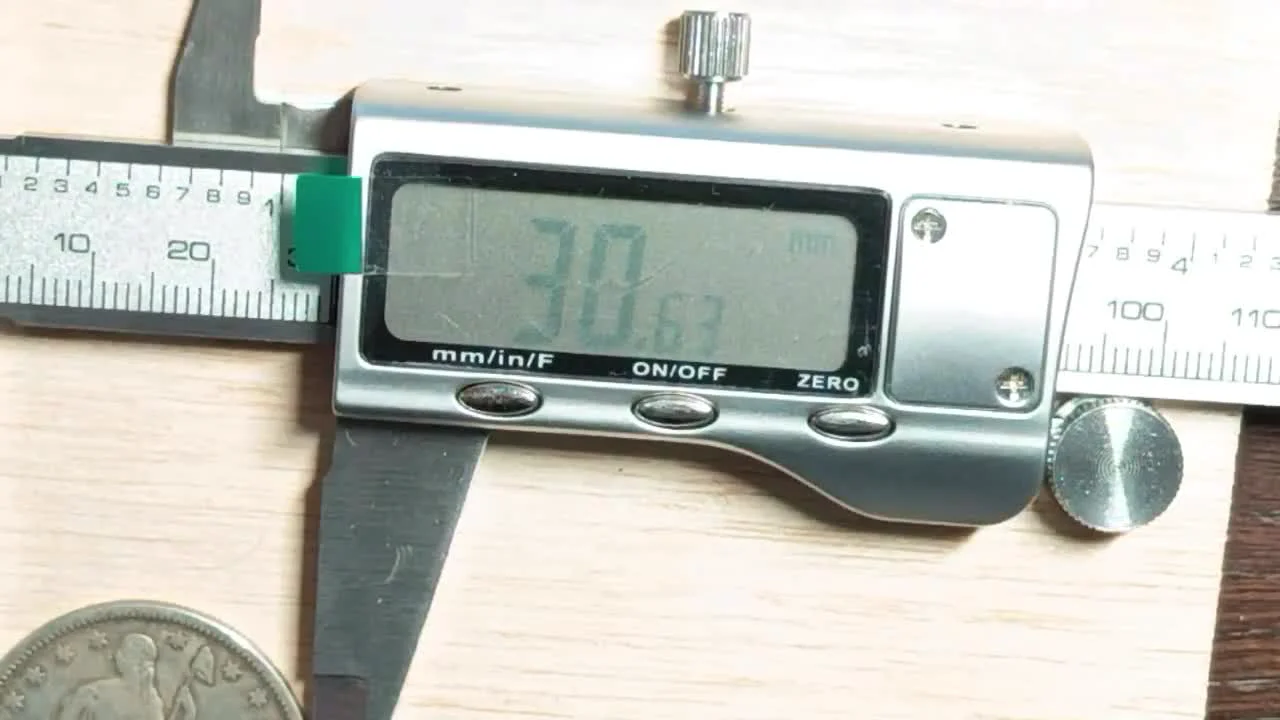
An at-home inspection confirms the coin's key parameters. The weight is 12.40 grams, which corresponds to the catalog value of 12.5 grams, accounting for natural wear. The diameter is 30.63 mm, also within the normal range. The coin is not magnetic and produces a long, resonant ring characteristic of silver.
- Presence of original patina and absence of cleaning marks.
- Clarity of the stars around Liberty and the lines on the shield.
- Condition of the feathers on the eagle's wings and breast.
Although the price paid, 130 euros, was likely high for a coin in 'Fine' condition, it represents a solid addition to a collection. Demand for 'Seated Liberty' series coins is stable, and their value is slowly but steadily increasing.