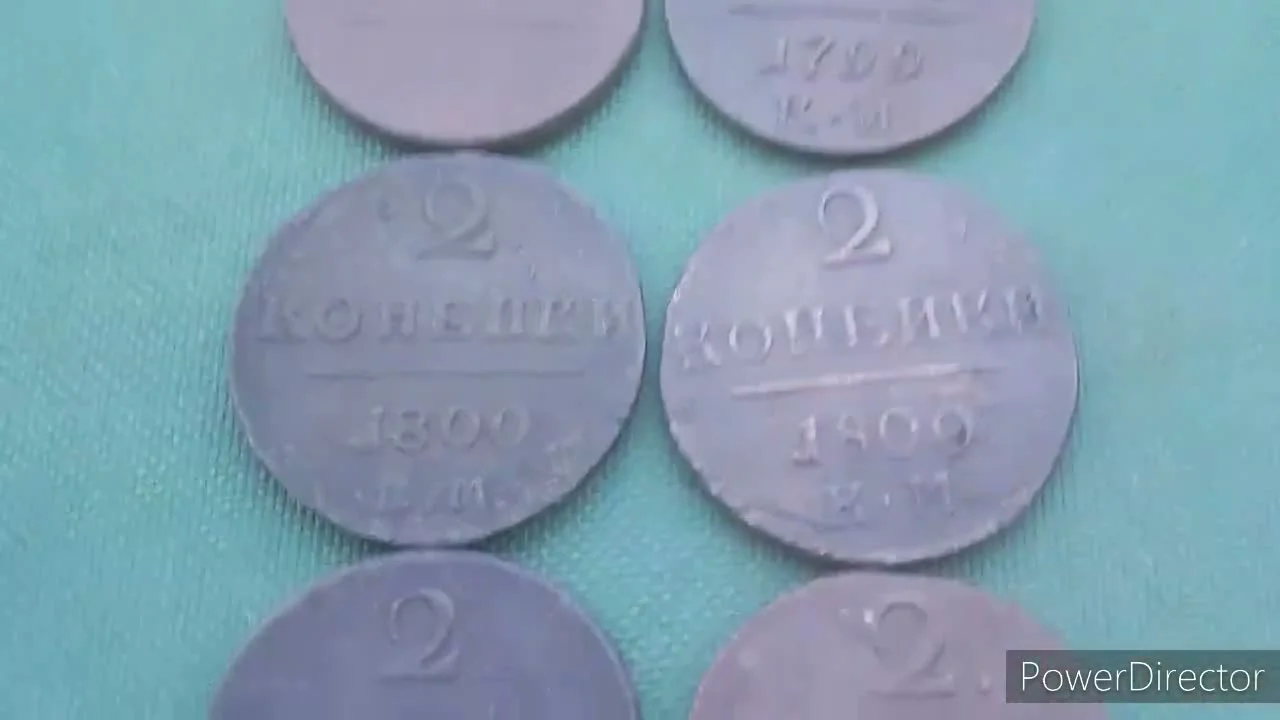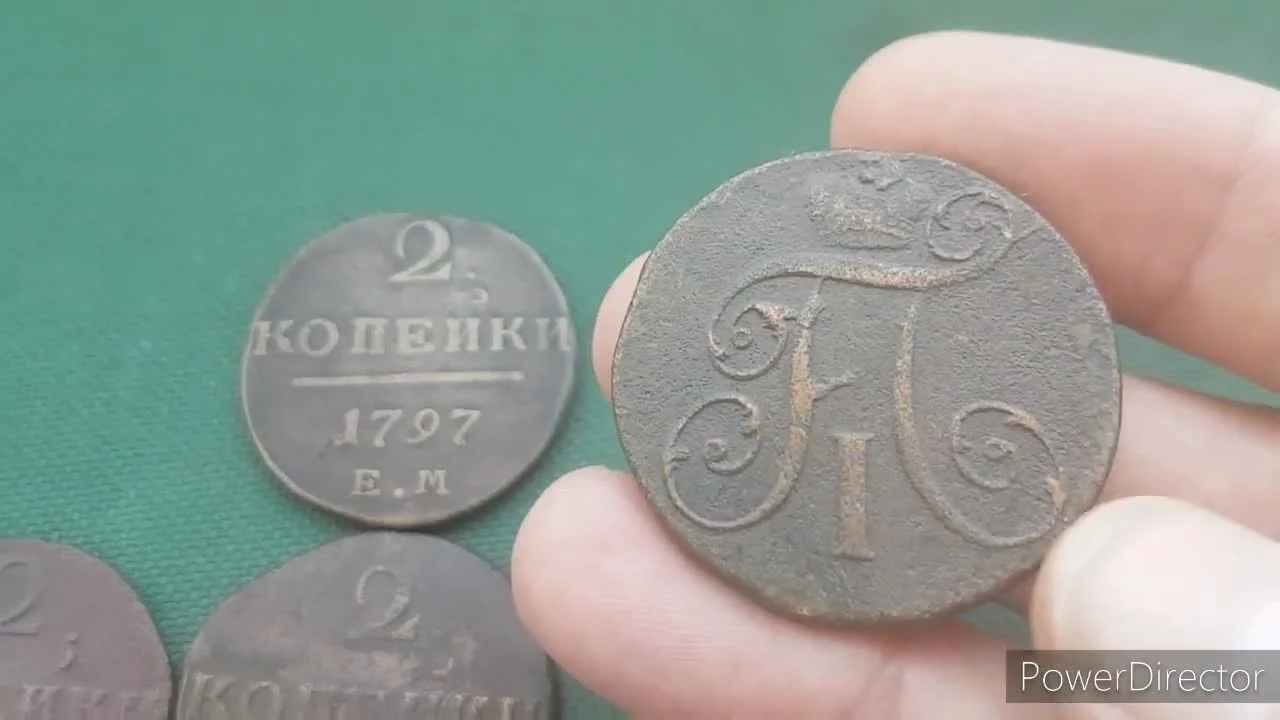

General Overview of Paul I's Coins
The two-kopek copper coins from the reign of Paul the First are among the most beautiful and interesting for collectors. Their mintage began in 1797 and continued for five years, up to and including 1801.
During this short period, the coins were issued by several mints, which led to the emergence of many varieties. The main minting locations were the Yekaterinburg, Suzun, and Anninsky mints, each of which left its unique markings on the coins.
1797: A Wealth of Varieties
| Marking | Mint | Starting Value |
| Е.М | Yekaterinburg | from 300 rubles |
| К.М | Suzun (Kolyvan copper) | from 800 rubles |
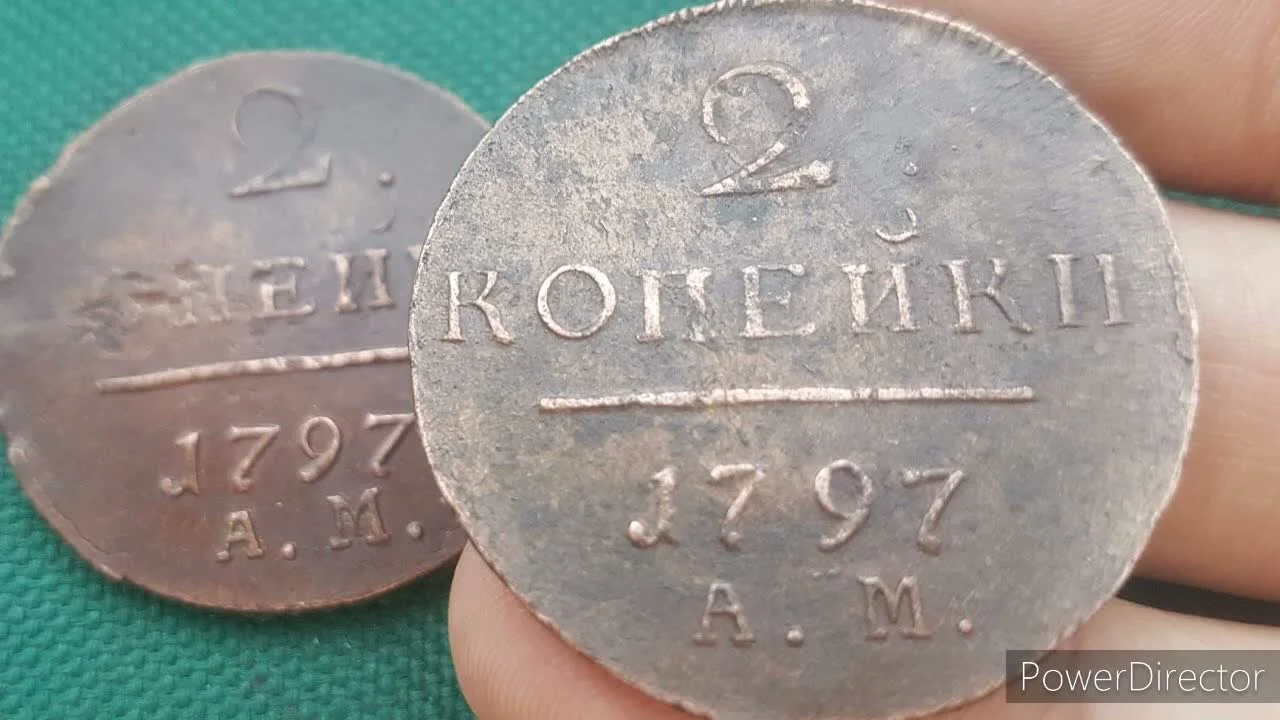
The first year of minting, 1797, turned out to be the richest in varieties. In this year, coins were issued by three main mints. Additionally, rarer variants exist.
Main mints and their value:
The coins from the Anninsky Mint (A.M.) are of particular interest. Several key varieties are distinguished among them:
- A corded edge slanted to the right or left. The value of such coins starts from 500 rubles.
- Small monogram. This is the most expensive coin of all Paul I's two-kopek pieces, with its value starting from 15,000 rubles.
- Large date numerals without a mint mark. These coins were presumably minted at a temporary mint in Nizhny Novgorod. Their value starts from 5,000 rubles.
1798 and the Closure of the Anninsky Mint
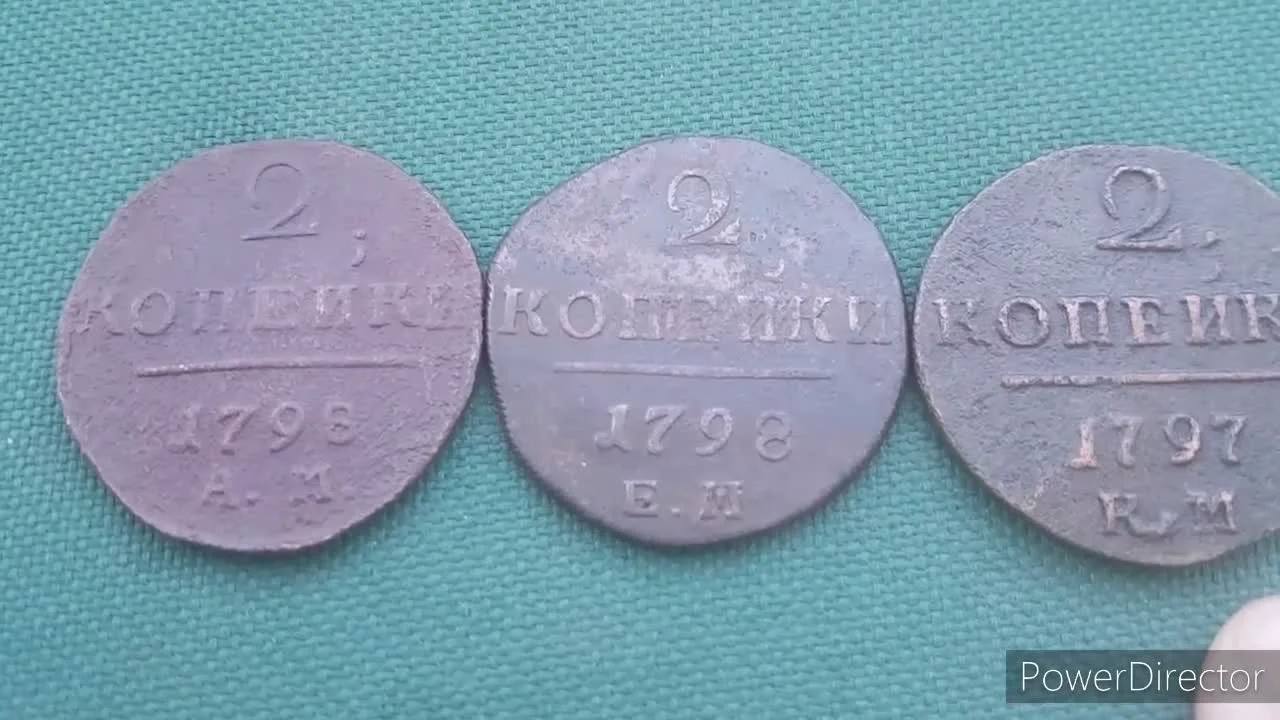
In 1798, minting continued at three mints: Anninsky (A.M.), Yekaterinburg (E.M.), and Suzun (K.M.). The value of coins from this year remained at the same level as the previous year: from 300 rubles for E.M., from 500 rubles for A.M., and from 800 rubles for K.M.
This year was the last for the Anninsky Mint. It was completely liquidated on February 5, 1798, and all its equipment was transferred to the Yekaterinburg Mint. The Anninsky Mint operated from 1789 to 1798.
The main reason for its closure was the beginning of the printing of paper assignations, which gradually displaced the costly-to-produce copper coin from circulation.
End of Mintage: 1799, 1800, and 1801
| Year | Mint (E.M.) | Mint (K.M.) |
| 1799 | from 300 rubles | from 800 rubles |
| 1800 | from 300 rubles | from 1500 rubles |
| 1801 | from 300 rubles | from 800 rubles |
After the closure of the Anninsky Mint, from 1799 onwards, only two enterprises continued to mint two-kopek coins: the Yekaterinburg and Suzun mints. This significantly reduced the number of varieties in subsequent years.
In 1799, the value of the coins remained stable: E.M. — from 300 rubles, K.M. — from 800 rubles. The situation changed in 1800 when the Suzun Mint coin became rarer.
Value of coins in the final years of mintage:
Thus, the coins from the Yekaterinburg Mint remained the most common and affordable throughout the entire minting period, while the value of the Suzun Mint coins fluctuated depending on the year.