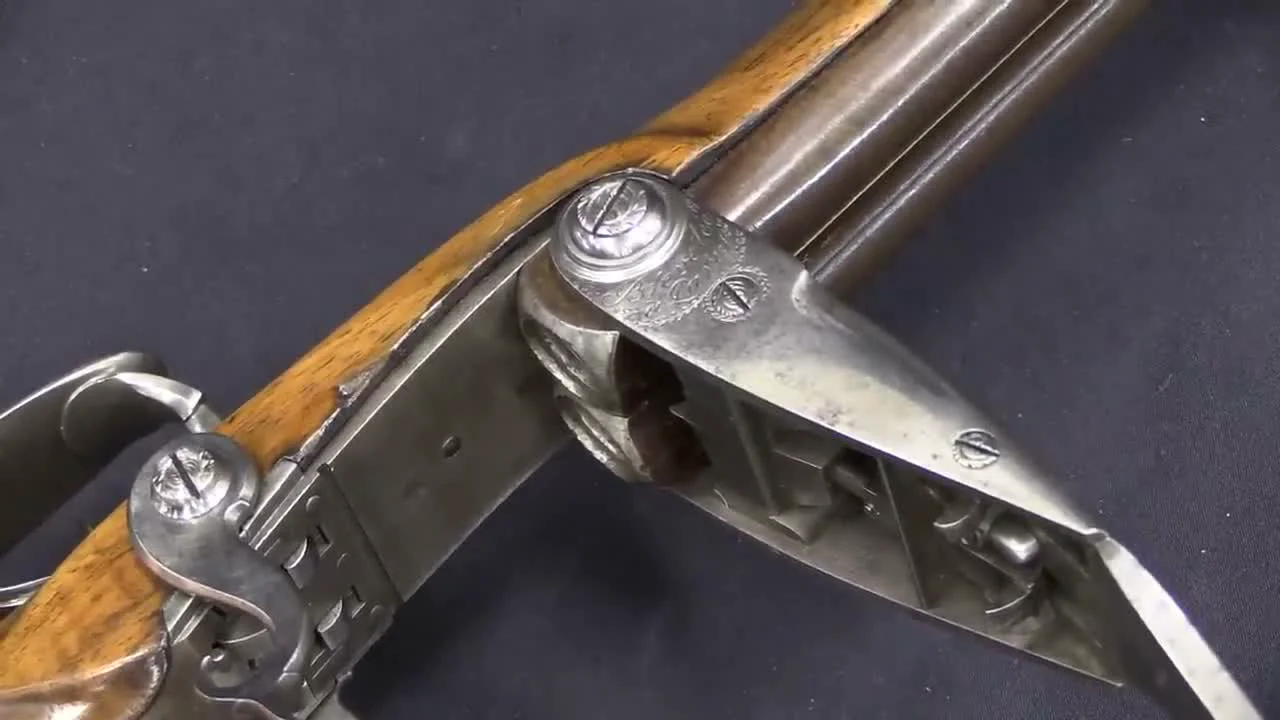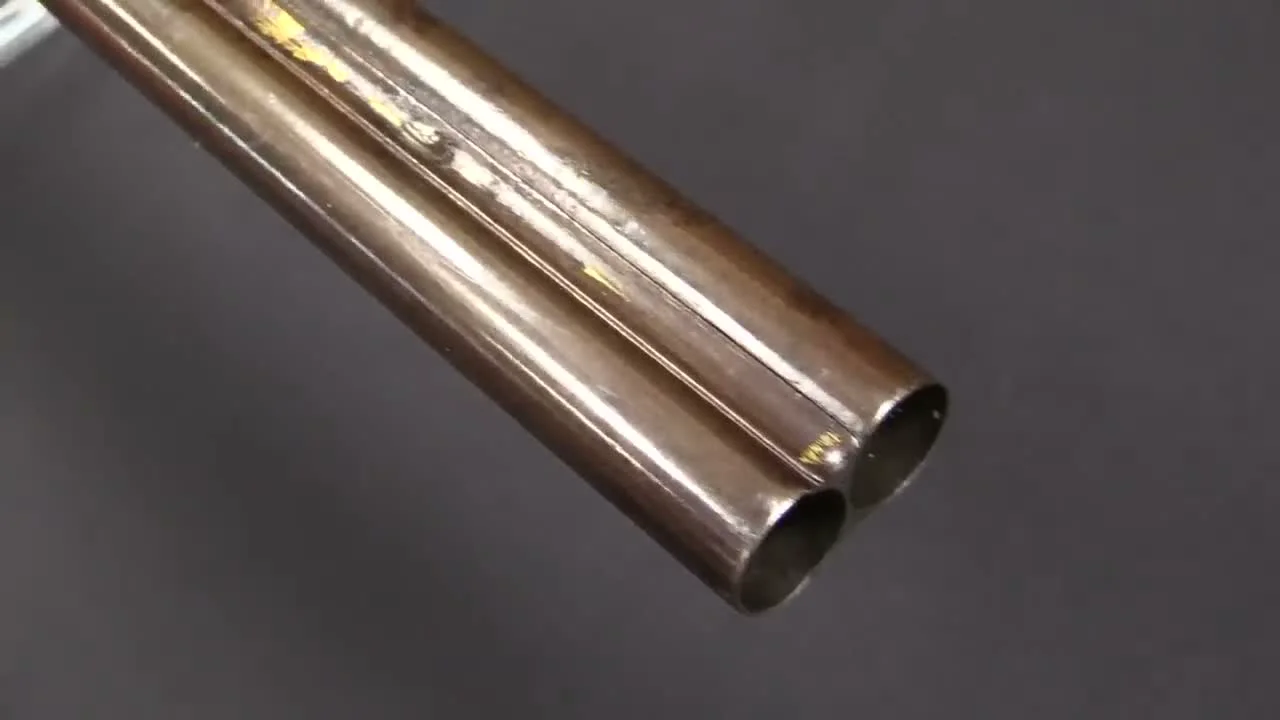

A Revolutionary Concept of 1812
In an era when Napoleon led his armies across Europe armed with flintlock muskets, a Swiss engineer offered him a revolutionary technology—a breech-loading firearm that used unitary cartridges. However, the emperor rejected this opportunity, and the invention, half a century ahead of its time, remained in obscurity.
This refers to the breech-loading shotgun developed by Samuel Pauly. Having failed to secure military contracts, Pauly focused his efforts on creating high-end sporting and civilian firearms. These guns were the world's first implementation of a fully self-contained cartridge, laying the foundation for all modern firearms.
The Inventor: The Versatile Genius Samuel Pauly
| Name | Period and Location |
| Samuel Johann Pauly | Born in Switzerland |
| Jean-Samuel Pauly | Name used in Paris (from 1802) |
| Samuel John Pauly | Name used in England (from 1814) |
Samuel Johann Pauly was born in the 1760s near Bern, Switzerland. With an engineering background, he proved to be a man of exceptionally broad interests, though he couldn't always find funding for his ambitious projects.
- Firearms, both small arms and artillery.
- Bridge design.
- Aeronautics, particularly the design of passenger airships.
In search of investors for his numerous projects, Pauly moved to Paris in 1802, which was then a major metropolis with significant financial opportunities. There, he continued his work in aeronautics, but his attention soon turned to a new direction in gunsmithing.
From Flintlock to Primer: The Birth of the Cartridge
| Component | Description |
| Cartridge Base | Brass, rimmed, and contained the percussion compound (primer) |
| Cartridge Body | Made of cardboard or paper |
| Body Contents | The main powder charge and projectile (bullet or shot) |
Around the same time, a Scotsman named Forsyth invented a percussion compound—an explosive substance that detonates on impact. Legend has it that he grew tired of slow and unreliable flintlock rifles, which often misfired in rainy weather. Forsyth's invention became the basis for modern primers.
Pauly learned of this discovery and began to experiment. His brilliant idea was to place this percussion compound directly into the cartridge, creating the world's first fully self-contained ammunition system. He received a patent for this invention in Paris in 1812.
The Pauly cartridge was complex in design but contained all the elements of a modern round.
All components—primer, powder, and projectile—were integrated into a single unit, representing a colossal technological leap.
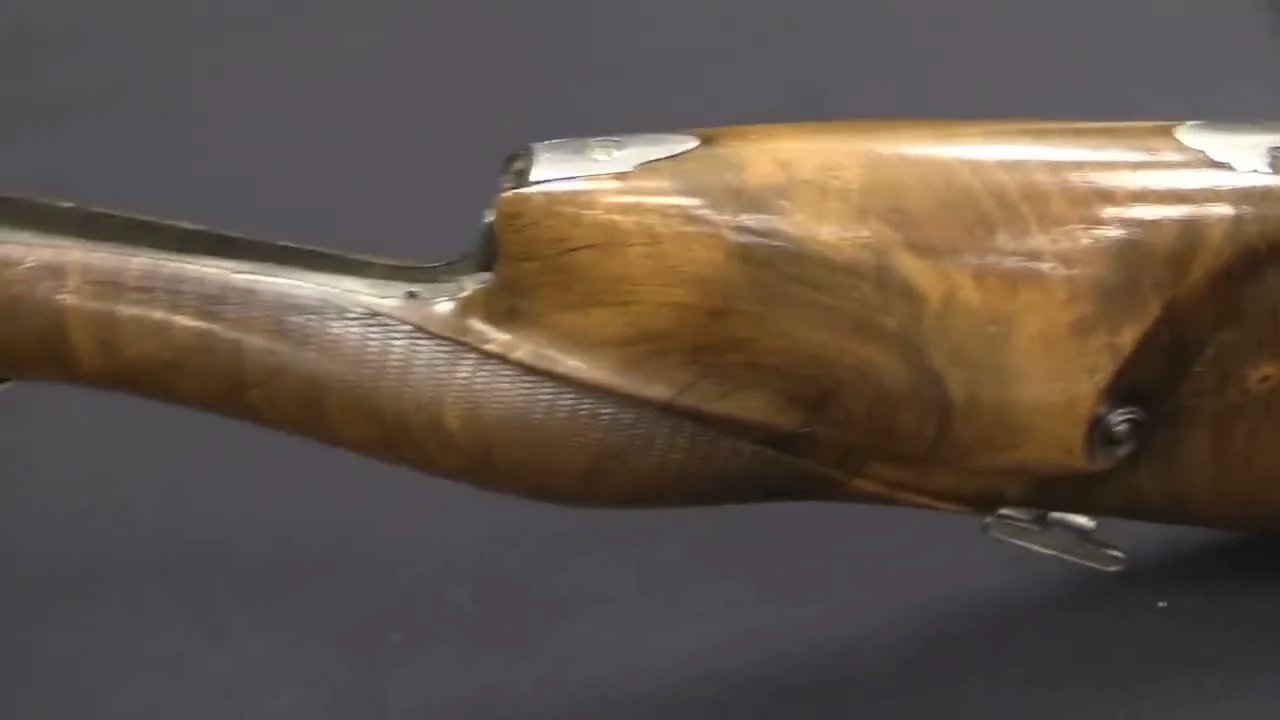
The Pauly Breech-Loading Rifle: How It Worked
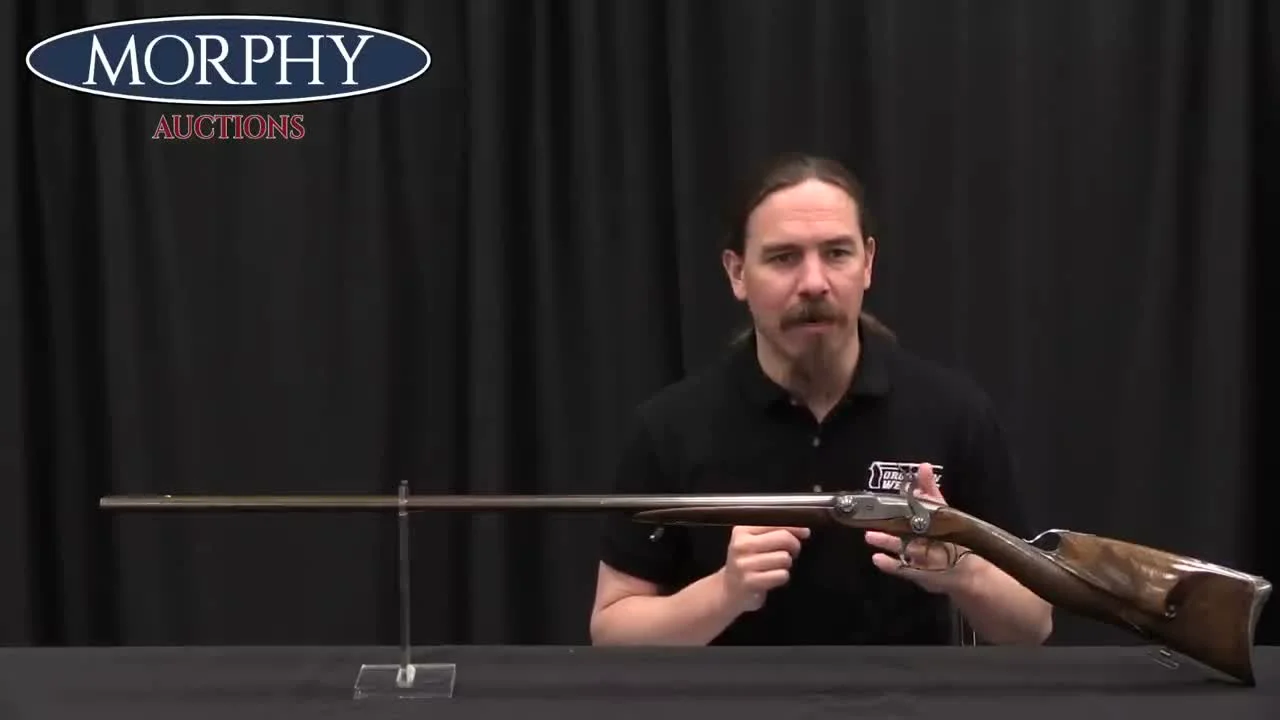
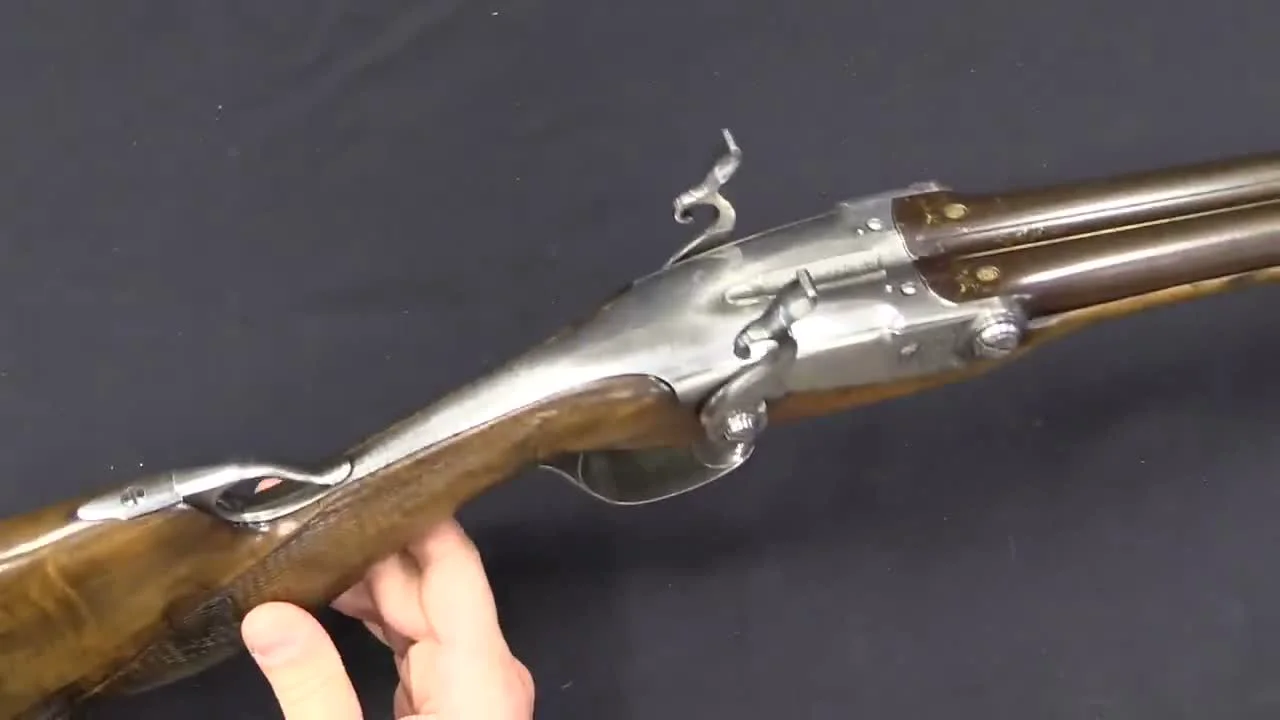
For his revolutionary cartridge, Pauly designed a corresponding firearm. Externally, it retained some features of flintlock rifles, such as two levers resembling hammers. However, their function was completely different.
The firing process for the Pauly rifle was as follows:
- Cocking. The shooter would pull back the two external levers, which cocked the internal strikers.
- Opening the breech. Using a lever on the tang of the receiver, the breechblock was lifted, exposing the chambers.
- Loading. Two unitary cartridges were inserted into the chambers.
- Closing the breech. The breechblock was lowered back into place, sealing the chambers.
- Firing. When the trigger was pulled, the cocked internal striker was released and struck a firing pin, which in turn hit the primer in the base of the cartridge, igniting the powder charge.
This was the first system in history where the primer was an integral part of the cartridge, rather than a separate element as in later percussion cap systems.
A Weapon Ahead of Its Time
The Pauly system had enormous advantages over the muzzle-loading flintlock rifles of the era. Contemporaries who had the opportunity to test the weapon noted its outstanding characteristics.
- Rate of fire. An experienced shooter could fire up to 12 rounds per minute, which was about 10 times faster than a muzzle-loader.
- Water resistance. The unitary cartridge protected the powder from moisture, making the weapon reliable in all weather.
- Safety. The use of pre-made cartridges eliminated the risk of double-charging and ensured the consistency of each shot.
- Ease of cleaning. Thanks to the breech-loading system, the barrel was open on both ends, which greatly simplified weapon maintenance.
Despite this, the invention did not gain widespread adoption. It was too complex and expensive for mass production, and the military was conservative in its attitude toward the novelty. Napoleon rejected it, citing the difficulty of supplying the army with two types of powder (for the main charge and for the primer).
Pauly's Enduring Legacy
Having failed to achieve success with his firearm, Samuel Pauly moved to England in 1814, where he returned to aeronautics, although he continued to make improvements to his firearm patents. He died in London in 1821, and for a long time, his name and contributions were all but forgotten.
However, his ideas did not die. Pauly's legacy was carried on by his apprentices, who worked under him and adopted his revolutionary concepts.
- Nikolaus von Dreyse. Created the famous needle-gun, which became the first mass-produced breech-loading military rifle.
- Casimir Lefaucheux. Developed the popular pinfire cartridge system, which became a direct link between Pauly's invention and modern metallic cartridges.
In 1827, Lefaucheux bought out Pauly's company. He and his son Eugène created a dynasty of gunsmiths whose developments defined the evolution of firearms in Europe for decades. Thus, every modern cartridge carries a piece of the genius of Samuel Pauly, the engineer who saw into the future.