
The 1924 Poltinnik: The Birth of a New Coin
| Parameter | Specification |
| Metal | Silver (.900 fineness) |
| Weight | 10 grams |
| Fine silver content | 9 grams |
| Diameter | 26.67 mm |
| Standard thickness | 2.0 mm |
| Edge | Inscription (varies by type) |
In early 1924, during the final stage of a monetary reform, new silver coins featuring the USSR coat of arms were issued. The goal of the reform was to restore the ruble's purchasing power to its pre-revolutionary level. These coins supplemented the existing stocks from 1921-1923 and entered circulation alongside them.
The 1924 poltinniks were minted on the same planchets as the tsarist 50 kopek coins, retaining their key parameters. This ensured continuity and public trust in the new currency.
A Propaganda Poster in Metal: Symbolism and Value
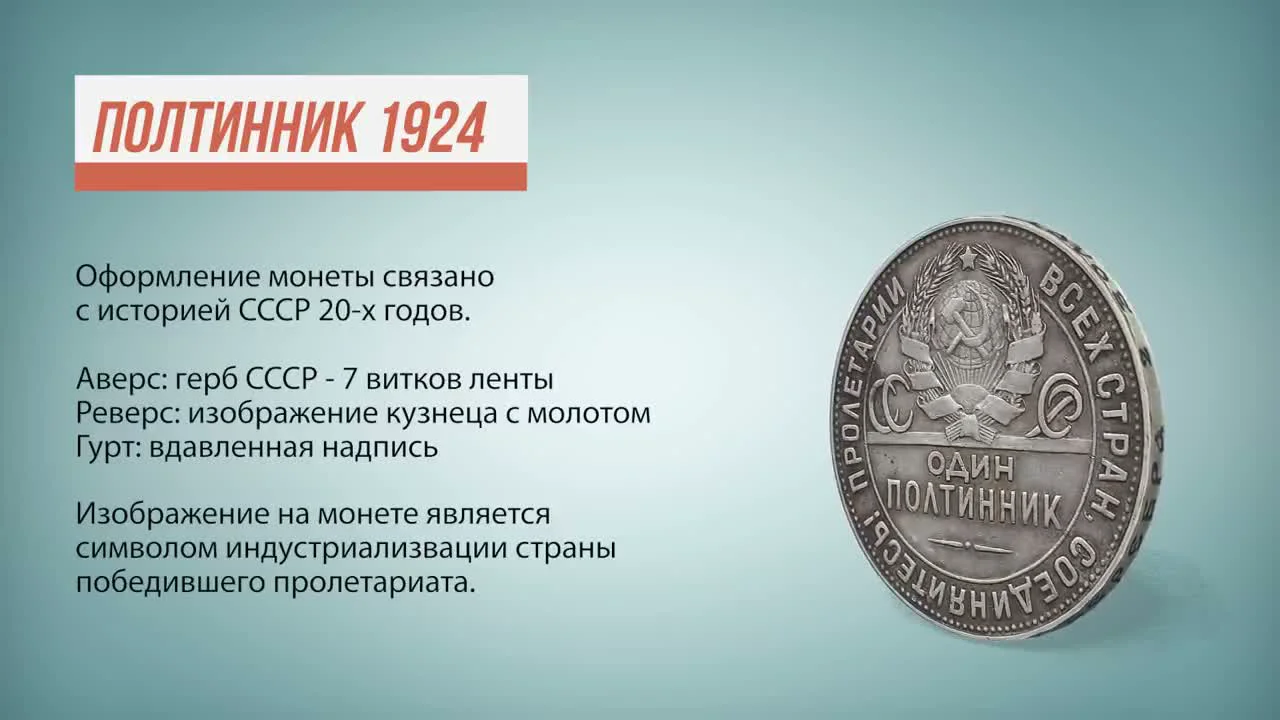
The coin's design is closely tied to the history of the USSR in the 1920s—an era of 'unbridled and frenzied rhythm,' Mayakovsky's poems, and the Russian avant-garde. At that time, every object, including money, was expected to serve a propaganda function and glorify the country of the victorious proletariat.
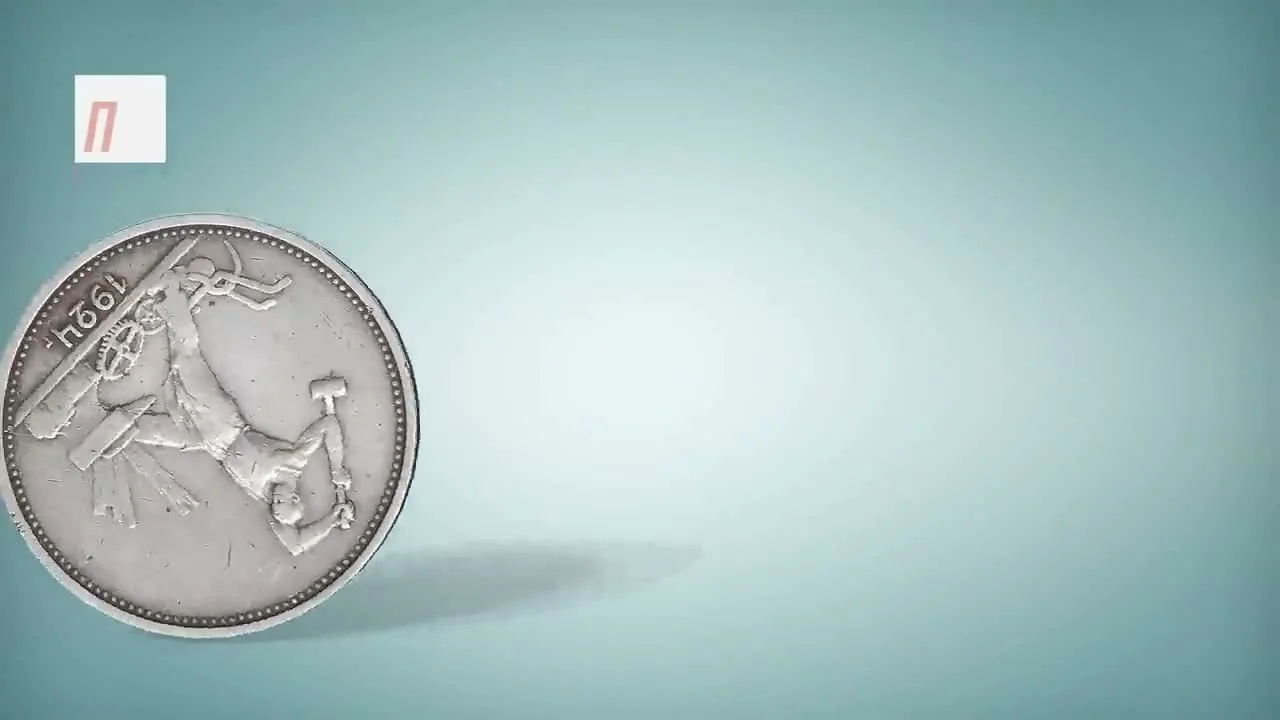
The image of the blacksmith on the reverse became a symbol of workers and the country's industrialization. Thus, the coin became a kind of propaganda poster in metal.
Despite their mass withdrawal from circulation in the 1930s, the huge mintages mean that today most of these coins are worth little more than their metal value—about 350-500 rubles for a condition of VF or lower. However, perfectly preserved specimens with their original luster can be worth a great deal of money.
Two Mints: PL and TR
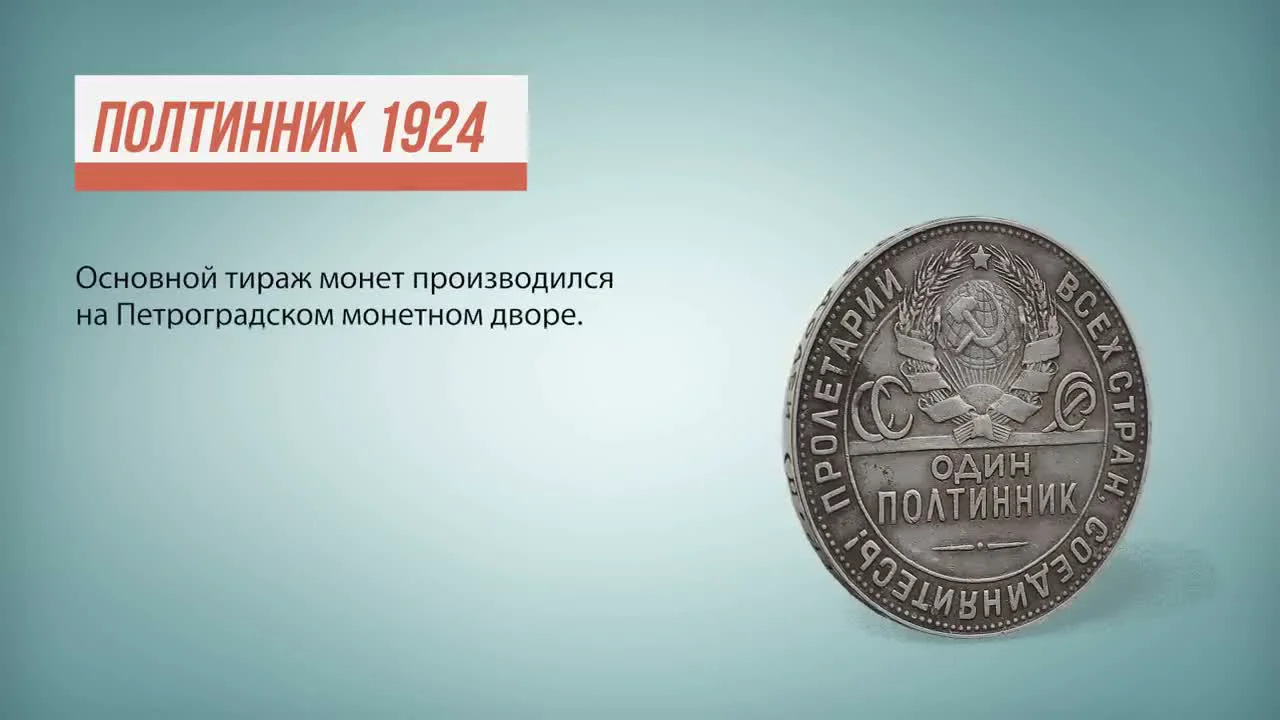
The main mintage of the coins was produced at the Petrograd (later Leningrad) Mint. These specimens are marked on the edge with the letters 'П·Л' (P·L), which are the initials of mintmaster Petr Latyshev.
Since the mint could not handle the volume, a significant part of the mintage was produced by a private mint in Birmingham, England. These coins bear the letters 'Т·Р' (T·R)—the initials of mintmaster Thomas Ross.
Initially, the minting was planned to be organized in London. Trial pieces with a plain edge were produced, which are very rare today. The letters on the edge by themselves do not indicate rarity; it is important to consider a combination of other details.
Rare Varieties of the English Mintage (T·R)
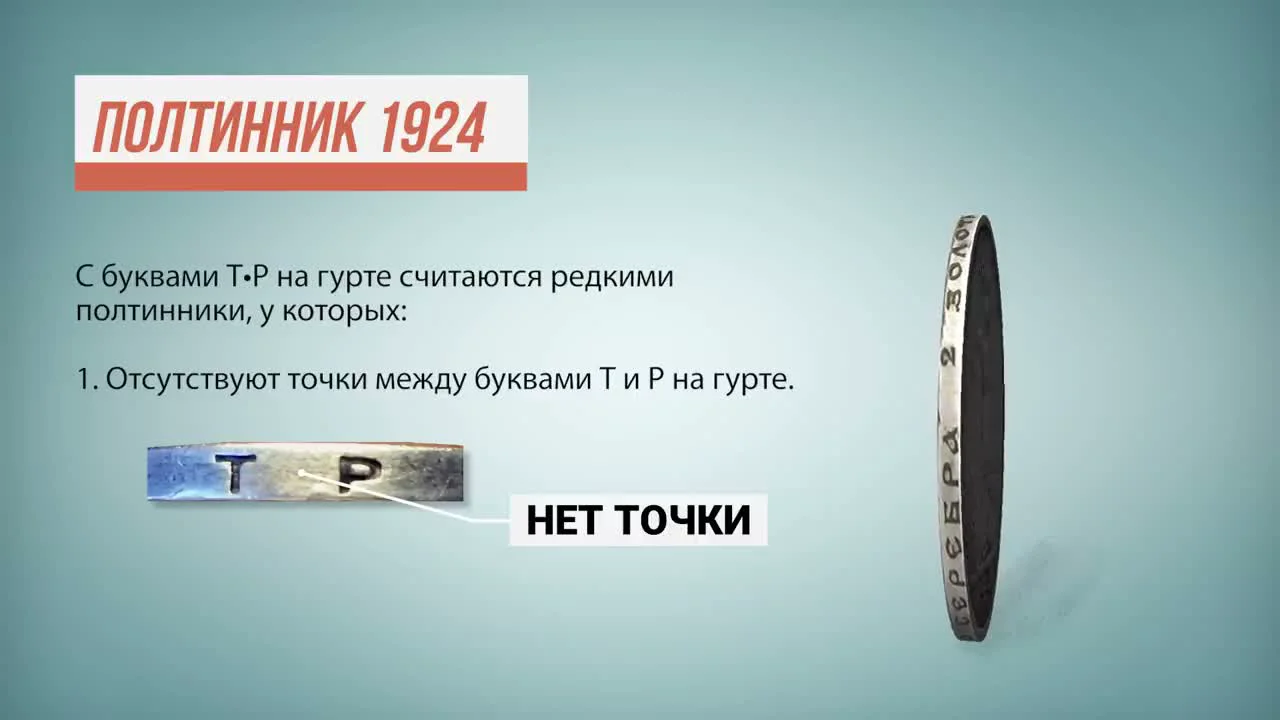
Among the poltinniks with the letters 'Т·Р' (T·R) on the edge, there are rare varieties that are highly valued by collectors. It is important to pay attention to the smallest details of the inscriptions and images.
- No dots between the letters T and R on the edge. The value of such a coin is about 24,000 rubles.
- A straighter font in the edge inscription (on common ones it looks like script), and there is a period after the number '10' instead of a comma. The value of such a specimen is about 400 rubles.
- A convex globe in the USSR coat of arms, with the second sun ray from the left being short. The price of such a coin reaches 4,000 rubles.
Valuable Varieties of the Petrograd Mint (P·L)
Poltinniks with the letters 'П·Л' (P·L) also have their own rare and expensive varieties. When evaluating them, it is necessary to consider the full range of details, as the same feature can be rare for one mintage and common for another.
- Plain edge with no inscription. These are trial pieces from the English mintage and are extremely rare. The value of such a specimen is about 70,000 rubles.
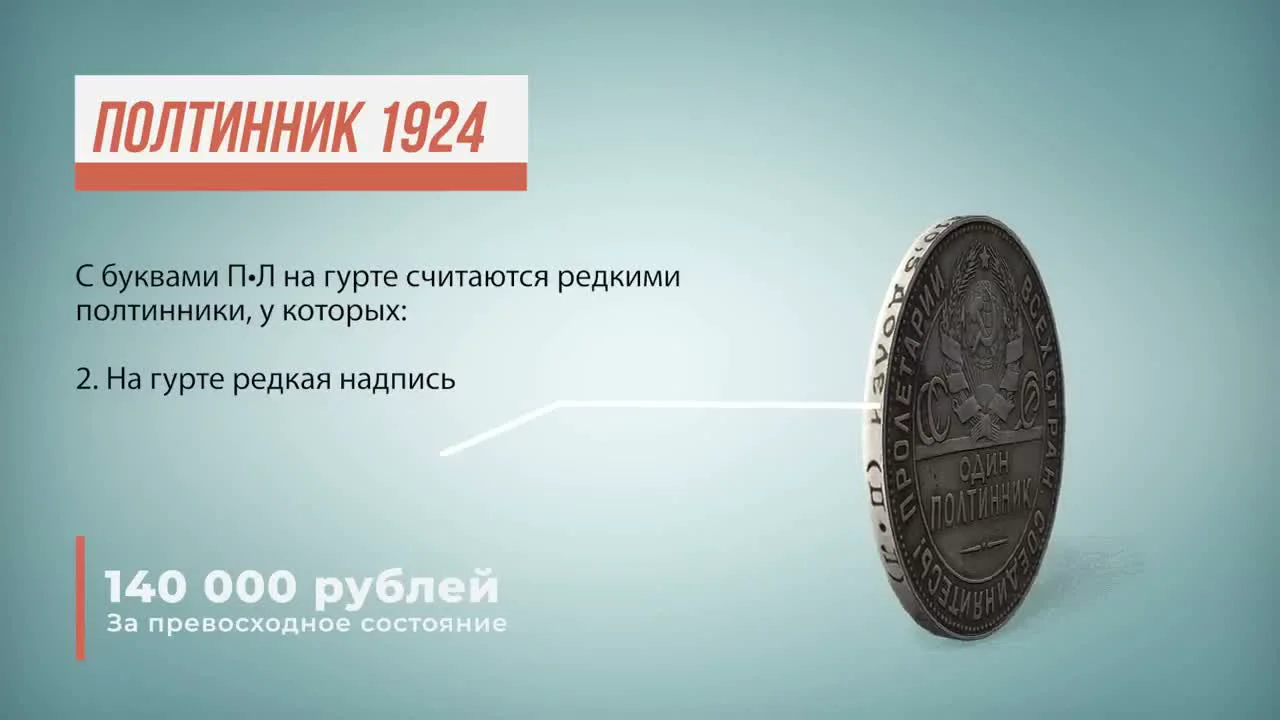
- Rare edge inscription: 'ЧИСТОГО СЕРЕБРА 2 ЗОЛОТНИКА 10,5 ДОЛЕЙ (П·Л)' (2 ZOLOTNIKS 10.5 DOLEI OF PURE SILVER (P·L)). The value of such a coin can reach 140,000 rubles.
- Depicts a 'thin worker.' Distinguishing features: a smaller head turned more directly forward, a wide rim, a thick hammer handle, and the anvil is positioned far from the dotted border. Value - about 13,600 rubles.
- On the obverse, the comma in the slogan is far from the rim. The price of this variety is about 40,000 rubles.
- Medium-sized worker's head, facial features are well-detailed, and the coin's rim is wide. Value - about 30,000 rubles.