
Increasing a Coin's Value by Improving Its Condition
There are several ways to buy a coin at an auction and sell it at the same venue for double the price. One of the most effective methods is pre-sale preparation. This is a simple but effective approach that will be especially useful for novice collectors and those who want to make money by reselling coins.
The main idea is to get the coin in good shape. This includes cleaning, patinating, and giving it a higher-quality and more aesthetically pleasing appearance. Essentially, it's a kind of 'tuning' that makes the coin more desirable to buyers and, consequently, increases its value.
Two Methods for Cleaning Aluminum Bronze Coins
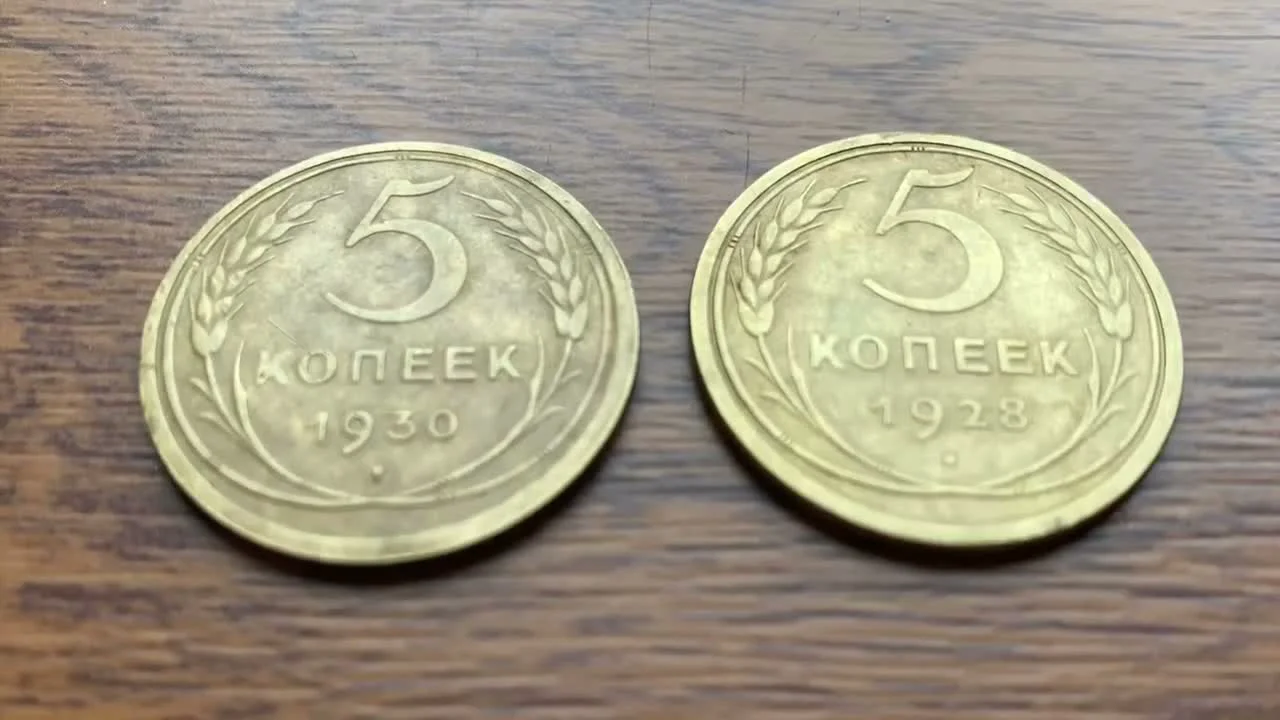
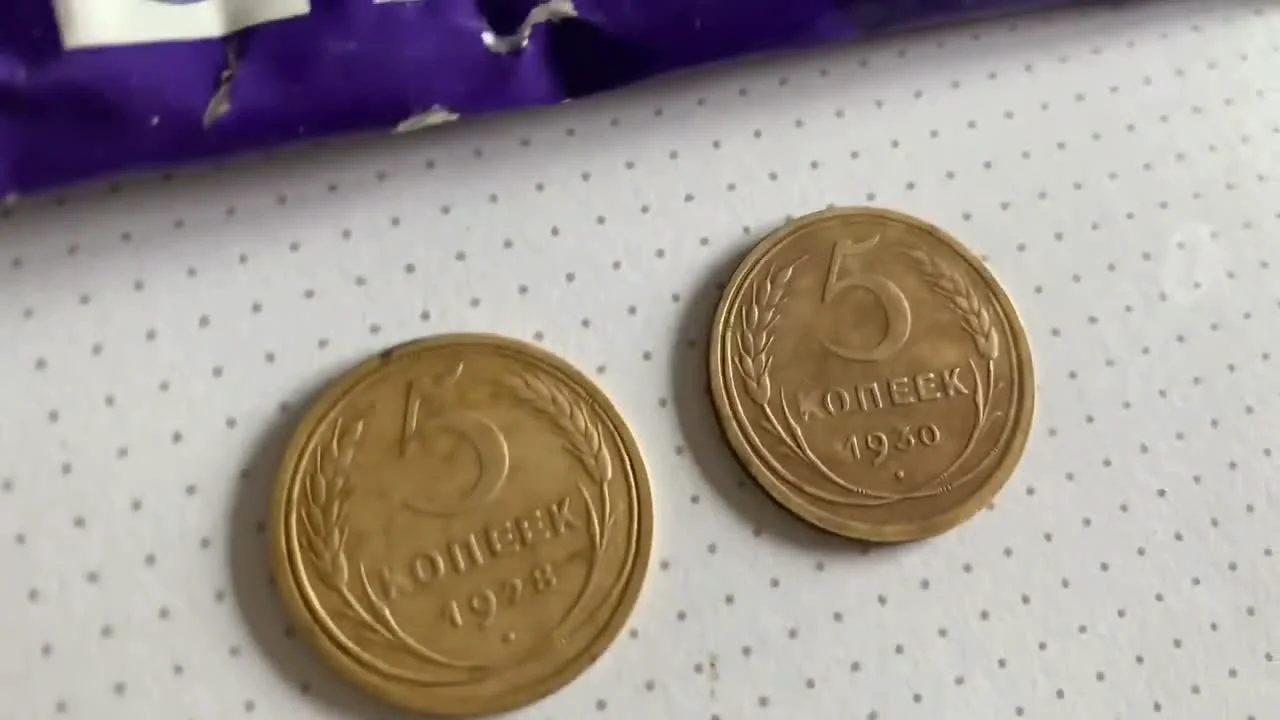
To demonstrate the effectiveness of different approaches, an experiment was conducted on two equivalent USSR coins—aluminum bronze 5-kopek pieces from 1928 and 1930. The goal was to compare two popular at-home cleaning methods and determine which one yields the best result.
A different method was chosen for each coin:
- 1928 coin: Cleaning with a special polishing paste and petroleum jelly.
- 1930 coin: Cleaning with a regular office eraser.
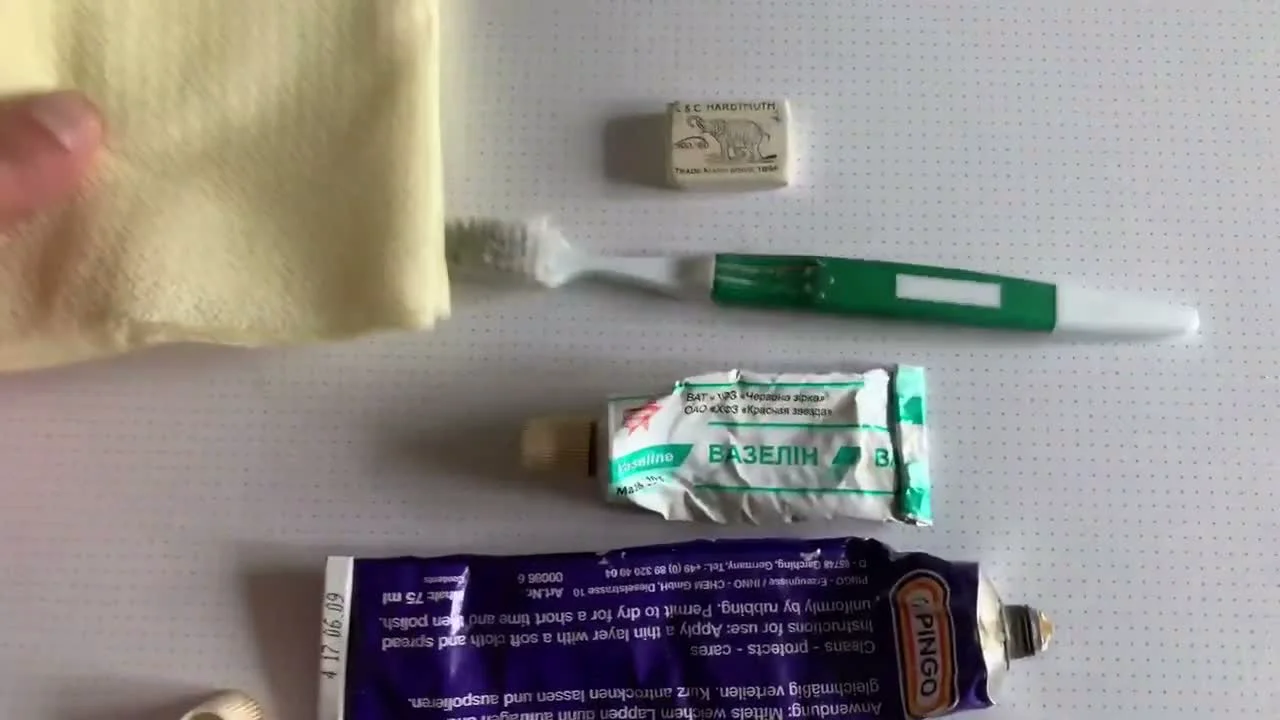
Tools and Materials for the Job
| Tool/Material | Purpose and Features |
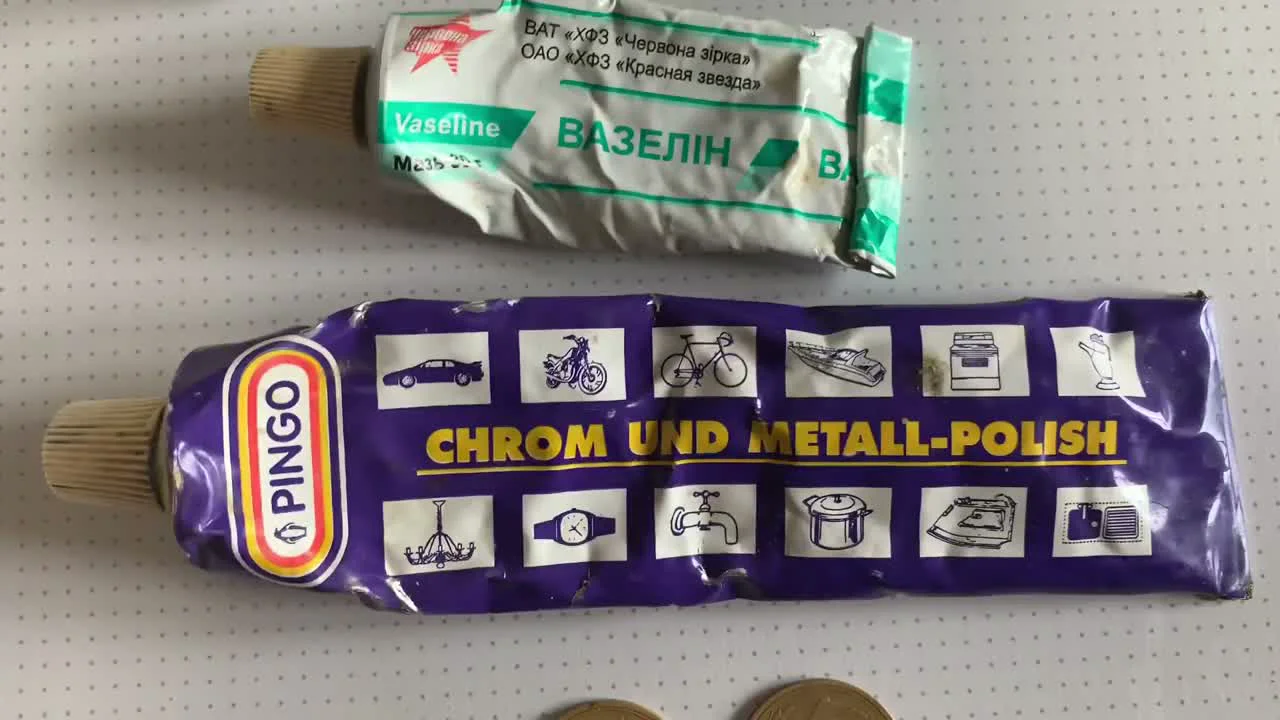
| Polishing paste | For cleaning. A paste for chrome and metal (e.g., Pingo) with fine particles is recommended to avoid scratching the coin. |
| Petroleum jelly | To soften the paste's action. Any pharmacy-grade petroleum jelly will do. |
| Toothbrush | The main tool for applying and rubbing in the paste. Helps to clean the fine details of the relief. |
| Eraser | For the second cleaning method. A Koh-I-Noor Hardtmuth eraser is used. |
| Napkins or paper towels | For removing leftover paste and oil. Paper towels are preferable. |
| Tweezers | For holding the coin during heating for patination. |
| Oil | For creating the patina. Automotive synthetic, olive, or sunflower oil will work (about 50-60 grams). |
A specific set of tools and materials will be needed for the cleaning and subsequent patination. It's important to choose the right cleaning agents to avoid damaging the coin's surface. This is especially true for abrasive pastes, which should have a very fine dispersion.
Method #1: Cleaning with Paste and Petroleum Jelly
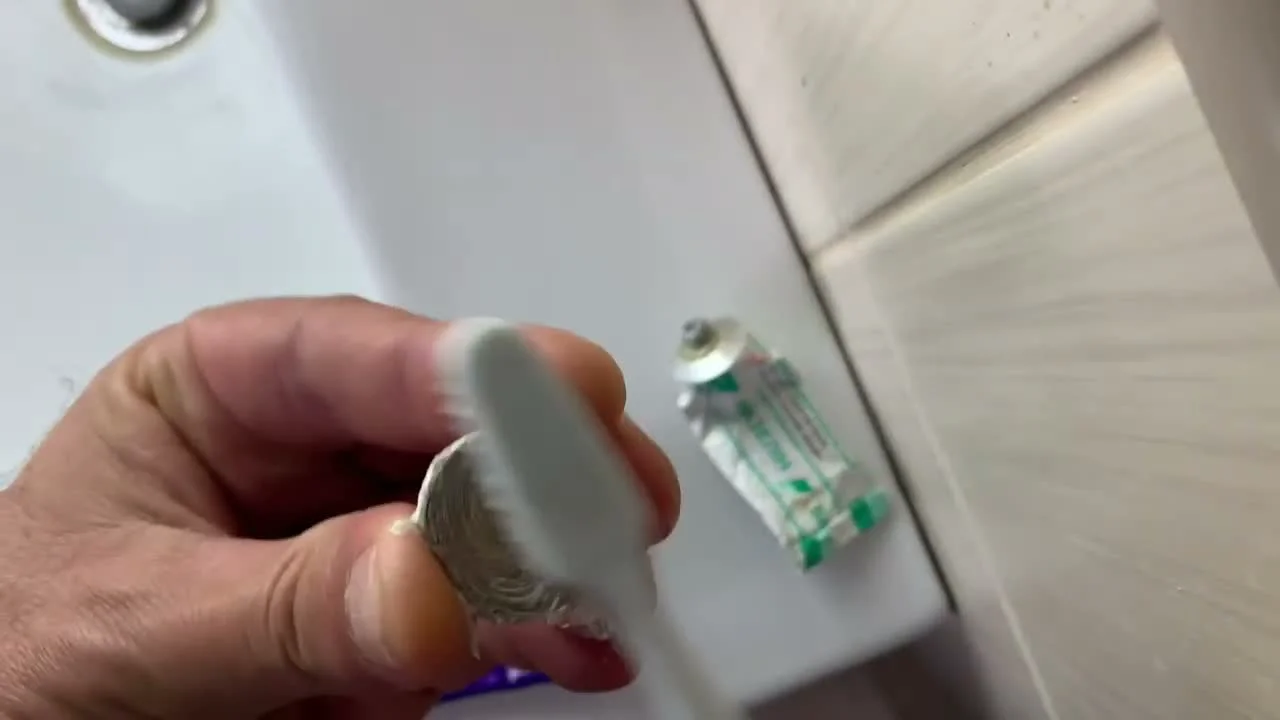
The cleaning process begins by applying a small amount of petroleum jelly to both sides of the coin. This is necessary to soften the abrasive action of the paste and make the process gentler. The petroleum jelly is spread evenly over the surface with a toothbrush.
After this, polishing paste is applied to the coin and must be thoroughly rubbed in with a toothbrush for 3-4 minutes. During the cleaning process, the paste will darken as it collects dirt and oxides. It's important to use a brush, not your fingers, as the bristles can better penetrate the fine details of the relief and do not create a 'worn-down' effect.
This method is well-suited for removing light soiling. However, for coins with heavy corrosion and deep deposits, it may not be effective enough. After cleaning, the coin should be washed with soap and water or laundry detergent to completely remove any remaining paste and grease.
Method #2: A Failed Experiment with an Eraser
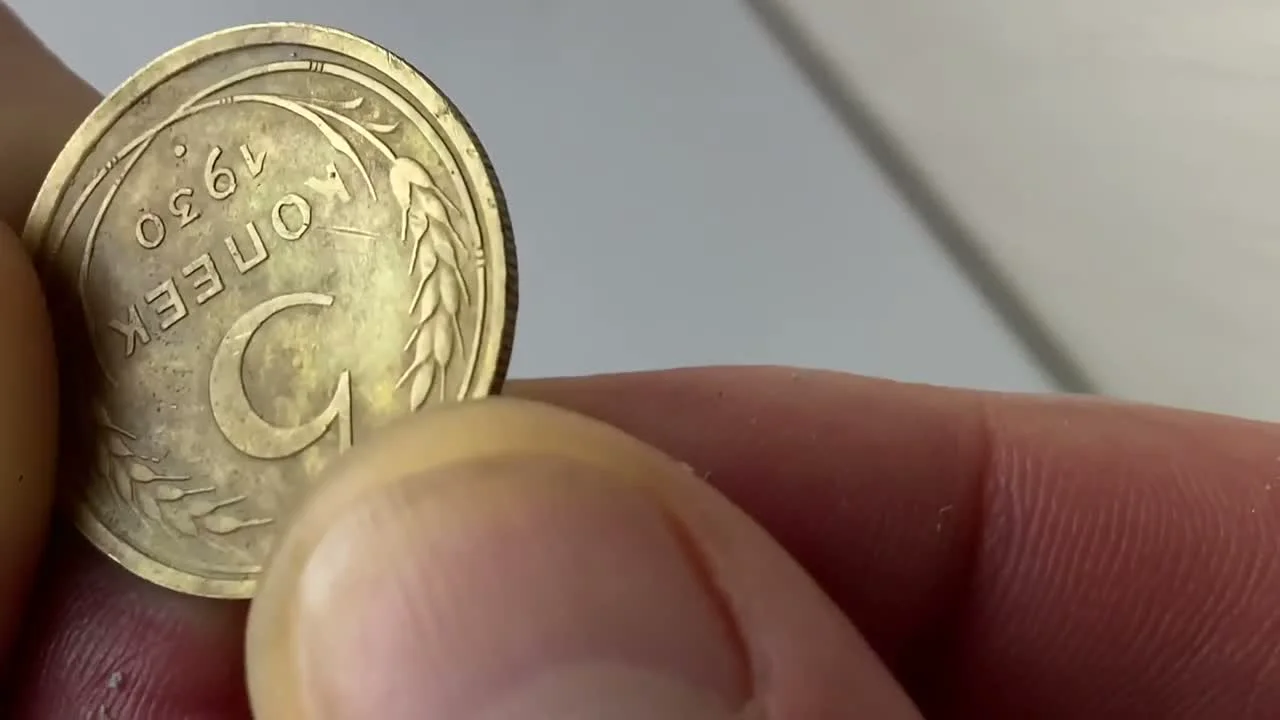
The second method involved cleaning the coin with an eraser. An attempt was first made to clean the coin while it was wet, but this had no effect. Then, the coin was dried and the attempt was repeated.
On a dry surface, the eraser did start to remove some dirt, but the process proved to be extremely inefficient and labor-intensive. This method does not allow for a thorough cleaning of the fine details of the relief and takes far too much time. Compared to the paste method, using an eraser turned out to be a waste of time and is therefore not recommended.
Applying a Patina to Complete the Look
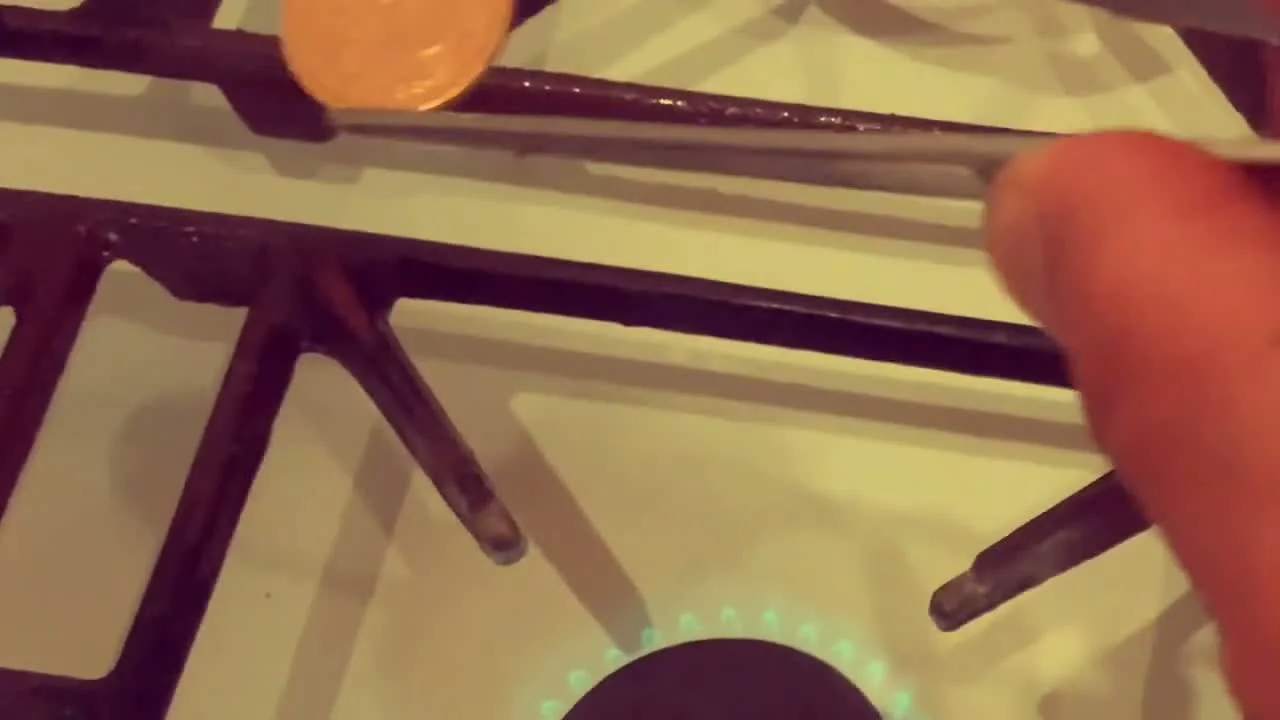
After cleaning, the coin looks too bright and unnatural. To give it a noble and finished appearance, patination is applied. For this, you will need a gas stove, tweezers, and a container of oil. It is important to be cautious when working with fire and hot objects.
The patination process is as follows:
- The coin is held with tweezers and heated evenly over the flame of a gas burner.
- Heating continues until the coin acquires a yellowish tint. This process takes about 4 minutes.
- Once the desired color is reached, the hot coin is immediately submerged in the container of oil to cool.
- After cooling, the coin is removed and wiped dry with a napkin to remove excess oil.
As a result, the coin acquires an even, beautiful patina that looks natural and significantly improves its appearance.
Experiment Results: Which Method to Choose?
A comparison of the results showed a clear advantage for the first method. The 1928 coin, cleaned with paste and coated with a patina, looked significantly more attractive and interesting than before the treatment. The 1930 coin, which was cleaned with an eraser, remained virtually unchanged.
Thus, it can be concluded that proper cleaning and patination are key factors in increasing a coin's value. This comprehensive approach, combining mechanical cleaning and the application of an artificial patina, helps not only to make a profit from resale but also to improve the condition of specimens in one's own collection.