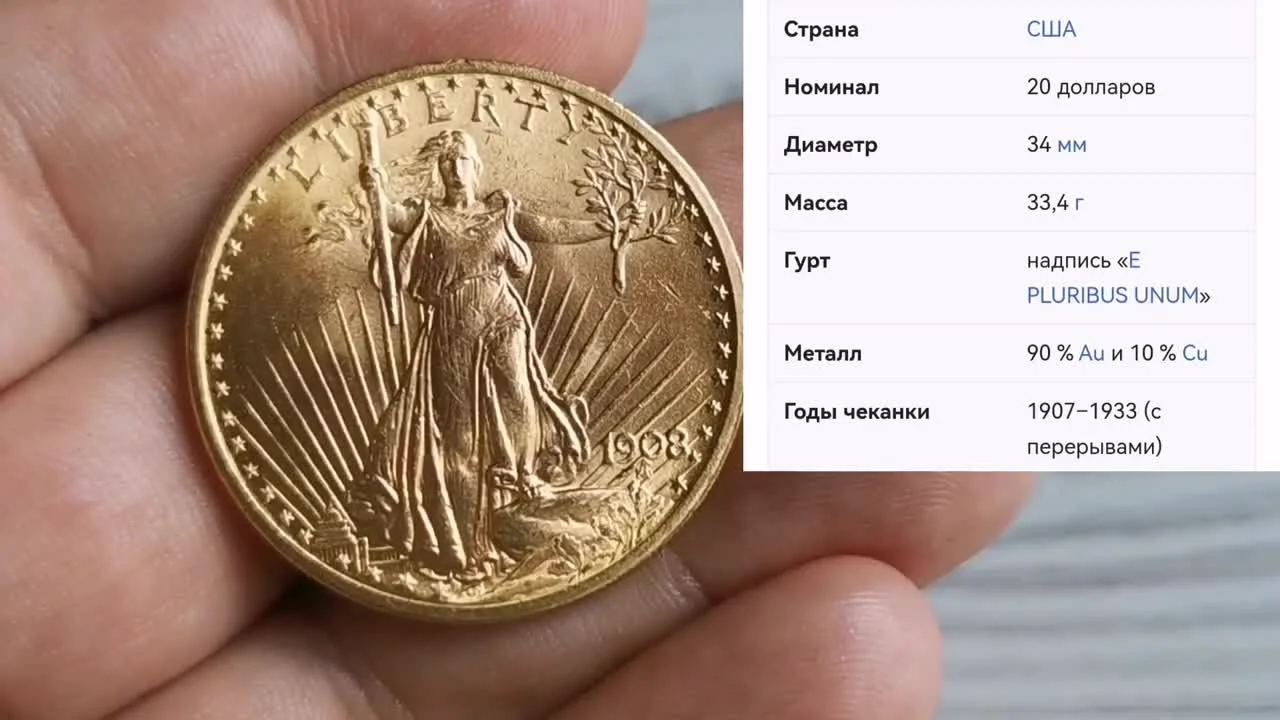

The Saint-Gaudens Double Eagle: General Characteristics
| Characteristic | Value |
| Country | USA |
| Denomination | $20 |
| Diameter | 34 mm |
| Mass | 33.4 g |
| Edge | inscription 'E PLURIBUS UNUM' |
| Metal | 90% Au and 10% Cu |
| Years of minting | 1907–1933 (intermittently) |
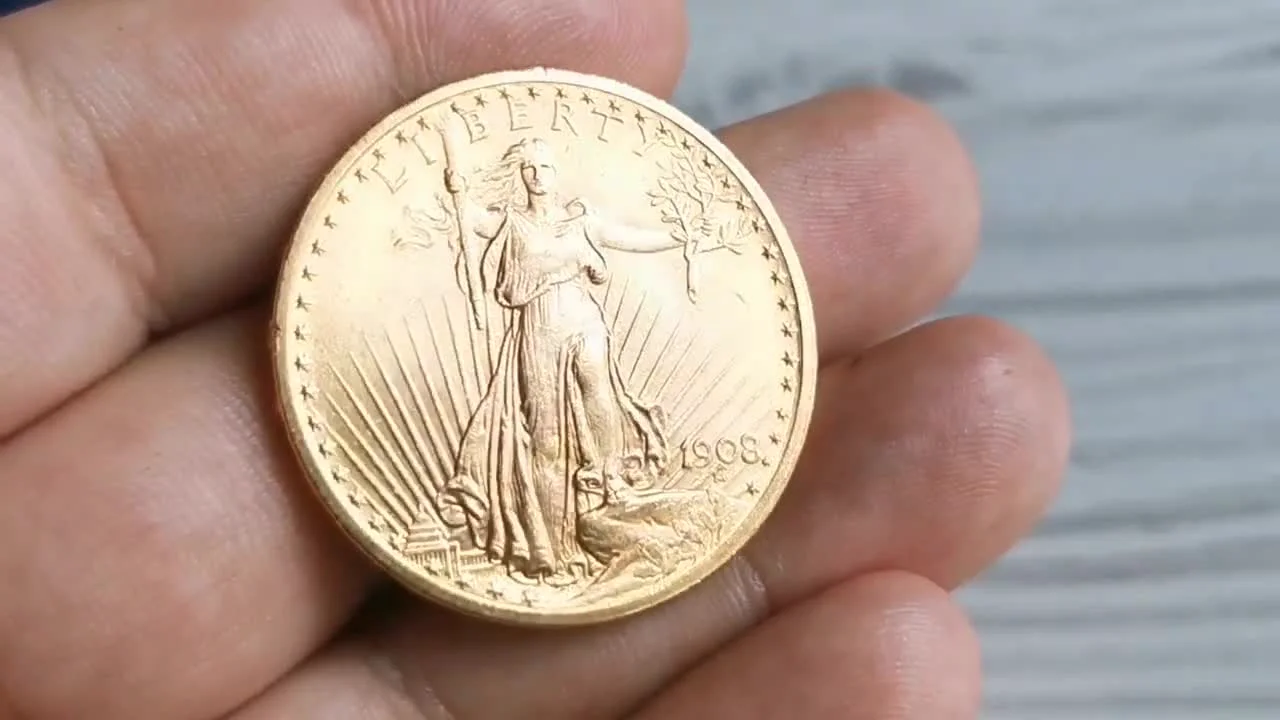
The $20 gold coin, known as the 'Saint-Gaudens Double Eagle,' is one of the most iconic in American numismatics. Its design was created by the renowned American sculptor and medalist Augustus Saint-Gaudens. These coins were minted from 1907 to 1933, becoming a true work of art.
The coin has its own unique technical specifications that are important for every collector to know.
These parameters make the coin not only a valuable collector's item but also a significant investment asset.
Creation Story: The Initiative of Theodore Roosevelt
Two key figures contributed to the appearance of this coin: U.S. President Theodore Roosevelt and sculptor Augustus Saint-Gaudens. Roosevelt aimed to make American coins more beautiful and aesthetically pleasing. In 1904, he proposed that Saint-Gaudens develop a new design for the coin series.
At first, the sculptor did not show much enthusiasm, partly due to a conflict with the Mint's Chief Engraver, Charles Barber. Nevertheless, he took on the work, and by 1907, the designs for the $10 and $20 coins were completed. Unfortunately, Saint-Gaudens himself did not live to see the coins issued and never saw his creation in metal.
The original design featured a high relief, which made the coins particularly beautiful. However, Charles Barber somewhat reduced the relief on the new dies to simplify the mass production process.
The 'Godless' Coin: The Absence of the 'In God We Trust' Motto
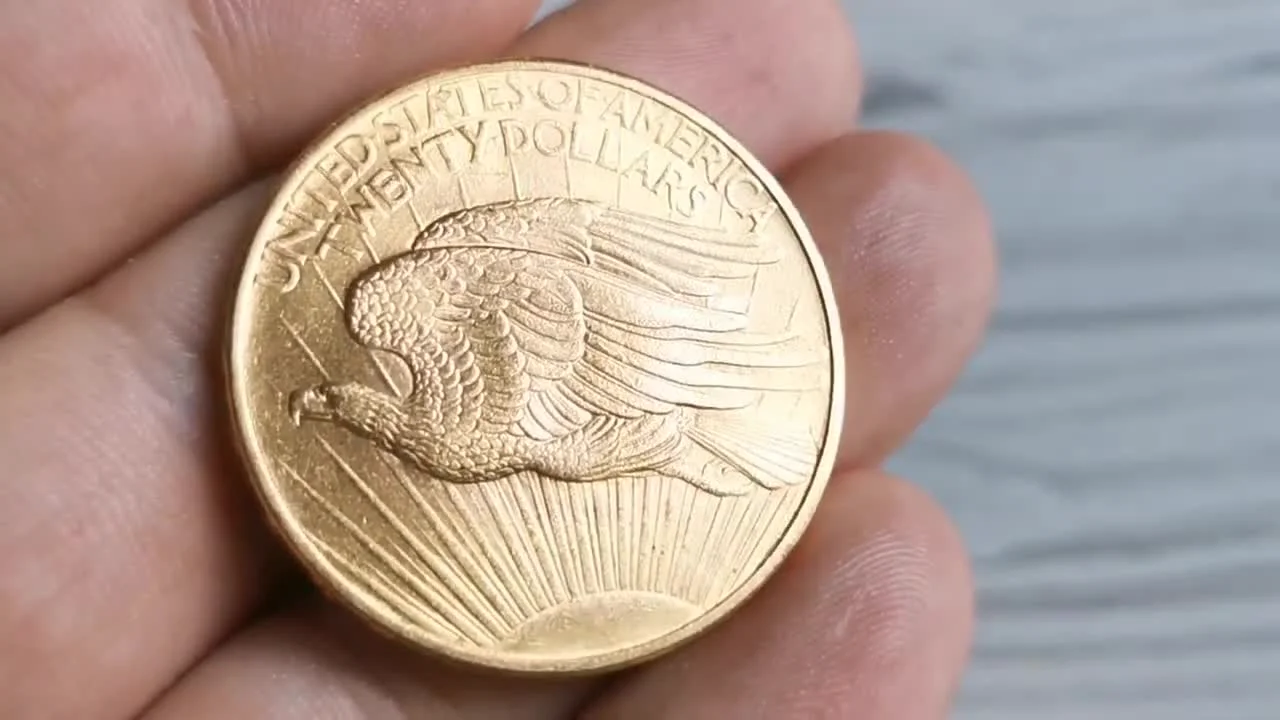
A key feature of the rare 1907 and 1908 specimens is the absence of the official U.S. motto 'In God We Trust.' At the beginning of production, these coins were issued without this inscription, which was mandatory for American currency.
The absence of the motto caused a public outcry and persistent demands from the U.S. Congress. As a result, in late 1908, the inscription was restored to the reverse of the coin, where it was placed above the image of the rising sun.
Because of this historical curiosity, the coins minted in 1907 and 1908 without the motto were popularly nicknamed 'godless.' It is this circumstance that makes them particularly rare and valuable to collectors.
Numismatic Value and Popularity
The absence of the motto directly affects the coin's value. In the domestic market, such 'godless' specimens are 5-7% more expensive than similar coins with the motto. Abroad, the price difference is even more significant and can reach 10-15%.
Coins in good condition that have been graded and placed in special plastic holders (slabs) are particularly valued. Specimens with a grade of MS63 and higher are in high demand.
The popularity of these coins is also confirmed by their availability on the market. For example, on major online platforms like APMEX, finding 'godless' $20 coins for open sale can be difficult, which indicates high interest from collectors and investors.