
Why Measure Coin Weight?
Knowing the weight of Russian coins is crucial not only for collectors but also for understanding significant historical processes. For gold and silver currency, this parameter serves as one of the most accessible methods for detecting fakes.
At the same time, for circulating coins, changes in weight reveal transformations in monetary policy and the evolution of minting technologies. Every gram carries echoes of economic decisions made in different eras.
Historical Metamorphoses: How Weight Changed
The history of Russian coins remembers many changes in their weight. These transformations were caused by various reasons, reflecting the rulers' desire to stabilize the monetary system or adapt to new economic realities.
For example, Peter I significantly reduced the weight of a 1 silver kopeck coin, lowering it from approximately 0.44 g to 0.28 g. This step was aimed at establishing a clear ratio: 1 ruble, containing 28 g of silver, was to equal 100 kopecks.
A similar attempt was previously made by Alexey Mikhailovich, but his ruble, re-minted from a thaler, actually corresponded to only 64 kopecks (28/0.44 ≈ 64), which undermined public trust in the new monetary unit. In Soviet times, starting from the 1920s, small denomination coins – 1, 2, 3, and 5 kopecks – had a weight equal to their denomination: 1, 2, 3, and 5 grams, respectively.
Modern Currency: A Look at Current Parameters
Let's take a closer look at how much modern currency weighs and what metals they are made from. This data allows for a deeper understanding of the technological and economic aspects of modern coin minting.
| Denomination | Weight | Diameter | Material |
| 1 kopeck | 1.5 g | 15.5 mm | Steel, clad with cupronickel |
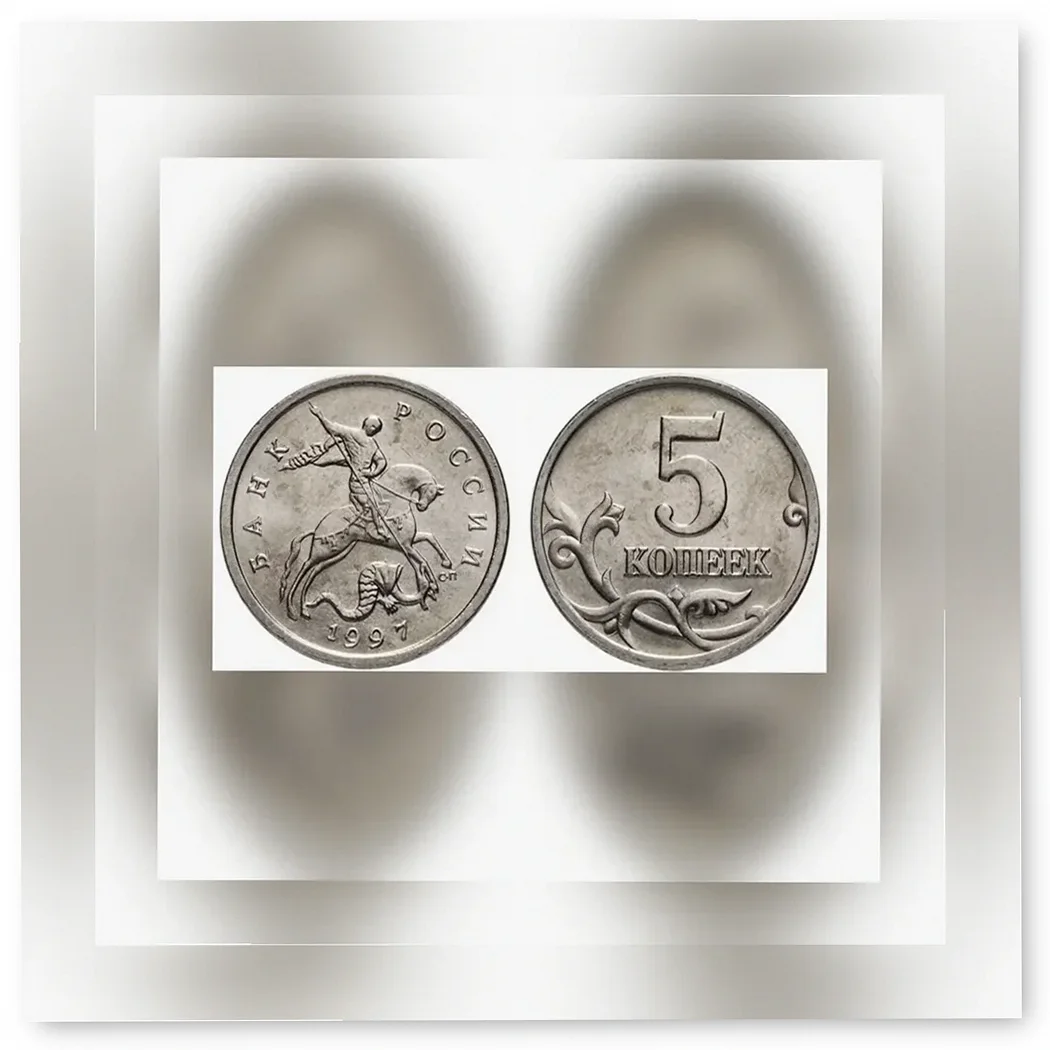
| 5 kopecks | 2.6 g | 18.5 mm | Steel, clad with cupronickel |
| 10 kopecks (1997) | 1.95 g | 17.5 mm | Brass |
| 10 kopecks (2006) | 1.85 g | 17.5 mm | Steel, copper-plated on both sides (tompac alloy) |
| 50 kopecks (1997) | 2.9 g | 19.5 mm | Brass |
| 50 kopecks (2006) | 2.75 g | 19.5 mm | Steel, plated with tompac alloy on both sides; since 2015 — steel with galvanic brass coating. |
| 1 ruble (1997) | 3.25 g | 20.5 mm | Cupronickel alloy |
| 1 ruble (2009) | 3 g | 20.5 mm | Steel with nickel electroplating |
| 2 rubles (1997) | 5.1 g | 23 mm | Cupronickel alloy |
| 2 rubles (2009) | 5 g | 23 mm | Steel with nickel electroplating |
| 5 rubles (1997) | 6.45 g | 25 mm | Copper, clad with cupronickel |
| 5 rubles (2009) | 6 g | 25 mm | Steel with nickel electroplating |
| 10 rubles (1997) | 5.63 g | 22 mm | Steel with brass electroplating |
Since 2009, circulating coins in Russia have been minted from more economical steel, using nickel or brass electroplating. This decision was made to reduce production costs, as the cost of minting a 1 kopeck coin exceeded its face value by 461%. Since 2016, regular minting of coins with a denomination of less than 1 ruble has been discontinued.
From Kopeck to Ruble: A Journey Through Denominations
1 Kopeck: From Lightest to Heaviest
The smallest coin by denomination – the 1 kopeck – weighs only 1.5 g in its modern version. This weight is characteristic of coins issued since 1997, which are made of steel clad with cupronickel.
However, history also knows more extreme figures: the lightest were Peter I's silver 'scales' weighing 0.28 g. In contrast, the heaviest was Empress Elizabeth Petrovna's copper kopeck, issued in 1755–1757, which weighed just over 20 g.
5 Kopecks: The Evolution of 'Pyataks'
Coins with a denomination of 5 kopecks, minted in 1997, weigh 2.6 g. Historically, the weight of 'pyataks' has changed repeatedly, reflecting different eras and economic needs.
Among them, the most impressive were Catherine I's copper plates from 1726. These square coins, with sides of 45 mm, were striking with their weight of 81 g, representing a unique example of monetary circulation of that time.
10 Kopecks: From Brass to Tompak and Giant Plates
Modern ten-kopeck coins, minted in 1997, weigh 1.95 g. However, after the transition to steel clad with tompak alloy, their weight slightly decreased to 1.85 g.
In a historical context, the heaviest coins were probably also the copper plates of Catherine I. These square coins had a side length of 65 mm and reached a weight of 163.8 g.
Among classic round coins, the Siberian 10 kopecks are notable. They were minted at the Suzun Mint starting in 1766. The copper coin had a diameter of 45 mm and an impressive weight of 65.5 g.
50 Kopecks: From Silver to Copper Giant
Modern 50-kopeck coins weigh 2.75 g. When they were still minted from brass, they were slightly heavier – 2.9 g. Silver 50-kopeck coins from the 19th century, as well as similar coins issued after the collapse of the Russian Empire, weighed 10 g.
The heaviest coins of this denomination in history were copper plates worth half a ruble (poltina). These square giants, with a side length of 139 mm, had an astonishing weight of 819 g.
1 Ruble: From Steel Standard to Kilogram 'Washers'
A modern ruble made of steel with nickel electroplating weighs 3 g, whereas its predecessor made of a copper-nickel alloy weighed 3.25 g.
However, giant ruble coins also existed in Russian history. Copper plates hold the first place in terms of weight: a square 1-ruble coin could reach a weight of 1.638 kg, with one side measuring 188 mm.
Following them is the Sestroretsk Ruble – a series of trial coins issued under Catherine II in 1770. In its form, this currency unit more closely resembled a washer: its thickness was 28 mm, its diameter was 72.5 mm, and its weight reached an impressive 1 kg.
2 Rubles: From Everyday Use to Commemorative Heavyweights
Two-ruble coins made of steel with nickel electroplating weigh 5 g, while the 1997 sample version, made of a copper-nickel alloy, weighed 5.1 g.
Historically, two-ruble coins also fluctuated between 4-5 g. However, the heaviest specimens are issued as part of commemorative series, such as 'Outstanding Personalities of Russia' or 'The Red Book'.
For example, the silver coin 'St. Nicholas the Wonderworker's Podvorie Church in Bari' weighs 22.26 g, demonstrating significant differences between circulating and collectible specimens.
5 Rubles: From Cupronickel to Two Precious Metals
Five-ruble coins made of steel with nickel electroplating weigh 6.45 g, the same weight as coins made of copper clad with cupronickel.
In the Soviet Union, the largest and heaviest coin of this denomination was the commemorative '70 Years of the Great October Socialist Revolution': it weighed 29 g with a diameter of 39 mm.
The five-ruble coins from the 'Golden Ring' series of 2004 turned out to be almost twice as heavy. These coins were the first to be made from two precious metals – silver and gold – and weighed approximately 48 g.
10 Rubles: From Brass to Gold Imperials
Ten-ruble coins made of steel with brass electroplating weigh 5.63 g. In general, this denomination does not show significant weight discrepancies across different periods.
Gold imperial coins of the Tsarist era weighed about 13 g. Slightly more, specifically 15.55 g, are the palladium commemorative coins issued between 1992 and 1995, such as the 'Russian Ballet' series.
25 Rubles: Rare Gold Specimens
Twenty-five-ruble coins are usually issued as part of commemorative series, such as 'Sochi-2014' or '300th Anniversary of Peter I's Monetary Reform'.
Their weight varies depending on the metal used and the minting method. Among them, the heaviest are the gold issues, minted in a quantity of only 100 pieces for Grand Duke Vladimir Alexandrovich, son of Emperor Alexander II. The average weight of one such coin was 32.7 g.
Optimal Balance: Why Weight Matters
Historical experience has convincingly shown that overly heavy currency is generally not in demand among the population, as it is inconvenient for everyday use. On the other hand, overly light coins are easily lost, which also reduces their practical value.
This is why modern circulating rubles and kopecks are made from a metal that combines resistance to wear and corrosion with moderate lightness. This approach ensures their convenience for carrying and use, achieving an optimal balance between functionality and economy.
