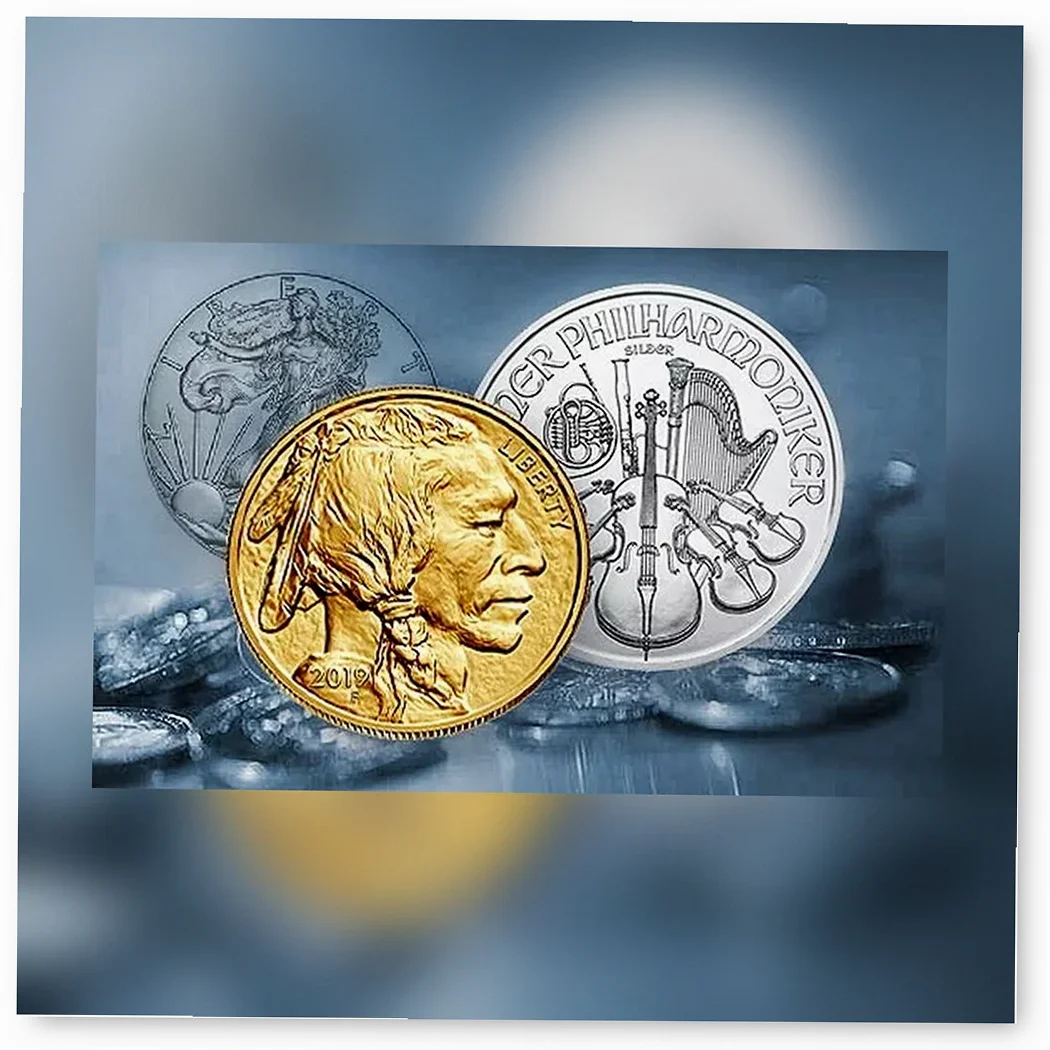

For successful investment in coins, there is a specific set of conditions that must be observed. Following these elementary rules helps preserve investments and avoid many unnecessary risks in the numismatic market.
Principle of Investment Diversification
The term 'investment diversification' emerged in 1952 thanks to the work of Harry Markowitz. He, a 1990 Nobel laureate, introduced portfolio theory, which changed the approach to investment decision-making.
Markowitz opposed the established practice of focusing solely on profit maximization. He proposed adding a new important element to the decision-making process – risk minimization, thereby emphasizing investment security.
Applying this theory to coin investments, it becomes clear that one should not invest too large a portion of capital solely in numismatics. This helps distribute potential risks and protect the overall investment portfolio.
It is considered safe to invest up to 10% of one's capital in numismatic coins. This principle is reasonable to apply in two respects: both to the total value of all assets and to the portion of capital specifically allocated for investments.
| Capital Category | Total Amount | Share for Investments | Share for Coins |
| All Property | 10,000,000 rubles | 1,000,000 rubles (10%) | 100,000 rubles (10% of investments) |
Ensuring the Security of Coin Investments
Any investment requires protection. For instance, when purchasing real estate for investment purposes, it is insured against theft and accidental damage. A similar approach is crucial when investing in numismatic items.
A key aspect of security when investing in coins is the purchase process itself. Various acquisition methods exist, each associated with a certain level of risk.
Where and How to Buy Coins?
Investment coins can be purchased in several ways:
- Directly at a bank branch.
- At the office of a certified coin dealer.
- In numismatic and specialized online stores.
- On online auctions.
- At physical auctions.
- At fairs, sales, and flea markets.
Purchases made at bank branches and from trusted dealers are considered the safest. Their offices typically provide the necessary level of security and allow for the verification of the authenticity of acquired coins. The highest risk is traditionally associated with auction purchases.
Minimizing Risks When Buying at Auctions
To reduce potential risks when buying coins, especially at auctions, it is recommended to follow these rules:
- Thoroughly check the seller's reliability: study reviews, buyer comments, find out if they are easy to contact, if they offer quality goods, if they ship parcels quickly, and how they pack items. It's also useful to check how long the store has been operating or if the user can view the seller's auction history.
- Prefer sellers with a large number of positive reviews. These are often large, well-established online numismatic stores that offer their goods through auction services.
- If possible, buy coins in person. This provides confidence in receiving the exact chosen items and allows you to assess their condition. If personal pickup is not possible, consider delivery with content verification, even though this may increase investment costs, it significantly reduces risks.
The 'Buy Low, Sell High' Principle in Numismatics
The old, but consistently relevant, investment principle states: buy low and sell high. In the numismatic market, this approach can be effectively applied using several strategies.
- **Look for Bargains:** On online auctions, pay attention to miscataloged coins or auctions with very short durations. Set up notifications for items of interest. Always compare prices in online stores to find the lowest offers.
- **Negotiate Discounts:** When purchasing several numismatic items from the same store, don't hesitate to discuss the price. Most sellers are willing to offer a good discount for a bulk purchase.
- **Minimize Costs:** Buy several coins from one seller to save on shipping. When purchasing expensive investment coins (valued over 10,000 rubles) from private individuals, remember that the tax on civil law transactions falls on the buyer. However, when purchasing from stores that issue a receipt or invoice, the buyer is exempt from this tax, which can make such a purchase more advantageous.
Applying these principles allows coin investors not only to preserve their capital but also to approach the selection and acquisition of each specimen rationally, increasing the potential for successful transactions in the numismatic market.
