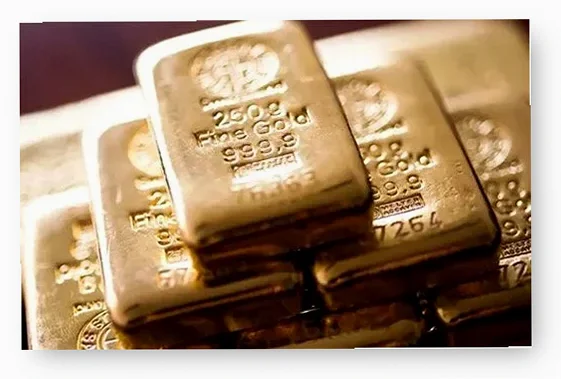

Why is gold back in the spotlight?
In recent years, the relevance of gold as an investment and savings asset has significantly increased. Several key factors contribute to this: global geopolitical instability, as well as the destabilization of the currency market and its loss of liquidity in Russia.
The abolition of VAT and personal income tax on gold purchase and sale transactions also played an important role, leading to increased demand and prices for precious metals. According to analysts, within 12 months, gold quotes on the exchange could exceed $3,000 per troy ounce, while at the time of writing, the price was $2,450 per ounce. It is expected that by the end of 2024, the price of gold could firmly establish itself above the $2,500 per ounce level.
Gold as a Safe-Haven Asset: Liquidity and Capital Preservation
Amidst the onset of deglobalization and systemic crisis, as well as looming sovereign defaults that could destabilize all debt markets and the banking system, many prefer to store their capital in physical assets. These assets include real estate, commodities, and, of course, gold.
Gold acts as the most liquid of physical commodities. It can be converted into money with the least time expenditure and a minimal spread between buying and selling prices, unlike, for example, real estate. This makes the precious metal a 'safe-haven' asset for capital.
One can invest in investment coins or bars. Both instruments are valued by the physical weight of gold, without additional markups for rarity or design. When acquiring physical gold, people usually aim to preserve their capital from devaluation, and in some cases, even from confiscation, for example, to create savings for children.
If the priority is to purchase gold with the smallest premium over the exchange price, bars should be considered, as their price per gram is usually lower. However, coins are considered more liquid because they have a standard weight and appearance, do not require special equipment for verification, and their counterfeiting is strictly punishable by law.
Understanding the Value: What Determines the Price of a Gold Bar?
The price of a gold bar depends on several key factors that determine its final market value.
| Cost Factor | Description |
| Global Gold Quotes | Determined on international markets and change daily depending on supply and demand. In 2024, the price per ounce (31.1 g) fluctuated between $2,000 and $2,500. |
| Bar Weight | Measured bars for private investors weigh from 1 g to 1 kg. Standard bars, used for interbank transactions and gold and foreign exchange reserves, weigh from 11 to 13.3 kg. |
| Pure Metal Content (Fineness) | Common investment bars have a fineness of 999.9 (1 gram of impurities per 1 kg). Less common is a fineness of 999.99 (0.1 g of impurities). A fineness of 995.0 is standard for India and Turkey, meeting the minimum requirements of many central banks. |
| Bank Markup | Depends on the weight of the bar. On average, it is 0.5–1.5% above the exchange price for kilogram bars and can reach 10–20% for 1-gram bars. |
Diversity of Gold Bars: From Grams to Kilogram Giants
Gold bars differ not only in price and weight but also in other important characteristics that determine their purpose and production method.
- Measured and Standard Bars: Measured bars are manufactured according to GOST R 51572-2020 with a minimum gold content of 999.9 fineness. These are the bars available for purchase by private investors from banks, and they can be of any shape and size as decided by the manufacturer. Standard bars are intended for interbank transactions, export, and the country's state reserve, weighing 11–13.3 kg. They are subject to GOST 28058-2015, and their shape is strictly regulated — only a truncated pyramid. Additionally, there are gold bars manufactured to order for companies with their corporate symbols, such as those owned by Sokolov.
- By Casting Technology: Cast and stamped bars are distinguished. Cast bars are produced by pouring molten metal into a mold followed by cooling; this method is used for measured bars weighing from 500 g to 1 kg, as well as standard bars. During stamping, a heavy stamp presses on heated metal, resulting in a perfectly smooth, mirror-like surface and precise shape. This method is used only for measured bars weighing up to 500 g.
- By Manufacturer: Among the largest manufacturers of gold bars in Russia are the Moscow Plant for Processing Special Alloys, Krasnoyarsk Non-Ferrous Metals Plant ("Krasцветмет"), Yekaterinburg Non-Ferrous Metals Processing Plant, Kolyma Refining Plant, and others. Information about the manufacturer is always indicated on the surface of the bar itself and in its certificate.
Secure Storage of Gold Bars: Choosing the Best Option
Naturally, gold bars require a secure and protected place for storage. This can be a bank safe deposit box or your personal safe at home. In the latter case, it is also recommended to arrange for a security alarm.
It is extremely important to keep all accompanying documents: certificates and the cash receipt. It is also not recommended to remove the bars from their original protective capsules.
When storing gold bars in a rented bank safe deposit box, it should be remembered that the bank does not know its contents and, accordingly, is not responsible for them. An alternative option is a safekeeping agreement, where the bars remain in the bank's vault after purchase or are deposited there later. In this case, the bank assumes responsibility for the preservation of the metal.
Purchasing Gold: Required Documents and Legal Aspects
To purchase gold bars from banks, only a passport is required. Foreign citizens must provide an identity document and a document confirming their right to stay in the Russian Federation.
Upon completion of the transaction, you will receive the following documents:
- sales contract;
- bar certificate;
- certificate of quality;
- cash order;
- acceptance certificate.
Please note that this list of documents is based on the example of Sovcombank and may differ in other financial institutions.
As of March 9, 2022, according to Law No. 47-FZ, VAT on the purchase of gold bars in banks has been abolished, meaning the final cost is without additional payments. Personal income tax (PIT) on transactions with precious metal bars has also been temporarily abolished if you sold previously purchased bars at a profit.
New Rules for Controlling Investments in Physical Gold
In accordance with the new methodological recommendations of the Bank of Russia No. 9-MR, banks now monitor and verify all individuals purchasing gold, especially on a regular basis. The following categories attract increased attention:
- individuals who regularly buy bars and coins but do not sell them;
- those who do not leave gold in the bank for safekeeping.
In such cases, which applies to almost all investors, the bank has the right to request additional documents, including those concerning the origin of funds. Transaction amounts may also be correlated with official income, and client actions and operations may be checked for suspicious activity. Similar actions are recommended for corporate buyers. The purpose of these measures is to counteract illegal financial operations and reduce the risks of credit institutions being involved in unlawful activities.
