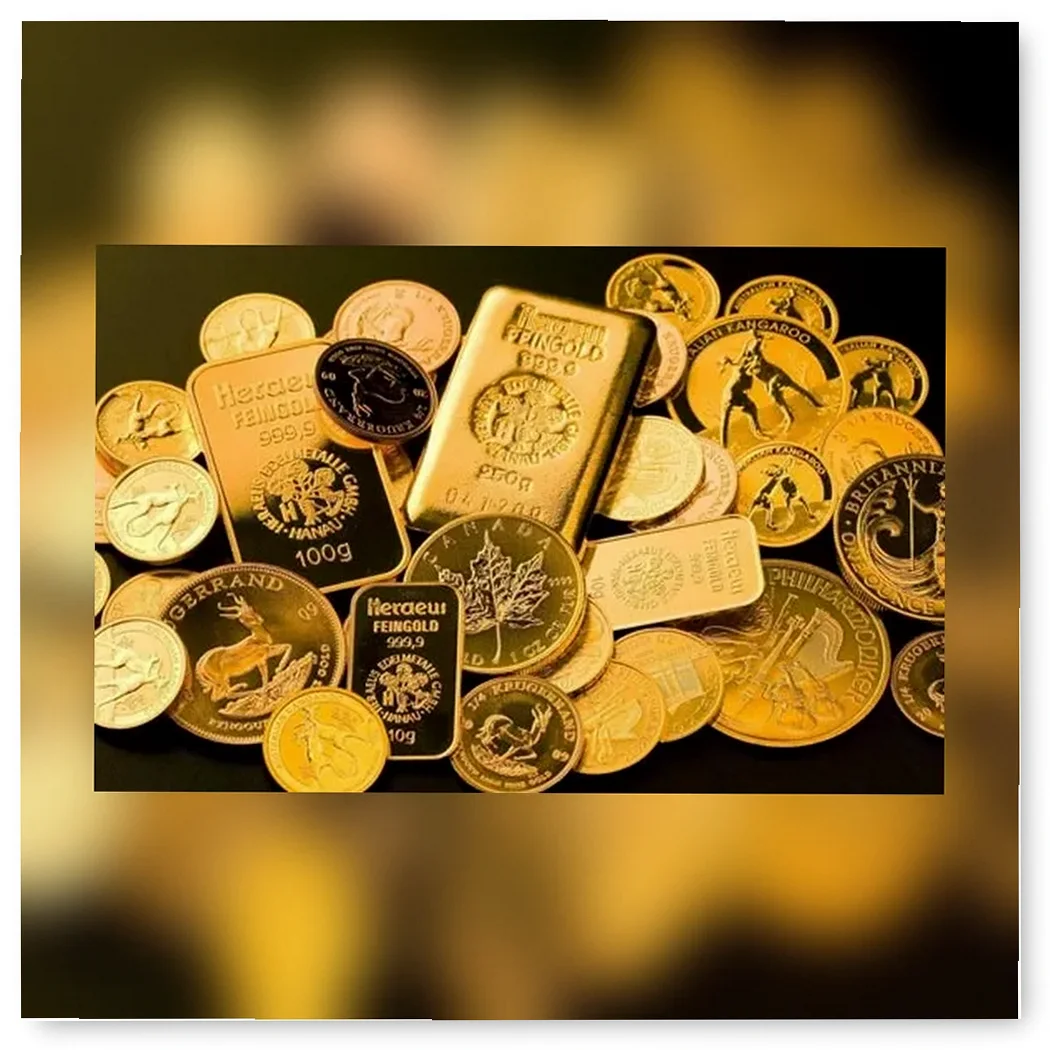

The Investor's Path into the World of Precious Coins
For successful and secure investments in precious metal coins, a deep understanding of their varieties and production characteristics is essential. Navigating the types of minting, distinctive features of releases, and market dynamics is a key task for every investor.
Both in Russia and abroad, gold, silver, and platinum coins are traditionally divided into two main categories, each with its unique characteristics and purpose.
Main Types of Coins: Investment and Commemorative
Precious metal coins are classified by their purpose, which directly affects their value and role in the market. This basic distinction helps to understand which type of coin best suits your goals.
- Investment Coins
- Commemorative Coins
The price of investment coins is determined solely by the value of the precious metal they contain. They are minted in large editions, and less stringent requirements are placed on their minting quality compared to other types of coins.
In contrast, commemorative coins are characterized by limited mintage and high-quality striking. Their value can significantly exceed the price of the metal they are made from, and they always come with a certificate of authenticity.
Investment Coins: Capital Preservation and Numismatic Value
Investment coins are created for those who seek to profitably invest funds and preserve their savings. Their main goal is to be a savings instrument tied to the value of the precious metal. Collectible editions, whether commemorative or special investment issues, are more suitable for numismatic connoisseurs or as valuable gifts.
This statement is particularly relevant for Russian investment coins: their value is 100% determined by the cost of the precious metal, without any additional collectible premium at the time of issue.
Minting Standards: From Bullion to Proof
In addition to international classification by type, precious metal coins are also categorized by minting quality, which is always specified in the issue's documentation. Interestingly, under certain conditions, investment coins can eventually acquire the status of collectible specimens.
| Minting Standard | Features | Mintage | Packaging/Certificate | Relative Price |
| UNC | Uncirculated, simplest variant | Large | Usually none | Base |
| BU | Brilliant Uncirculated, enhanced minting, deep relief, high detail, sometimes mirrored fields | Large | May include a capsule | Higher than UNC |
| Proof-like | Outwardly similar to Proof (mirror finish/reverse frosting), but simpler production technique | Medium/Large | Often in capsules | Higher than BU, lower than Proof |
| Proof | Significant portion of operations by hand, high degree of detail, relief, mirrored fields, highest quality | Limited (tens-thousands) | Branded, with certificate | Significantly higher than all others |
Uniqueness of the Proof Standard
Collectible coins are characterized by the 'Proof' minting standard. During their production, a significant portion of operations are performed manually, which requires more time. The result is a very high degree of detail, relief, and overall surface quality.
Proof issues are always limited; their mintage can range from a few dozen to several thousand pieces. Such coins are sold in branded packaging with mandatory certification documents. The price of these specimens is significantly higher than that of investment coins.
Bullion Coins and 'Rounds': What Are They?
Investment coins are often referred to as 'bullion coins,' which literally translates to 'ingot coins.' Their minting adheres to various quality standards described above.
Besides coins, there are also coin-like round ingots called 'rounds'. These are simple gold or silver discs and are not official legal tender in any country.
Types of Investment Coins and Their Features
In addition to qualitative differences, investment coins are characterized by the themes of their series, regularity of re-issue, and the total number of pieces in a mintage. These factors also influence their potential investment attractiveness and value for numismatists.
World Leaders Among Investment Coins
Among the most popular investment coins recognized worldwide, the following well-known examples can be highlighted:
- South African Krugerrand
- American Eagle
- Australian Kangaroo
- Canadian Maple Leaf
- Austrian Philharmonic
- Russian St. George the Victorious
Bullion (Weight) Coins: Annual Issue and Stability
Most silver investment coins and a significant portion of gold coins are issued annually with an unchanging design. Their mintages can reach tens of millions of pieces.
These coins are called bullion, or weight, coins. Essentially, they are gold bars of standardized weight (0.25, 0.5, 1, 2, 5, or 10 troy ounces), designed in the form of a coin. They offer the smallest premium in price, unless the issue has specific features.
Over time, the premium on bullion coins hardly changes, although older specimens may appreciate, especially if their original mintage was small. In practice, new issues are often valued higher than older ones due to improved quality and enhanced security features.
Unlike silver coins, the minting of annual gold bullion coins sometimes involves changes to the reverse design. For example, the Australian Kangaroo changes its reverse design annually, essentially transforming into a series coin.
Series Bullion Coins: Themes and Collectible Value
There are coin series dedicated to specific themes, cities, places, objects, or events. They can have either a limited or an unlimited mintage.
A prime example of this category is the popular unlimited series “Somali Elephant,” whose gold and silver issues have been released every year for 15 years with a constantly changing reverse design. Among the successful limited series is the British cycle “The Queen's Beasts.”
Series coins can be highly sought after or not so much. New series appear annually, and only experts can predict which ones will gain the most popularity. Typically, series coins have a higher price than standard bullion coins.
A "closed series," meaning a complete set of issues from all years, will have maximum value. The very first issues of each series are the rarest, as they were sold long ago. This leads to a significant increase in price and even the reclassification of some initially successful bullion coins into the collectible category.
Commemorative Issues: A One-Time Event in Metal
Another category is commemorative coins, which are issued once in honor of a specific event. Their mintage can range from tens to even hundreds of thousands of pieces. The value of such coins is typically even higher than that of series coins. Moreover, they can be produced in any minting quality.
Commemorative coins are sold in cases, booklets, or without packaging. Over time, their price may increase if the international significance of the issue's theme persists. However, if interest in the theme wanes, the value of a commemorative coin may decrease, and it risks being reclassified as a simple bullion coin.
Low-Mintage Investments: The Potential for Rarity
Investment coins issued in small batches can have greater value. A low mintage is considered to be a release of 5,000 to 50,000 pieces. Such editions are always more expensive than bullion or standard investment issues, regardless of packaging and minting quality.
If successful with the audience, the price of such coins will increase over time due to a rarity premium. If a coin of this type becomes popular, the mint often continues to strike coins on the same theme.
However, predicting the success of a particular release is extremely difficult, and subsequent issues by no means guarantee the same popularity as the first.
Limited Series: The Mystery of Mintages
Coins with restrictions on the duration of their release belong to the limited type. Among these, two main varieties are distinguished, each with its own characteristics.
- Issues with a pre-set end time for minting.
- Coins whose minting is limited by the start date of the next issue within the same series, with the exact completion moment unknown in advance.
The number of limited edition pieces in a mintage is usually kept secret, as the future appreciation of the coin and the recouping of its premium directly depend on this information, making them particularly interesting for knowledgeable investors.
The Path to Smart Coin Investments
A deep understanding of coin types and their classification, as well as minting specifics, will help novice investors confidently navigate the coin market. This knowledge will form the foundation for building an effective individual investment strategy in the world of precious metals and numismatics.
