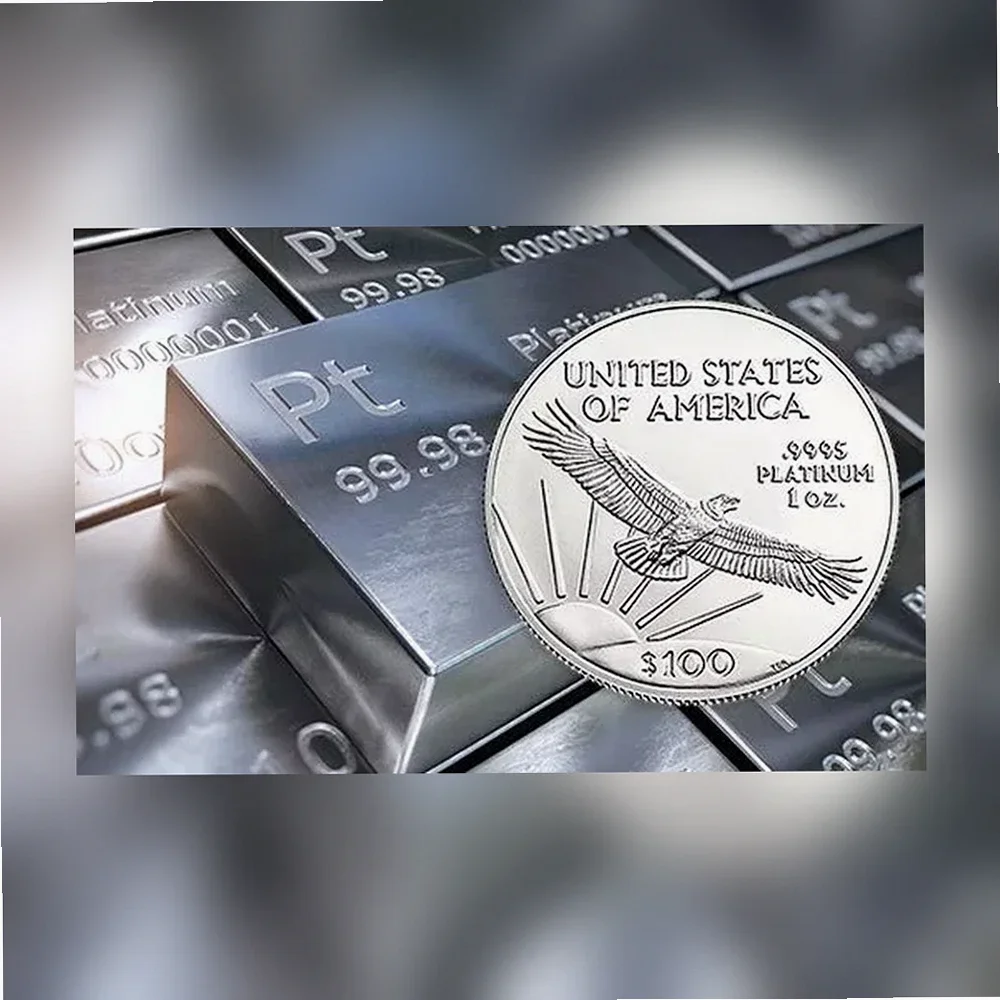

Platinum, this very rare precious metal, has long attracted the attention of investors and collectors worldwide. It is often sold in the form of coins, bars, and rounds, raising many questions about its value and investment potential. Experts are ready to share their knowledge about what you need to know about this unique asset.
Platinum as an Investment Asset
Investing in platinum can be a strategic decision, especially for those looking to hedge their assets against inflation. The potential price growth of the precious metal in the coming years also makes it attractive for purchase. It is one of the reliable investment methods during turbulent economic times.
Physical platinum is available in several forms, providing flexibility for investors. These include coins, rounds, and bars. Platinum coins are not only a popular way to invest in platinum but also a highly liquid asset, meaning they can be easily sold on the market.
Virtually pure forms of platinum are available on the market. Many platinum coins, bars, and rounds boast a purity of 9999/1000.
Acquisition and Sale of Platinum
Most investors prefer to buy platinum in the form of coins or bars. These can be purchased from specialized dealers trading in precious metals. Selling platinum is not difficult, as it is one of the most sought-after precious metals in the world and holds excellent resale value.
To find out current spot prices for platinum, you can refer to up-to-date precious metal quotes. The best place to sell platinum is a reputable and reliable dealer or bank, which ensures you receive a fair price and a secure transaction.
While it is possible to pawn platinum at a pawnshop, it is not always the best solution. For the optimal price, it is advisable to contact professional certified dealers specializing in coins or bars.
Platinum Price Dynamics: From "Cheap" to "Expensive"
Assessing platinum's value as "cheap" or "expensive" is often relative. In early 2020, platinum and other physical metals could be acquired at prices some considered low. However, in 2008, platinum quotes set record highs, and in mid-2020, they approached those levels again.
Platinum and other metal prices have risen significantly compared to the 1980s or 1990s. Nevertheless, today's platinum prices could indeed prove advantageous if precious metals appreciate in value in the future, especially if demand for platinum sharply increases, which is a very probable scenario.
Platinum's high price is due to its exceptional rarity. It is found in nature much less frequently than gold, which is one reason for its high cost. Furthermore, platinum has numerous industrial applications, ensuring consistent high demand. Low supply combined with significant demand helps maintain high prices.
The highest price for platinum in recent decades was recorded in 2008, when it sold for almost $2075 per ounce.
| Comparison Criteria | Platinum | Diamond |
| Weight Comparison | Much More Affordable | Much More Expensive |
Various factors influence the rise and fall of platinum prices. Some are directly linked to fluctuations in platinum demand. At the same time, the price of the precious metal can be affected by investor confidence in Wall Street, the relative strength of the dollar, and geopolitical conditions both domestically and internationally. Sometimes, price drops can be caused by correlation with general market events, rather than necessarily a causal relationship.
To determine the approximate value of one gram of platinum, you can divide the current price of platinum per ounce by 31.103, as a troy ounce contains precisely that many grams of 100% pure metal. Similarly, to find the approximate value of 100 grams of platinum, you would divide the price per ounce by 31.1 and multiply the resulting number by 100.
While there have been periods in the past when platinum was more expensive than gold, at the time of writing this article, platinum has generally been cheaper than gold. This is due to many reasons, including relatively higher demand for gold and the longstanding preference many investors traditionally have for gold.
Assessing Platinum's Value
Current platinum prices and price charts are available on the precious metals quotes pages. The value of platinum coins varies widely, as it depends on several key factors.
- The net weight and purity of the metal in the coin.
- The current spot price of platinum.
- Collectibility and market demand for a specific coin.
These factors can cause some platinum coins to be worth hundreds or even thousands of dollars. Platinum bars also vary in value depending on their size and weight. Typically, bars are issued in weights of 1 ounce, 10 ounces, or 1 kilogram (which is equivalent to 32.151 troy ounces).
The value of platinum scrap is also determined by its net weight. Regardless of whether it's a few particles of platinum dust or entire pieces of residual platinum from a destroyed bar, it is the amount of pure metal that will influence its value.
Platinum in an Investment Portfolio
Platinum is an excellent asset, widely used by precious metals investors and speculators. It has also proven to be a successful investment tool for collectors accumulating precious metal coins.
Buying platinum can be profitable for those who acquire it at a lower price than the current selling price. This metal is also worth buying for those planning to hold it long-term, as it serves as a hedge against inflation and is one of the reliable ways to invest during unstable economic times.
The choice between platinum and gold depends on an individual's investment strategy and the prevailing price dynamics of one metal compared to the other. Gold is often the preferred precious metal for investors due to its popularity and value in industry, jewelry, and art. Platinum, however, is used less frequently for investment, but its significance in various industries is growing.
Many investors diversify their portfolios by acquiring platinum, gold, silver, and other assets to increase their chances of positive performance regardless of market conditions.
Platinum coins can be a good investment. Over the years, they have generally performed stably as a savings tool. Despite fluctuations in platinum's value, platinum coins, like other precious metal coins, have generally yielded favorable results for many investors who showed patience and did not rush to sell.
Some investors who bought platinum in 2021 have seen positive results, but timing is a crucial factor. Those who acquired platinum at a high price may need to hold their investments for a longer period to realize significant gains.
Investing in precious metals can be done both short-term and long-term. Some precious coin investors who make purchases right before a sudden metal price spike do very well by turning around and selling at the peak. Others achieve incredible success by holding their metals for several years and selling during periods of relative price inflation. Both approaches require the investor to be aware of market trends and have a good understanding of the trend direction in that market sector.
No one can accurately predict how much platinum will be worth in 2030 or at any other specific point in the future. However, past price data can influence investment decisions. Long-term data shows that platinum and other precious metals have generally demonstrated an upward trajectory over many years. Barring any unforeseen changes in platinum demand or anomalous market conditions that would definitively lower the value of precious metals, platinum is likely to continue performing well in the years to come.
The question of whether platinum is undervalued is one that nearly every precious metal investor asks. In the case of platinum, a rare precious metal with numerous industrial applications, retrospective analysis may indicate that it is undervalued, especially if industrial sectors where platinum is crucial have experienced unprecedented growth in recent years.
It is quite possible that the price of platinum will rise. It's important to remember that precious metals are subject to price fluctuations based on various market factors. Even if the price of platinum drops tomorrow, it could return to today's value in a couple of days or even reach a record high in the coming months or years. While trying to predict the future price precisely is futile, it is wise to include platinum in a larger, diversified investment portfolio.
Additional Facts About Platinum
There is a US $100 platinum coin called the American Platinum Eagle. These coins contain one troy ounce of pure platinum and have been minted by the US Mint since 1997. They can be purchased from coin dealers and some banks.
Platinum is not the rarest or most expensive metal in the world. That honor currently belongs to rhodium, a silvery-white metal used in the automotive and other industries.
| Platinum Applications | Sector |
| Catalytic Converters | Automotive Industry |
| Jewelry | Fashion and Ornaments |
| Medical Devices (stents, catheters) | Medicine |
| Chemotherapeutic Drugs | Pharmacology |
| Electronics, Sensors | High-Tech |
When it comes to investments, both platinum and diamonds have their merits and drawbacks. However, when evaluated by cost per gram, platinum is significantly more affordable than a diamond and can benefit from many market factors, including its widespread use in various growing and developing industries.
Platinum cannot spontaneously turn black under normal storage conditions. However, its color can be artificially altered to black using gaseous hydrogen, ammonia, or hydrochloric acid.
Gold is traditionally preferred by many due to its familiarity as a precious metal for over 5000 years and its countless artistic, recreational, and industrial purposes. People only became acquainted with platinum in the 19th century. It is a much rarer metal, although its industrial use is constantly growing. However, it is incorrect to assert that all people prefer gold to platinum.
Unique Properties and Origin of Platinum
Platinum is a white metal similar in appearance to silver, but unlike silver, it does not tarnish or discolor. Additionally, platinum is quite dense and stronger than gold, yet it is very ductile. It is also a fantastic catalyst, making it ideal for applications in industries such as automotive.
Platinum occurs naturally in relatively small quantities and is primarily extracted as a byproduct during the mining of other ores like copper and nickel. All the platinum ever mined in the world could fit into a typical American home. The constant demand for platinum makes it even rarer.
Natural deposits of platinum are found in various countries worldwide, including Canada, the USA, South Africa, and Russia.
Platinum in Jewelry and Its Durability
Platinum rings can last forever. Because platinum does not change color under normal conditions, platinum rings will retain their original appearance, unlike rings made from other precious metals.
Platinum is a natural and pure metal, whereas white gold obtains its color through the artificial addition of silver or palladium. Platinum does not change color under normal conditions and use, which makes it preferable to white gold.
Platinum typically has a brighter color than white gold and does not tarnish over time. It is denser and much purer than white gold, and in certain applications, such as jewelry, it wears down much less over time. While white gold may tarnish over time and lose the plating that gives it its white color, platinum is pure, and platinum jewelry will never need to be replaced over time.
Both platinum and rhodium have their advantages. However, while rhodium is the most expensive and rarest metal, platinum is still much rarer than many other widely traded metals. Nevertheless, it is easy to acquire in the form of a coin, round, or bar – an excellent means for investing in physical metal.
Both titanium and platinum appear similar in color, but titanium is much stronger than platinum, lighter in weight, and cheaper. This gives titanium an advantage for many industrial applications, including the construction of objects such as aircraft, tennis rackets, and prosthetics. But platinum is a better catalyst, it is extremely dense, and from an investment perspective, it is much rarer than titanium.
Platinum does not contain iron and does not rust, including in water. It is impervious to rust.
Platinum has antioxidant properties and is used in various medicines, chemotherapy, and other health-related products.
There are different estimates of global platinum reserves. For example, Statista states that there are approximately 70,000 metric tons of platinum in the world, 95% of which is concentrated in South Africa.
Platinum is durable and can be melted, remelted, and manipulated in virtually any way. It is a truly eternal metal.
