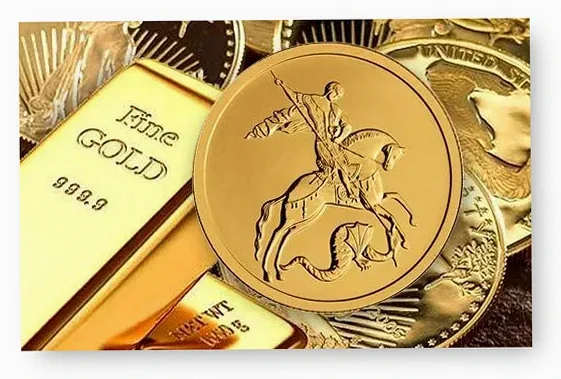

Gold as a Reliable Investment: Modern Context for Russia
Russian residents are well aware of the advantages of investing in gold, distinguishing it from riskier assets and other means of accumulation. In the current economic situation, the development of the domestic gold market is capable of fully satisfying the growing investment demand, as confirmed by experts from the World Gold Council.
Thanks to its unique characteristics, which allow for the optimization of investment portfolios and effective management of financial instruments, the yellow metal attracts the attention of large institutional investors. However, for the further growth of the Russian gold market, legislative changes aimed at expanding the list of available gold assets are necessary. The prospects for such development already look promising.
Historical Roots and Russia's Current Gold Reserves
Russia's connection with gold goes deep into history. The State Russian Treasury, the predecessor of Gokhran, was founded by Peter I in 1719. Today, Russia holds one of the leading positions in the world in terms of the extraction of this precious metal.
The country's Central Bank has formed a significant gold reserve, which accounts for 20% of all state gold and foreign exchange reserves. This reserve contains an impressive 2300 tons of precious metal. Interest in gold investments is now higher than ever, and the yellow metal is becoming an essential component of effective, long-term investment portfolios.
| Indicator | Details |
| Gokhran Foundation | 1719 (under Peter I) |
| Central Bank Gold Reserve Volume | 2300 tons |
| Share of Gold in FX Reserves | 20% |
Impact of the COVID-19 Pandemic on the Economy and Investments
The COVID-19 pandemic had a significant impact on the global and Russian economies. The situation was exacerbated by the collapse of the oil market, which led capital market participants to seek to minimize any risks. These factors resulted in the ruble's collapse and a significant reduction in state budget revenues.
Authorities were able to support the national currency and ease pressure on the economy only through monetary and fiscal stimulus measures. However, a full recovery of the consumer market is only possible with the return of economic stability. Ongoing geopolitical risks do not contribute to investment growth, and the ruble's exchange rate remains susceptible to volatility.
The Russian Gold Market: Challenges and Development Paths
By many indicators, the domestic gold market is in its early stages of development compared to the dynamically growing markets of Europe and China. Over the past decade and a half, the demand for gold coins and bars there has increased tenfold.
The main obstacle to gold investment and the expansion of the gold market in Russia is one of the highest value-added taxes (VAT) in the world, at 20%. Specialists from the World Gold Council note that Russians possess sufficient knowledge of gold as an investment tool. Increasing the availability of gold assets, including coins and bars, at adequate prices could significantly boost demand for the precious metal.
WGC expert studies have shown that gold investments are perceived by the population as a reliable protective tool for preserving savings against inflation.
Towards VAT Abolition and Demand Stimulation
The issue of abolishing value-added tax on transactions involving gold bars and coins has been actively discussed in the government for several years now. Russian investors are hopefully awaiting a positive decision that could significantly revitalize the market.
Recent legislative changes have come into force, allowing the state to track all manipulations with precious metals. This should ensure the transparency of the domestic gold market and accelerate the process of VAT abolition. Removing this barrier should stimulate gold investments and contribute to the further development of the precious metals market in Russia.
The experience of China and EU countries has shown that the abolition of VAT on sales of gold coins and bars led to a significant increase in demand from private investors. While the growth of the gold market does not happen instantly, intelligent stimulation can significantly accelerate it. From 2010, retail investors in Europe acquired approximately 2260 tons of yellow metal in the form of coins and bars, with a total current value of about $128 billion, or 8.9 trillion rubles.
A revision of the Russian tax system governing the buying and selling of precious metals, and the creation of appropriate infrastructure, can breathe new life into the domestic gold market.
Financial Literacy and Accessibility of Gold Assets
In words, the Russian government encourages broader public participation in investments and advocates for the preservation of pension and other savings through increased financial literacy. In practice, however, opportunities for generating income are often curtailed, and the Russian gold market continues to significantly lag in development.
According to World Gold Council experts, expanding the range of reliable assets will increase the accessibility of gold. Russians already consider it the safest and most effective tool for mitigating financial risks, which will help attract new investments to the precious metal market.
Gold in the Modern Investment World: Its Unique Role
The last twenty years have significantly changed public opinion about gold. This has been driven by economic growth and increasing prosperity in Eastern countries, as well as heightened interest from major institutional investors. Thanks to its unique qualities, gold is an ideal tool for long-term risk diversification.
- Lack of visible correlation with other assets
- Scarcity and limited resources
- High liquidity in the global market
The precious metal plays a dual role: it is not only a luxury item and a status symbol but also an effective investment tool. It can yield profits of up to 30%. The average annual appreciation of gold in ruble terms is about 15%, which is comparable to the growth rates of securities of successful Russian companies.
The protective anti-crisis properties of the precious metal encourage investors to use it during periods of increasing financial risks and inflation threats. The dual nature of gold, being both a consumer good and an investment asset, allows it to generate income even during periods of economic stability.
Analysts' Forecasts and Recommendations for Investors
Current analyst forecasts indicate that the upward trend in the gold market will continue in the near future. This is due to ongoing uncertainty in the economic and geopolitical environment, as well as the continuing coronavirus pandemic. Additional catalysts for the metal's price growth remain record-low key interest rates and a challenging situation in the stock markets.
Today, financial experts recommend forming a ruble investment portfolio, including protective gold assets up to 13% of all other instruments. This approach will significantly reduce overall risks, increase effectiveness, and potential profit.
