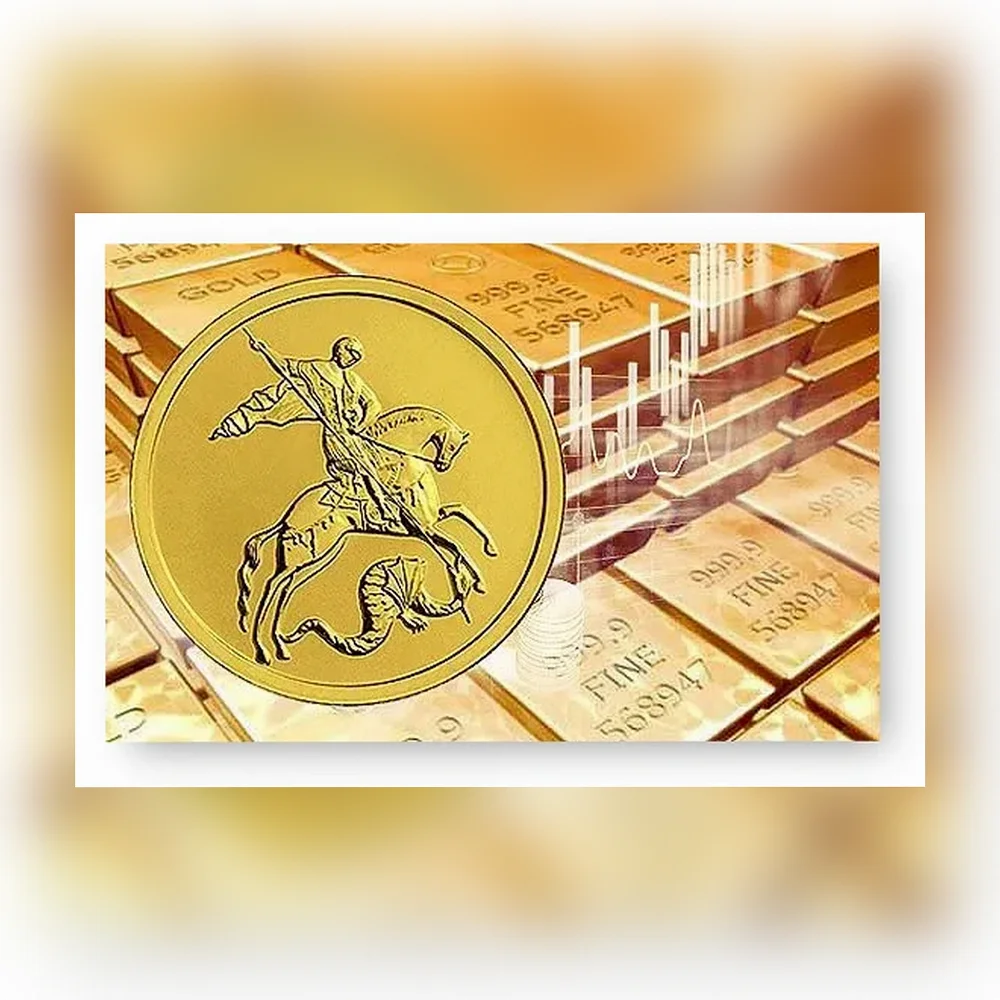

The Riddle of Gold's Rise: Echoes of Financial Emission
The rise in gold prices is inextricably linked to the decrease in the purchasing power of 'fiat' money. This is due to the fact that over recent decades, the global financial system has faced a colossal volume of obligations, formed as a result of monetary and credit issuance.
These obligations have become so significant that, in the long term, it is impossible not only to fully repay them but even to effectively service them. This creates fundamental pressure on currency values and provokes an increase in gold prices.
American Debt: An Indicator of Global Problems
The United States of America serves as a prime example of this trend, as the US dollar still holds the status of the world's primary reserve currency. The total obligations of the American government, businesses, and households are estimated to be in the range of 60 to 100 trillion dollars.
Meanwhile, the country's gross domestic product is only about 13 trillion dollars. Such a disproportion indicates a significant financial gap, affecting purchasing power.
Amidst the ongoing economic crisis in the U.S., there has been a sharp decline in tax revenues across all levels of government budgets. Simultaneously, subsidies for struggling industries, especially the banking sector, are rapidly increasing, as are social welfare payments.
This includes unemployment benefits and payments for the retiring 'baby boomer' generation. As a result, budgets are 'bursting at the seams,' and deficits are covered by incurring new debts, for the servicing of which new loans are also taken.
The acceleration of this process in recent years makes the prospects of the U.S. government being able to pay off its obligations 'in current dollars' practically zero. This situation is a key factor driving the rise in gold prices.
Chain Reaction: Global Economies Under Pressure
A similar picture is observed in a number of other developed countries, including Japan, the United Kingdom, and some European Union states. These economies face similar challenges related to growing liabilities and budget deficits, which is reflected in the global financial system.
Governments' Dilemma: Default or Currency Devaluation
When a government finds itself facing financial obligations it cannot meet, a choice arises between two difficult solutions: to default on its debts or to print additional money.
Printing money, in essence, means devaluing the national currency. Under conditions of devaluation, citizens and investors naturally seek to preserve the purchasing power of their savings by converting them into more stable currencies.
Gold as a Refuge: A Shift Away from 'Paper' Assets
However, what happens when financial problems become global? In such a situation, currency devaluation occurs alternately and, in essence, 'in a race' across many countries worldwide. This creates unique challenges for capital preservation and stimulates investment in gold.
In conditions of such global competitive devaluation, owners of capital and savings are left with only one effective way to protect purchasing power.
- To 'exit money' altogether, i.e., to convert it into real physical assets.
- To invest in real estate or essential goods.
- To acquire gold, which is recognized as the most liquid and convenient to store of all physical commodities.
This process has been actively developing in recent years and, according to estimates, will only accelerate. The world is entering a period of global and rapid depreciation of paper money.
The price of gold serves as one of the most accurate and important indicators of this process. It is sufficient to track the current dynamics of the gold price to understand what 'barometer' of the world's financial health it reflects.
Perennial Questions for the Gold Investor
In light of these trends, many are asking important questions concerning the preservation and growth of capital in precious metals.
- What portion of capital or savings is it advisable to keep in gold?
- For what period does it make sense to consider buying gold as an investment?
- How can one effectively create their own 'gold reserve' for retirement?
