
Resurgence of Interest in Gold: Global and Russian Trends
Recent years have been marked by a rapid recovery in demand for physical gold in coins and bars among retail investors worldwide. According to a report by the World Gold Council (WGC), more than 222 tons of this precious metal were acquired by the public from July to September 2020 alone, which was one and a half times the figures for the previous year.
Russia also saw an increase in demand for investment coins and bars, although volumes were more modest, not exceeding 1.3 tons during the same period. Bank clients more often choose gold coins due to their high liquidity. Their price is usually comparable to the exchange value of the metal they contain.
Gold Rush in the Post-Pandemic Period
The third quarter of 2020 became a period of significant growth in gold investments among retail investors. WGC statistics confirm the purchase of over 222,000 kg of physical gold in the form of coins and gold bars, which is 150% higher than the same period in 2019. This surge was due to the beginning of the global economy's revival after the lifting of quarantine restrictions and the partial restoration of supply channels disrupted by the pandemic.
The highest investment demand for physical gold was recorded in China, where the sales volume of investment coins and bars to retail buyers amounted to 60.5 tons, an increase of 36% compared to 2019. Surprisingly, Turkey took second place in the demand for precious metal, purchasing over 48 tons of gold – seven times more than in the same period last year.
Demand for gold bars and investment coins among Russians also significantly increased in 2020. Private investors acquired 1.3 tons of these assets in Q3, which is 1.5 times higher than last year's figures. From January to the current moment, 3.7 tons of physical precious metal have been purchased in the country, comparable to the entire volume of investments in the yellow metal for the whole of 2019.
This growth is explained by concerns about inflationary processes caused by the increasing unbacked mass of paper dollars and euros. Under such conditions, the price of protective assets like gold will inevitably rise, which prompts investors to acquire the precious metal now.
Secrets of Choice: Investment vs. Commemorative Coins
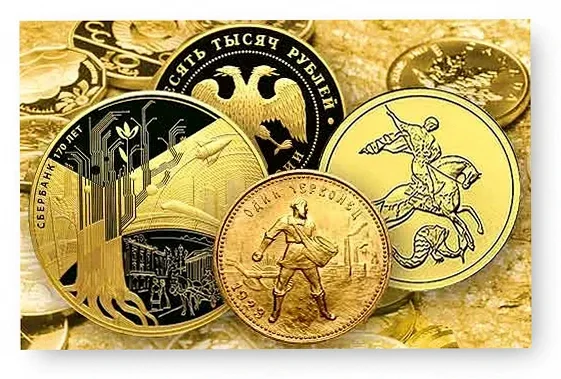
Precious metal coins come in two main types: investment and commemorative. The selling price of both options is close to the value of the precious metal contained within them. However, there are significant differences between them that affect their liquidity and investment attractiveness.
| Characteristic | Investment Coins | Commemorative Coins |
| Mintage | Hundreds of thousands or millions of copies | Up to 10,000 pieces (limited editions) |
| Minting Quality | Uncirculated | Proof |
| Design | Mass-produced design | Elaborate design |
| Liquidity | High | Low (secondary market is narrow) |
| Sale to Bank | Price determined by banks (spread 10-15%) | Extremely difficult, buyback several times less than sale price |
| Purpose | Long-term `gold investments` | Numismatic collection or expensive gift |
Investment coins have greater liquidity, as their purchase and buyback prices are determined by banks. The difference between these prices, known as the bank spread, typically ranges from 10% to 15%. This difference covers not only the commission markup but also the costs of transportation, storage, and insurance of the precious metal.
By acquiring gold coins with a long-term perspective, typically three years or more, investors can realize significant profits. For example, investment coins purchased in January 2020 could have already yielded high returns upon sale, considering the increased price of gold over the year and the strengthening of the US dollar against the ruble. Such acquisitions are rarely part of momentary speculations.
Features of Investing in Russian Gold Coins
The sale of precious metal coins in Russia is handled by major financial institutions such as Lenta Bank, Sber, RSHB, VTB, Otkritie, Gazprombank, and others. Among retail investors, the domestic investment coin George the Victorious is most popular.
“George the Victorious”: The Flagship of Russian Investments
The "George the Victorious" coin has a nominal value of 50 rubles and contains 7.78 grams of pure gold 999 fine. The selling price varies depending on the bank: in early November 2020, it ranged from 42,500 to 46,600 rubles. The value of coins also depends on their place of minting; for instance, products from the Moscow Mint (MMD) are approximately 2.4% more expensive than those from the Saint Petersburg Mint (SPMD), which is also considered when selling the coins back to a Russian bank.
Legendary Soviet Chervonets
In the market for gold investments, you can also find gold chervonets, produced for the 1980 Moscow Olympic Games. These coins were issued in millions of copies and, in terms of gold content (7.74 grams), are similar to the George the Victorious. Their price in banks ranges from 41,000 to 45,000 rubles, but they are encountered much less frequently.
Rules for Storing Gold Coins
Storing coins made of gold requires adherence to certain rules, as their condition largely determines their subsequent resale value. Even a fingerprint can remain on the metal forever, so it is recommended to touch coins only with special cotton gloves.
- Touch coins only with special cotton gloves to avoid fingerprints, which can remain on the metal forever.
- Store `gold coins` in their original transparent plastic capsules provided by manufacturers to prevent stains and other damage.
- Avoid opening the protective capsule, as this significantly increases the risk of microscopic defects and, consequently, reduces the subsequent resale value of an `investment` or collectible piece.
