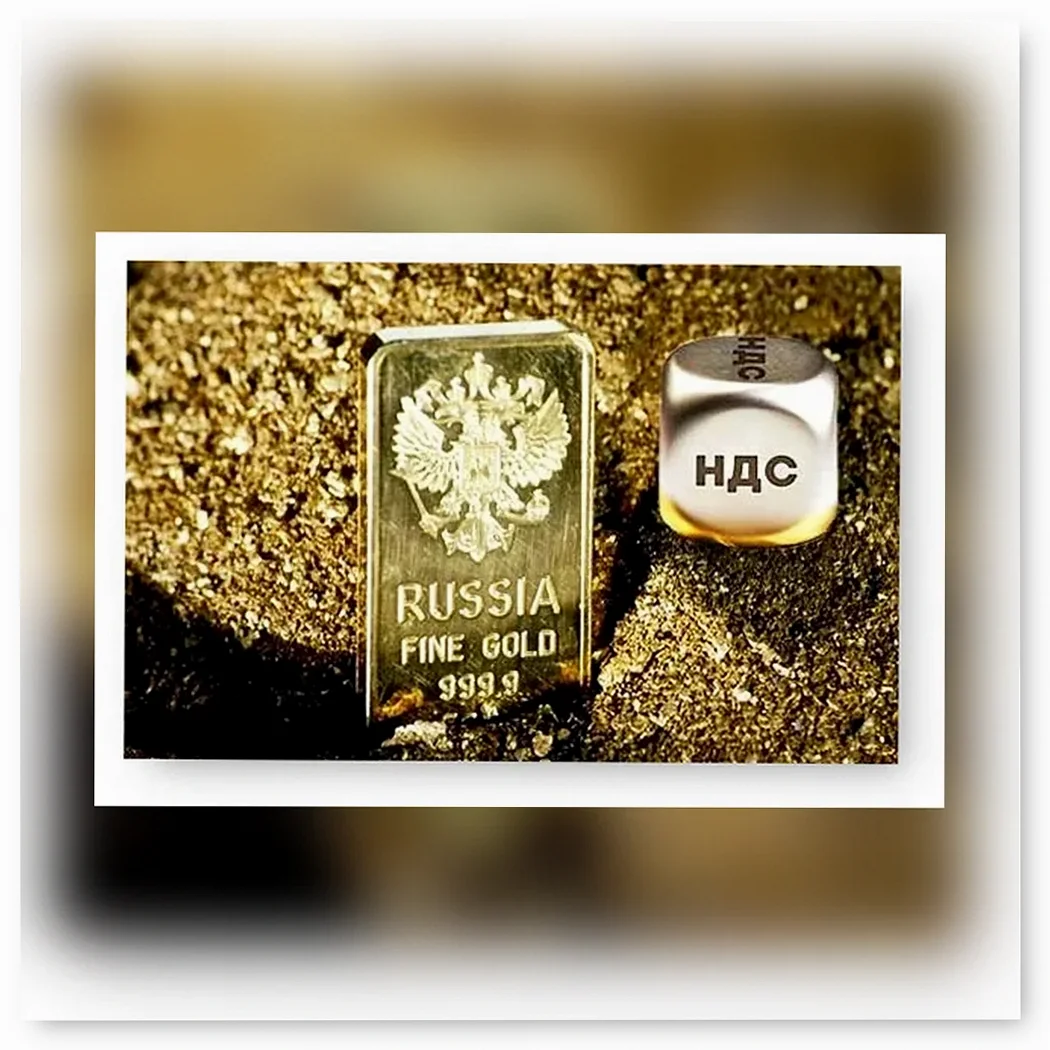

The Path to Gold Investments: What You Need to Know About Taxes?
The desire to preserve and multiply capital often leads investors to consider gold. This timeless asset offers various ways to invest funds: from the physical acquisition of gold coins and bars to modern instruments such as unallocated metal accounts (UMAs), exchange-traded funds (ETFs), or mutual investment funds (MIFs).
While the choice of options for investing in gold is wide, a critically important aspect often overlooked is the tax obligations associated with the purchase and sale of precious metals in the Russian Federation.
Understanding these nuances is a key element to ensure your gold investments yield the expected profit. Without prior study of this issue, returns from investments can be significantly reduced or even completely negated by the tax burden.
Preparing for Investments: Important Tax Aspects
Before finally deciding on an option for investing in gold, the prospective investor is advised to carefully study the following aspects:
- What type of gold tax corresponds to the chosen investment method.
- What methods exist to reduce the tax burden when buying and selling precious metals.
- How, within the framework of current legislation, gold can be sold without VAT.
Two Main Taxes on Precious Metals: VAT and PIT
Domestic legislation provides for two main taxes regulating operations with precious metals and derivative investment instruments:
- VAT (Value Added Tax): at a rate of 20%, accompanying the purchase.
- PIT (Personal Income Tax): at a rate of 13%, accompanying the sale of precious metal.
VAT on Gold Purchases: When to Pay 20%
State tax on gold investments in the form of VAT is required to be paid in several cases:
- When purchasing gold bars from a bank. The purchase price will already include VAT, effectively increasing costs by 20%.
- When acquiring precious metal coins that are not classified as official means of payment by the issuing country. In this case, VAT will also have to be paid on the gold purchase.
However, if an investor sells precious metal to a bank, there is no need to pay VAT.
Strategies for Avoiding VAT on Buying and Selling Precious Metals
There are legal ways to avoid paying gold tax in the form of VAT.
- Acquiring bars and storing them in a bank. In this case, physical withdrawal of the bars does not occur, but you will need to pay for the rental of a bank safe deposit box for storage.
- Choosing alternative ways to invest in precious metals that are not subject to VAT upon purchase. These include opening an unallocated metal account (UMA), buying assets on the stock exchange, or investing in gold ETFs.
Personal Income Tax on Gold Sales: 13% of Profit
Personal income tax (PIT) must be paid when selling precious metal, whether through a brokerage account or the sale of gold coins and bars. Its standard rate is 13% of the profit received.
However, investors have various opportunities to reduce or even completely avoid paying this tax on gold investments.
Mechanisms for Reducing Personal Income Tax: Benefits and Property Deductions
There are several legal ways to reduce the tax burden when selling gold:
- Long-term ownership benefit. If an investor owns a precious metal for more than three years and is not in a hurry to sell it, a tax benefit applies to them, completely exempting them from personal income tax.
- Property deduction. If the precious metal has been owned for less than three years, a property deduction for the sale can be utilized. Gold, according to paragraph 2 of Article No. 130 of the Civil Code of the Russian Federation, is considered property just like a house or a car, which grants the right to corresponding preferential taxation.
Within the framework of the property deduction, two methods are available for reducing the tax on gold:
- The reported income from the sale of precious metal can be reduced by the amount of confirmed expenses, calculated as its purchase price.
- Tax losses can be offset by a potential annual property sale deduction of 250,000 rubles.
Examples of Applying Tax Deductions
Let's consider how this works in practice.
Suppose you purchased gold as an investment in an unallocated metal account for 100,000 rubles. After a year, you managed to sell the precious metal for twice the price, i.e., for 200,000 rubles.
What's the best way to pay taxes on gold investments in this situation? By reducing the income from the sale by the amount of expenses, the net income will be 100,000 rubles. The tax on this amount will be 13,000 rubles (13% of 100,000).
However, it is possible to use a property tax deduction of 250,000 rubles and pay no taxes on gold at all, if the profit from the sale of precious metal is less than 250,000 rubles.
Now let's consider another scenario. Someone purchased gold using an unallocated metal account for 300,000 rubles. The following year, the value of the precious metal increased to 400,000 rubles.
The sale will generate a profit of 100,000 rubles (400,000 - 300,000), and the tax under the standard scheme (13% PIT) will be 13,000 rubles.
If the investor attempted to apply the property tax deduction, the deduction would only apply to 250,000 rubles of the total sale amount. A tax of 19,500 rubles (13% of 150,000) would have to be paid on the remaining 150,000 rubles (400,000 - 250,000).
As can be seen from this example, in this situation, paying PIT under the standard scheme (reducing income by the amount of expenses) would be significantly more advantageous than using property tax deductions.
Key Aspects of Gold Taxation: What to Remember
For every investor dealing with precious metals, it is important to be aware of several fundamental rules:
- If the purchase or sale of precious metal is carried out through brokerage firms or banks, the responsibility for filling out and submitting the tax declaration lies with the investor.
- Even if the calculated tax is zero, the investor is obliged to file a declaration if they owned the precious metal for less than three years.
- The moment of purchase or sale, as well as all incurred costs, must be confirmed by relevant documents.
- In recent years, the government has been actively considering the abolition of VAT on the purchase of gold bars for private individuals, however, changes to the legislation have not yet been adopted.
Taxation of Gold Investments via ETFs
Investments in securities of gold Exchange Traded Funds (ETFs) have their own taxation specifics. Since these securities are not classified as property assets, PIT at a rate of 13% will apply only to the income received from their sale.
Tax reduction for ETF investments is possible under the following conditions:
- The ETF securities have been owned by the investor for less than three years, allowing for a reduction of the amount subject to gold tax by 3,000,000 rubles for each year of ownership.
- The purchase of ETF assets was made through a type 2 Individual Investment Account (IIA), which fully exempts sales income from taxation.
When working with ETFs, the broker acts as a tax agent, so investors do not need to independently fill out declarations or pay tax on investments.
Summing Up: Maximizing Profit from Gold Investments
The world of gold investments offers numerous opportunities but requires careful attention to tax details. To ensure your investments are as profitable as possible, it's important to remember a few key principles:
- In most cases, operations involving the purchase and sale of precious metals or related investment instruments require filing a tax declaration.
- Investors have the right not to pay personal income tax (PIT) if the annual profit from selling the yellow metal does not exceed 250,000 rubles, thanks to a property deduction.
- Owning the metal for more than three years completely exempts it from gold tax, which is a significant tax benefit.
- The most favorable tax conditions are often offered for investments in ETFs or unallocated metal accounts, due to the specifics of their tax regulation.
- Investments in gold bars may be less profitable due to VAT and liquidity specifics. At the same time, investment coins are typically not subject to VAT and have good liquidity, offering other advantages.
